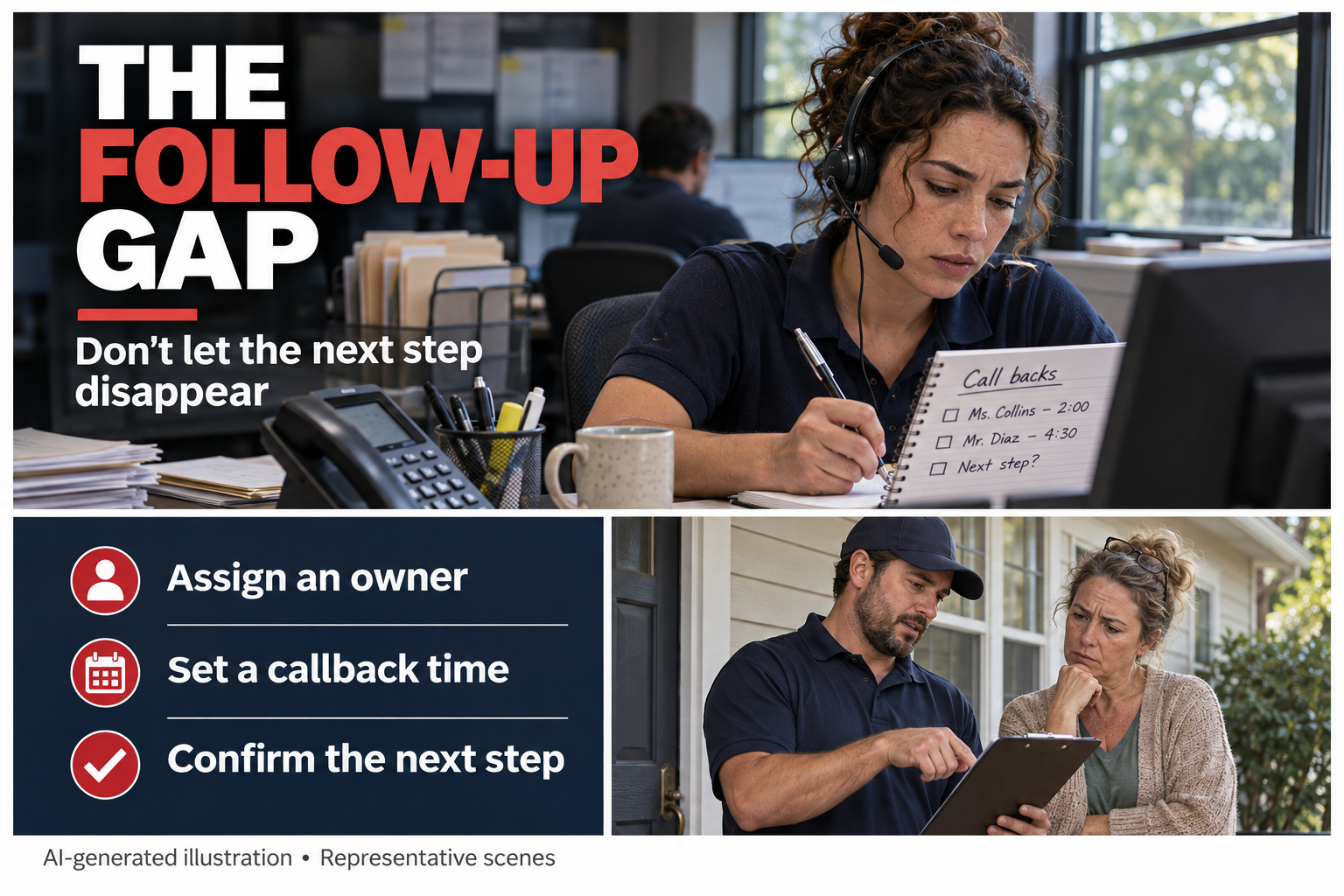

A restoration company can answer the phone professionally and still leave a potential job stranded. The caller explains the damage, provides an address and hears that someone will call back. Then the conversation ends without a named contact, a clear next step or an agreed update time.
That follow-up gap deserves the same attention as the first greeting. The practical fix is simple: assign one person to the inquiry, document the commitment and make sure the next shift can see what remains unfinished.
Give every inquiry an owner
Consider a hypothetical evening call about water spreading through a kitchen. The dispatcher records the details and sends a message to the on-call manager. Unless someone accepts responsibility, both employees may assume the other has contacted the homeowner.
Use one shared record with the caller’s name, callback number, property address, reported problem and time received. Assign an owner and a backup. Separate new inquiries from confirmed appointments so a message sent to a technician is not mistaken for an accepted dispatch.
Replace vague promises with a specific update
A promise to call shortly leaves the customer guessing. Instead, explain who will contact them, what that conversation will establish and when they should expect an update. Choose a timeframe your team can meet, based on actual staffing and workload.
For example: ‘Our on-call manager will contact you by 7:30 to confirm availability and discuss the next step.’ That is an update commitment, not a guaranteed arrival time. If availability changes, contact the customer before the promised deadline and explain the revised plan.
Keep safety ahead of scheduling
An intake conversation cannot establish that a damaged building is safe. Staff should avoid directing callers into hazardous areas to take photographs, inspect equipment or locate a leak. Immediate danger requires emergency assistance, not a sales conversation.
The National Weather Service advises against entering a basement or room where water covers electrical outlets or submerges cords. Build that boundary into intake training. Gathering useful details should never depend on a caller entering standing water or approaching potentially energized equipment.
Make the handoff visible
Before a shift ends, review every open inquiry. Record the last customer contact, the promised update, the assigned employee and the unresolved question. If another contractor must address the problem first, clarify whether your team will coordinate that introduction or the customer will contact them directly.
Ask customers which contact method they prefer. Keep messages relevant to their inquiry, and document when they decline further contact. A useful follow-up answers a question or confirms an arrangement; repeated requests to book without new information add little value.
Audit the promises, not just the calls
This week, review ten recent inquiries. Compare each promised callback with the recorded contact time. Check whether an owner was assigned, whether the customer received an update and why the inquiry closed. Include unanswered calls and after-hours messages so the review covers more than completed daytime conversations.
Track missed commitments separately from unavailable crews, declined estimates and requests outside your service area. Each problem needs a different response. Start by correcting one recurring handoff failure, then review the next ten inquiries to see whether that specific gap remains.