Businesses by State
Find the right fit for your property
Filter by service and location, then select up to three providers to compare contact details, recorded coverage and source-check status.
Our listing criteria & source-check process · Source checks cover the named facts, not workmanship or licensing.
Compare providers
Select providers below to start a comparison.
1 business · CA - San Bernardino County
Fullerton, CA
TITAN Environmental
714-244-6249View business →Not yet source-checked
View comparison ↑STORM DAMAGE & PROPERTY RECOVERY
California: storm damage risks and recovery
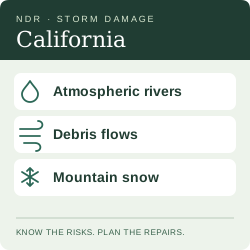
California's storm damage risks change dramatically between coastal cities, inland valleys, steep hillsides and mountain communities. NOAA describes atmospheric rivers delivering intense rain and snow, with some events combining warm rainfall and snowmelt. The state summary also identifies the increased danger of flooding and debris flows after wildfire removes vegetation. That combination makes location essential: a property below a burned slope has a different recovery problem from a house with a localized roof leak.
Local challenges after a storm
Where runoff carries mud or debris toward a building, clarify whether the first assessment needs drainage, slope or structural expertise. Restoration crews can address damaged interiors, but that does not establish that the surrounding site is stable. Follow local access restrictions and obtain the relevant authority's direction before entering affected areas. From a safe position, document deposited material, exterior openings and the path of water so later inspections are based on more than interior stains.
Mountain storms introduce snow accumulation, interrupted roads and a limited window for repairs. Ask roofing and restoration contractors how they coordinate temporary protection with changing weather and delivery schedules. A written estimate should distinguish snow-related damage assessment from interior water restoration and permanent rebuilding. In coastal and valley properties, ask how roof drainage, windows, exterior penetrations and adjacent ground conditions will be investigated rather than assuming that every wet room shares the same source.
Choosing restoration help in California
For California storm damage restoration, compare businesses on the actual scope and property location. Request itemized charges for extraction, cleaning, drying and reconstruction, with separate responsibility for specialist evaluations and permit coordination. Ask what measurements will support the decision to close walls or reinstall finishes. Retain photographs and written approval of additional work, especially when repeated storms cause separate episodes of intrusion. Confirm current access and availability directly; a broad service-area claim does not establish that a provider can reach a particular hillside, mountain road or evacuation area.
For hillside buildings, distinguish repairing interior water damage from any separate evaluation of runoff controls, slopes or access routes around the property. Keep written repair records accessible. Keep copies of findings and approved changes available to every relevant contractor.
Climate and hazard source: NOAA/NCEI State Climate Summary for California. The recovery questions are NDR editorial guidance, not a property assessment or a live weather warning. Follow current instructions from local authorities.