Businesses by State
Find the right fit for your property
Filter by service and location, then select up to three providers to compare contact details, recorded coverage and source-check status.
Our listing criteria & source-check process · Source checks cover the named facts, not workmanship or licensing.
Compare providers
Select providers below to start a comparison.
1 business · CT - Prospect
Waterbury, CT
SERVPRO of Waterbury
Fire Damage Restoration · Mold Remediation · Water Damage Restoration
(203) 757-5050View business →Not yet source-checked
View comparison ↑STORM DAMAGE & PROPERTY RECOVERY
Connecticut: storm damage risks and recovery
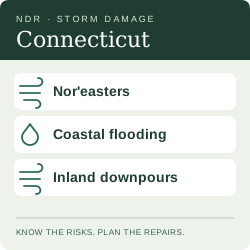
Connecticut storm damage can come from Long Island Sound, inland rainfall or winter weather. NOAA's state summary describes nor'easters, hurricanes, severe thunderstorms and damaging snow events, including storms that have disrupted electricity and affected roofs. It also documents major inland flash flooding. Shoreline exposure is therefore only part of the story: a property away from the coast may still face fast runoff, stream flooding or rain entering through a wind-damaged roof.
Local challenges after a storm
For coastal properties, distinguish water pushed inland from rainfall entering above ground level. Ask the inspection team to record where water appeared, how high it reached and which building systems were affected. A repair plan may require coordination between interior restoration, electrical assessment and exterior work. Check with the local building authority about the proposed reconstruction, especially when work involves an affected floodplain or a change to damaged structural components.
Winter storms can leave tree impacts, damaged exterior openings and water intrusion that continues during thawing. Ask how temporary protection will perform if freezing rain, wind or additional snow follows the initial event. Where roof movement or unusual interior deformation is visible, request the appropriate structural assessment before routine repairs begin. Do not treat a company's ability to remove wet materials as evidence that it has evaluated framing, roof capacity or utility safety.
Choosing restoration help in Connecticut
Compare Connecticut storm damage restoration businesses by the work they will document and perform. Request separate descriptions for emergency protection, extraction, cleaning, drying and rebuilding, plus a list of excluded trades. Ask which measurements support decisions about insulation, wall cavities and flooring before those assemblies are closed. Discuss access and equipment placement in attached homes or shared buildings, where coordination with neighbors or management may be necessary. Keep photographs, reports and written changes in one project record, and confirm current service coverage directly rather than relying solely on the directory's recorded cities.
For a shoreline condominium, establish who manages the affected exterior components before assuming an individual unit owner's restoration agreement covers all necessary work. Keep records accessible. Before approving changes, ask the contractor to explain the findings, proposed work and any effect on the schedule.
Climate and hazard source: NOAA/NCEI State Climate Summary for Connecticut. The recovery questions are NDR editorial guidance, not a property assessment or a live weather warning. Follow current instructions from local authorities.