Businesses by State
Find the right fit for your property
Filter by service and location, then select up to three providers to compare contact details, recorded coverage and source-check status.
Our listing criteria & source-check process · Source checks cover the named facts, not workmanship or licensing.
Compare providers
Select providers below to start a comparison.
1 business · GA - Harlem
Evans, Georgia
SERVPRO of Columbia County
Cleaning Services · Fire Damage Restoration · Mold Remediation · Storm Damage Restoration · Water Damage Restoration
(706) 868-5441View business →Not yet source-checked
View comparison ↑STORM DAMAGE & PROPERTY RECOVERY
Georgia: storm damage risks and recovery
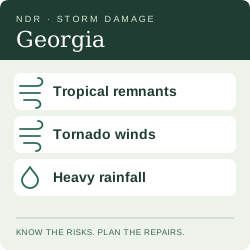
Georgia storm damage extends from the Atlantic coast through inland cities, farmland and northern mountains. NOAA describes tropical systems bringing heavy rainfall and strong winds even when Georgia is not the landfall location. Severe thunderstorms can also produce tornadoes and flooding. This mix matters when assessing a property: a large tree impact, wind-driven roof leakage and water arriving from a nearby drainage route may occur together but require different repair decisions.
Local challenges after a storm
In coastal communities, document the relationship between flooding and exterior wind damage. Ask whether the proposed assessment includes windows, roof connections, affected utilities and any evidence of water reaching enclosed spaces. Inland, ask the same questions about heavy-rain runoff rather than assuming distance from the sea eliminates flood exposure. Keep photographs tied to room locations and observation times so later contractors can understand the sequence of damage and distinguish separate entry points.
Georgia's tree cover can complicate storm recovery when limbs or entire trees strike buildings and block access. Establish who coordinates tree removal, temporary weather protection and any structural evaluation. Request separate descriptions for those stages, particularly if different businesses will perform them. A restoration estimate should explain what happens after emergency cleanup and identify who is responsible for permanent repairs. Temporary covering should also have a monitoring plan if more rain is forecast.
Choosing restoration help in Georgia
When comparing Georgia storm damage restoration providers, ask for coverage of your actual county and property type, along with current crew availability. Review equipment rates, monitoring visits, material removal and repair exclusions in writing. Ask how the business will document moisture conditions before reinstalling insulation or closing walls. For rural properties, include detached buildings and access constraints in the initial discussion. Consult the appropriate local building authority about reconstruction requirements. The most useful comparison is a clear account of work, evidence and responsibility, rather than a broad promise that a company handles every storm-related problem.
For a wooded property, ask how the tree-removal and roofing teams will communicate if an impact is discovered beneath fallen branches or coverings. Ask how the finished work will be documented and which unresolved concerns require another professional assessment.
Climate and hazard source: NOAA/NCEI State Climate Summary for Georgia. The recovery questions are NDR editorial guidance, not a property assessment or a live weather warning. Follow current instructions from local authorities.