Businesses by State
Find the right fit for your property
Filter by service and location, then select up to three providers to compare contact details, recorded coverage and source-check status.
Our listing criteria & source-check process · Source checks cover the named facts, not workmanship or licensing.
Compare providers
Select providers below to start a comparison.
1 business · NC - Weaver
Durham, NC
SERVPRO of North Durham
Cleaning Services · Fire Damage Restoration · Mold Remediation · Storm Damage Restoration · Water Damage Restoration
(919) 467-0880View business →Not yet source-checked
View comparison ↑STORM DAMAGE & PROPERTY RECOVERY
North Carolina: storm damage risks and recovery
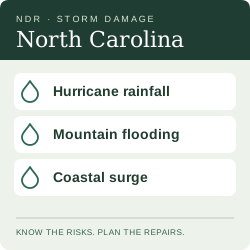
North Carolina storm damage changes dramatically between the Outer Banks, coastal plain, Piedmont and western mountains. NOAA describes hurricane winds and surge, extreme inland rainfall, landslides and winter snow or ice. Tropical systems can therefore cause severe losses far from the coast. A useful assessment identifies whether the building was affected by tidal water, river flooding, runoff, slope debris or an opening in its envelope, because each pathway raises different questions for restoration and permanent repairs.
Local challenges after a storm
In mountain and foothill locations, ask whether the surrounding site and supporting ground need evaluation before interior work proceeds. Damaged access routes can also affect equipment delivery and the order of inspections. Follow local restrictions and document water paths or deposited material only from safe locations. A cleanup company may be able to remove wet finishes without having the expertise to determine that a slope, foundation or approach is ready for reconstruction.
For coastal properties, distinguish flood effects from roof or window leakage and describe any known seawater exposure to the relevant specialists. Elsewhere, wind and ice can bring tree impacts and repeated water intrusion while repairs are pending. Clarify who coordinates tree removal, temporary protection and structural assessment. Ask how the building will be monitored if another storm arrives before permanent roof work or additional trades can be scheduled.
Choosing restoration help in North Carolina
Compare North Carolina storm damage restoration providers through a written, itemized scope for extraction, cleaning, drying verification and rebuilding. Confirm address coverage under current road conditions and ask which services the business performs itself. Identify responsibility for permits, excluded trades and additional discoveries, with changes approved in writing. Request the evidence used before closing affected walls or floors and retain it alongside photographs and inspection findings. Consult the responsible local building authority about permanent repairs. Broad regional service-area statements help frame inquiries but do not establish current access, specialist qualifications or a guaranteed arrival time for your particular property.
For a mountain property, describe the condition of the approach and surrounding terrain so inspection planning accounts for access and possible specialist assessments. Keep copies of findings and approved changes available to every relevant contractor.
Climate and hazard source: NOAA/NCEI State Climate Summary for North Carolina. The recovery questions are NDR editorial guidance, not a property assessment or a live weather warning. Follow current instructions from local authorities.