Businesses by State
Find the right fit for your property
Filter by service and location, then select up to three providers to compare contact details, recorded coverage and source-check status.
Our listing criteria & source-check process · Source checks cover the named facts, not workmanship or licensing.
Compare providers
Select providers below to start a comparison.
1 business · OR - Beaumont-Wilshire
Portland, OR
SERVPRO of Northeast Portland
Cleaning Services · Fire Damage Restoration · Mold Remediation · Storm Damage Restoration · Water Damage Restoration
(503) 287-4542View business →Not yet source-checked
View comparison ↑STORM DAMAGE & PROPERTY RECOVERY
Oregon: storm damage risks and recovery
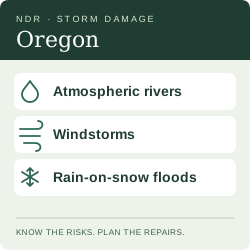
Oregon storm damage differs between the wet coast and western valleys, mountain communities and the drier eastern part of the state. NOAA describes atmospheric rivers bringing heavy precipitation, with some events combining rain and snowmelt to produce flooding or landslides. Powerful windstorms can also interrupt electricity and damage trees. The first restoration discussion should establish whether water arrived through a damaged building envelope, crossed the ground or came with broader site damage that requires specialist attention.
Local challenges after a storm
Where runoff, sediment or slope debris affects a property, clarify which drainage, site or structural assessments are needed before rebuilding. Interior material removal does not establish that supporting ground is stable. Follow local restrictions and document surrounding conditions only from safe locations. Ask whether the provider's estimate covers all affected lower-level and service spaces, and whether a separate contractor must investigate the source of repeated water entry.
Wind-damaged roofs and tree impacts require coordination between debris removal, temporary weather protection and inspection. Ask who checks coverings if another atmospheric river arrives before permanent repairs are complete. For mountain or rural properties, discuss road conditions, equipment delivery and travel arrangements at the outset. A schedule should explain how the building remains protected during delays, rather than assuming that interior work and exterior repairs can always proceed together.
Choosing restoration help in Oregon
Compare Oregon storm damage restoration providers using written scopes that separate extraction, cleaning, drying measurements and reconstruction. Ask which trades are included, who coordinates permits and what requires additional approval. Review equipment rates, monitoring charges and the criteria used to determine that affected assemblies are ready to close. Keep photographs, findings and approved changes in a single record, particularly where successive storms cause distinct episodes of damage. Confirm current address coverage and availability directly. A company advertising regional storm response still needs to explain its suitability for the specific building, access route and combination of water, wind or site damage.
For a hillside property, describe deposited debris and drainage conditions when arranging an assessment rather than assuming that interior drying resolves the entire loss. Keep records accessible. Review the proposed scope carefully before authorizing permanent repairs or replacements.
Climate and hazard source: NOAA/NCEI State Climate Summary for Oregon. The recovery questions are NDR editorial guidance, not a property assessment or a live weather warning. Follow current instructions from local authorities.