Businesses by State
Find the right fit for your property
Filter by service and location, then select up to three providers to compare contact details, recorded coverage and source-check status.
Our listing criteria & source-check process · Source checks cover the named facts, not workmanship or licensing.
Compare providers
Select providers below to start a comparison.
1 business · UT - Murray
Riverton, UT
Lightspeed Restoration of Sandy
(801) 336-4919View business →Not yet source-checked
View comparison ↑STORM DAMAGE & PROPERTY RECOVERY
Utah: storm damage risks and recovery
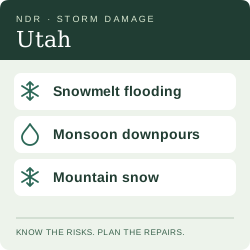
Utah storm damage reflects the differences between northern valleys, high mountains and the southern desert. NOAA describes heavy rainfall and snowmelt causing flooding, summer thunderstorms associated with monsoon moisture in the south and east, and lake-effect snow around the Great Salt Lake. The same statewide forecast can therefore mean very different conditions at individual properties. Recovery should begin with the water-entry route and site context, not the assumption that a dry climate rules out significant flood damage.
Local challenges after a storm
Where runoff or deposited material affects a building, ask whether drainage, site or structural assessment is needed before interior reconstruction. Cleanup cannot establish the stability of surrounding ground or the adequacy of an affected drainage feature. Document accessible exterior conditions and visible waterlines before removal work changes the evidence. A restoration estimate should explain whether the source investigation is included or needs a separate specialist.
Mountain and northern properties may face roof leaks, additional snow and interrupted access while permanent repairs are pending. Ask how temporary protection will be monitored and who coordinates roofing with interior restoration. For lower-level water damage, identify affected utility areas and enclosed assemblies rather than limiting attention to visible room surfaces. Clarify equipment delivery, parking and access where slopes, narrow roads or shared buildings could affect the work sequence.
Choosing restoration help in Utah
When selecting Utah storm damage restoration, compare written scopes for extraction, cleaning, drying verification and rebuilding. Confirm that the provider serves your actual community and property type. Ask which measurements support retaining materials and closing assemblies, and review itemized equipment and monitoring charges. Establish responsibility for electrical, structural, plumbing and drainage work outside the cleanup agreement. Contact the local building authority about permanent repairs and keep photographs, reports and approved changes together. The directory's recorded services and coverage help organize inquiries, but current availability and the company's ability to manage the particular combination of winter, runoff or building damage must be confirmed directly.
For a southern desert property, show the inspector any observed runoff paths and sediment deposits rather than assuming all intrusion came through the roof. Keep copies of findings and approved changes available to every relevant contractor.
Climate and hazard source: NOAA/NCEI State Climate Summary for Utah. The recovery questions are NDR editorial guidance, not a property assessment or a live weather warning. Follow current instructions from local authorities.