Businesses by State
Find the right fit for your property
Filter by service and location, then select up to three providers to compare contact details, recorded coverage and source-check status.
Our listing criteria & source-check process · Source checks cover the named facts, not workmanship or licensing.
Compare providers
Select providers below to start a comparison.
1 business · WA - Clyde Hill
Bellevue, WA
SERVPRO of Bellevue West
(425) 454-3900View business →Not yet source-checked
View comparison ↑STORM DAMAGE & PROPERTY RECOVERY
Washington: storm damage risks and recovery
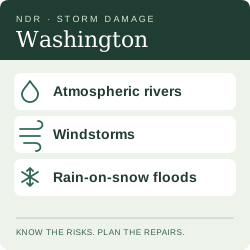
Washington storm damage can combine atmospheric-river rainfall, mountain snowmelt and powerful winds. NOAA describes flooding and landslides when heavy rain and thawing snow occur together, with pronounced differences between western watersheds, mountains and the drier eastern part of the state. A recovery assessment should therefore identify the property's terrain and damage pathway. A roof leak, lower-floor flood and building affected by slope movement require different expertise even when the same storm system caused the regional disruption.
Local challenges after a storm
Where water, sediment or debris reaches the property from surrounding terrain, clarify whether site, drainage or structural evaluation is needed before rebuilding. Interior cleanup does not establish that supporting ground is stable. Follow local restrictions and document exterior observations only from safe locations. Ask how the restoration team will distinguish affected materials and utility areas from components outside its scope, and who will address recurring entry routes or other unresolved causes.
Wind damage and tree impacts require coordination between debris removal, temporary protection and inspection. Ask who monitors coverings if another wet-weather system arrives before permanent work is complete. In mountain or rural communities, discuss access, equipment delivery and travel arrangements early. A restoration schedule should explain how the building remains protected during delays rather than assuming roofing, drying and specialist repairs can always proceed at the same time.
Choosing restoration help in Washington
Compare Washington storm damage restoration providers through written, itemized scopes for extraction, cleaning, drying verification and reconstruction. Confirm coverage for the actual address and current availability under local road conditions. Review equipment and monitoring charges, excluded trades and approval procedures for additional discoveries. Ask what measurements support decisions to retain materials or close assemblies. Consult the local building authority about permanent repair requirements and retain photographs, inspection findings and written changes together. Directory facts are a useful starting point, but the crew's practical access, qualifications and responsibility for each stage need direct confirmation for your particular property and type of loss.
For a property below a slope, describe surrounding ground conditions and deposited material when requesting an assessment rather than relying only on interior photographs. Ask the contractor to clarify any responsibilities that remain uncertain.
Climate and hazard source: NOAA/NCEI State Climate Summary for Washington. The recovery questions are NDR editorial guidance, not a property assessment or a live weather warning. Follow current instructions from local authorities.