Businesses by State
Find the right fit for your property
Filter by service and location, then select up to three providers to compare contact details, recorded coverage and source-check status.
Our listing criteria & source-check process · Source checks cover the named facts, not workmanship or licensing.
Compare providers
Select providers below to start a comparison.
1 business · WY - Orchard Valley
Cheyenne, WY
SERVPRO of Cheyenne
(307) 514-9011View business →Not yet source-checked
View comparison ↑STORM DAMAGE & PROPERTY RECOVERY
Wyoming: storm damage risks and recovery
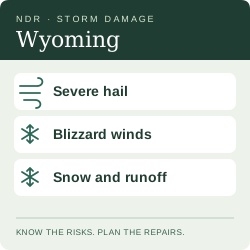
Wyoming storm damage combines exposed terrain, strong winds, winter travel constraints and severe summer thunderstorms. NOAA describes damaging hail in the southeast, powerful wind events and blizzards that can close major routes. Snow and runoff create additional water-management questions at individual properties. A useful recovery estimate should account for the actual building, elevation and access route, rather than treating a rural outbuilding and an urban home as equivalent jobs with the same delivery schedule.
Local challenges after a storm
After hail or wind, ask a qualified roofing professional to document roof coverings, flashing, openings and other exposed components. Include detached buildings and utility areas in the inspection discussion where relevant. If rain or melting snow entered, connect exterior findings with interior moisture observations. Temporary protection and permanent roofing should be described separately, including who monitors the covering and what happens if another storm arrives while specialist trades or materials remain unavailable.
Winter access can determine when work is practical. Discuss road conditions, equipment delivery and travel arrangements before accepting a completion promise. If the building shows impact damage, unusual movement or affected supporting ground, establish the appropriate structural or site assessment before routine rebuilding. The restoration team should explain how it will assess wet insulation and enclosed spaces; cold or dry outdoor conditions are not, by themselves, evidence that moisture within the building has been resolved.
Choosing restoration help in Wyoming
Compare Wyoming storm damage restoration businesses through written, itemized scopes for extraction, cleaning, drying verification and reconstruction. Confirm actual address coverage and current crew availability. Request equipment, monitoring and travel charges and identify exclusions for electrical, structural, roofing or drainage work. Ask which measurements support closing affected assemblies and how additional discoveries will be documented and approved. Contact the local building authority about permanent repairs and keep photographs, findings and written changes organized by structure and date. Directory service areas help frame the search, but practical access and responsibility for each recovery stage need direct confirmation with the provider.
For an exposed rural property, confirm the process for monitoring temporary coverings if wind or road closures delay a scheduled return visit by the contractor. Keep written repair records accessible.
Climate and hazard source: NOAA/NCEI State Climate Summary for Wyoming. The recovery questions are NDR editorial guidance, not a property assessment or a live weather warning. Follow current instructions from local authorities.