Businesses by State
Find the right fit for your property
Filter by service and location, then select up to three providers to compare contact details, recorded coverage and source-check status.
Our listing criteria & source-check process · Source checks cover the named facts, not workmanship or licensing.
Compare providers
Select providers below to start a comparison.
Browse cities served in this state
1 business
Morgantown, WV
Crossroads Property Rescue of Morgantown
View business →Not yet source-checked
View comparison ↑STORM DAMAGE & PROPERTY RECOVERY
West Virginia: storm damage risks and recovery
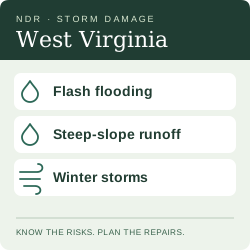
West Virginia storm damage is strongly influenced by mountain terrain, narrow valleys and rapidly changing stream conditions. NOAA describes serious flash and river flooding, tropical remnants, severe thunderstorms and winter snow or ice. A property can be far from the coast and still experience damaging rainfall from a tropical system. The recovery plan should distinguish roof leakage from runoff, stream water and broader site damage so the first inspection addresses more than visibly wet interior surfaces.
Local challenges after a storm
Where floodwater or debris affects a building, ask which surrounding-ground, drainage and structural concerns require a specialist before rebuilding. Follow local access restrictions and photograph exterior water paths and deposited material only from safe locations. A cleanup estimate should state whether it includes extraction, cleaning, assessment of materials and drying, or only the initial stage. Identify affected service areas and detached structures explicitly so they are not lost behind a general description of the main house.
Wind, ice and tree impacts can block approaches and leave a building exposed to further precipitation. Clarify who coordinates tree removal, temporary weather protection and any structural evaluation. Ask how coverings will be monitored if roads or weather delay permanent repairs. For rural or hillside properties, discuss equipment delivery, working access and travel arrangements at the outset. An advertised service area does not establish that a crew can immediately reach every affected location.
Choosing restoration help in West Virginia
Compare West Virginia storm damage restoration businesses using written scopes and itemized equipment, monitoring and reconstruction charges. Ask which measurements support decisions about wet insulation, wall cavities or flooring before assemblies are closed. Identify excluded electrical, plumbing, structural or drainage work and who will handle it. Contact the responsible local authority about permanent repairs and retain photographs, findings and approved changes together. A provider should explain its capabilities and limits for the particular building, with a clear handoff between emergency response, restoration and the permanent work needed to make the recovery complete.
For a narrow-valley property, include damaged approaches and utility access in the initial discussion so equipment delivery and specialist visits can be planned realistically. Keep photographs and written repair approvals together for reference.
Climate and hazard source: NOAA/NCEI State Climate Summary for West Virginia. The recovery questions are NDR editorial guidance, not a property assessment or a live weather warning. Follow current instructions from local authorities.