Businesses by State
Find the right fit for your property
Filter by service and location, then select up to three providers to compare contact details, recorded coverage and source-check status.
Our listing criteria & source-check process · Source checks cover the named facts, not workmanship or licensing.
Compare providers
Select providers below to start a comparison.
Browse cities served in this state
1 business
Falmouth, ME
ServiceMaster Falmouth
(207) 879-7668View business →Not yet source-checked
View comparison ↑STORM DAMAGE & PROPERTY RECOVERY
Maine: storm damage risks and recovery
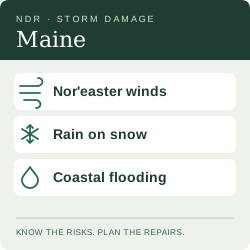
Maine storm damage can combine powerful coastal weather with inland river flooding and winter ice. NOAA describes nor'easters as a major source of disruption, along with damaging ice storms and heavy rain falling onto existing snow. Coastal buildings, forested inland properties and river communities therefore face different repair problems. The same storm may produce a roof opening at one address and rising water at another, making the damage pathway more useful than the storm's name alone.
Local challenges after a storm
Along the shoreline, ask an inspection team to distinguish wave or flood effects from wind-driven rain entering through the building envelope. Keep photographs showing exterior openings and surrounding conditions, taken only where access is safe. A property affected by erosion or movement needs the appropriate site or structural assessment before interior rebuilding conceals the evidence. Confirm local reconstruction requirements rather than assuming a contractor's cleanup scope covers shoreline or foundation questions.
Inland, trees and ice can interrupt electricity, block access and damage roofs while cold weather complicates repairs. Ask how temporary protection will be monitored and what happens if another storm arrives before materials or specialist trades are available. Discuss the inspection of wet insulation and enclosed spaces, not just room surfaces. For seasonal or remote properties, clarify who can provide access and how progress will be documented when the owner is elsewhere.
Choosing restoration help in Maine
Compare Maine storm damage restoration businesses through written scopes that separate emergency protection, extraction, cleaning, drying and reconstruction. Confirm service to your actual community and ask about travel, equipment and monitoring charges. Identify responsibility for structural, electrical and permanent roofing work. Request the criteria used to determine that affected assemblies are ready to close, along with written approval procedures for changes. Contact the responsible building authority about permanent repairs and retain photographs, findings and invoices together. A broad regional service-area statement does not establish immediate access to a particular island, rural road or weather-affected property.
For an island or seasonal property, identify who can grant access and photograph temporary protection between visits if another coastal storm interrupts the schedule. Keep copies of findings and approved changes available to every relevant contractor.
Climate and hazard source: NOAA/NCEI State Climate Summary for Maine. The recovery questions are NDR editorial guidance, not a property assessment or a live weather warning. Follow current instructions from local authorities.