Businesses by State
Find the right fit for your property
Filter by service and location, then select up to three providers to compare contact details, recorded coverage and source-check status.
Our listing criteria & source-check process · Source checks cover the named facts, not workmanship or licensing.
Compare providers
Select providers below to start a comparison.
Browse cities served in this state
1 business
Green Bay, WI
ServiceMaster Recovery by Restoration Holdings
(262) 425-5269View business →Not yet source-checked
View comparison ↑STORM DAMAGE & PROPERTY RECOVERY
Wisconsin: storm damage risks and recovery
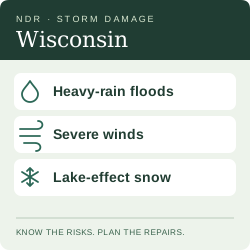
Wisconsin storm damage reflects a combination of heavy rainfall, river and groundwater flooding, severe thunderstorms and winter weather. NOAA describes lake-effect snow near Lake Superior and flooding influenced by ice jams and persistent wet conditions. These regional differences matter for recovery. A northern snowbelt building, an urban basement and a property beside a rising river may all need water restoration, but their sources, access constraints and repair decisions should not be treated as interchangeable.
Local challenges after a storm
For lower-level water intrusion, ask whether the inspection will distinguish groundwater, surface runoff and other possible entry routes. Document visible waterlines and accessible adjoining spaces before cleanup changes the scene. A restoration plan should explain which materials and utility areas are included and when drainage, plumbing or structural expertise is needed. Removing standing water is one stage; it does not establish that the source has been resolved or enclosed assemblies are ready for replacement.
Wind, hail and winter impacts require clear coordination with exterior trades. Ask a qualified roofing professional to document findings on coverings, flashing and openings, and connect those observations to any interior damage. Clarify who monitors temporary protection if additional rain or snow arrives before permanent repairs are complete. For rural and seasonal properties, agree on access, equipment delivery and how the contractor communicates findings when the owner cannot attend each visit.
Choosing restoration help in Wisconsin
Compare Wisconsin storm damage restoration providers through itemized scopes covering extraction, cleaning, drying verification and reconstruction handoff. Confirm current coverage for the actual address and identify equipment, monitoring and travel charges. Ask which measurements determine when equipment can be removed and affected assemblies can be closed. Establish responsibility for permits, excluded trades and additional discoveries, with changes approved in writing. Contact the local building authority before permanent work proceeds and retain photographs, findings and invoices together. Directory records help structure inquiries, but each provider must explain its capabilities and availability for the specific property and type of storm loss.
For a seasonal lakeside building, agree on access, monitoring and photographs between visits if the owner cannot attend every stage of the restoration. Keep photographs and written repair approvals together for reference.
Climate and hazard source: NOAA/NCEI State Climate Summary for Wisconsin. The recovery questions are NDR editorial guidance, not a property assessment or a live weather warning. Follow current instructions from local authorities.