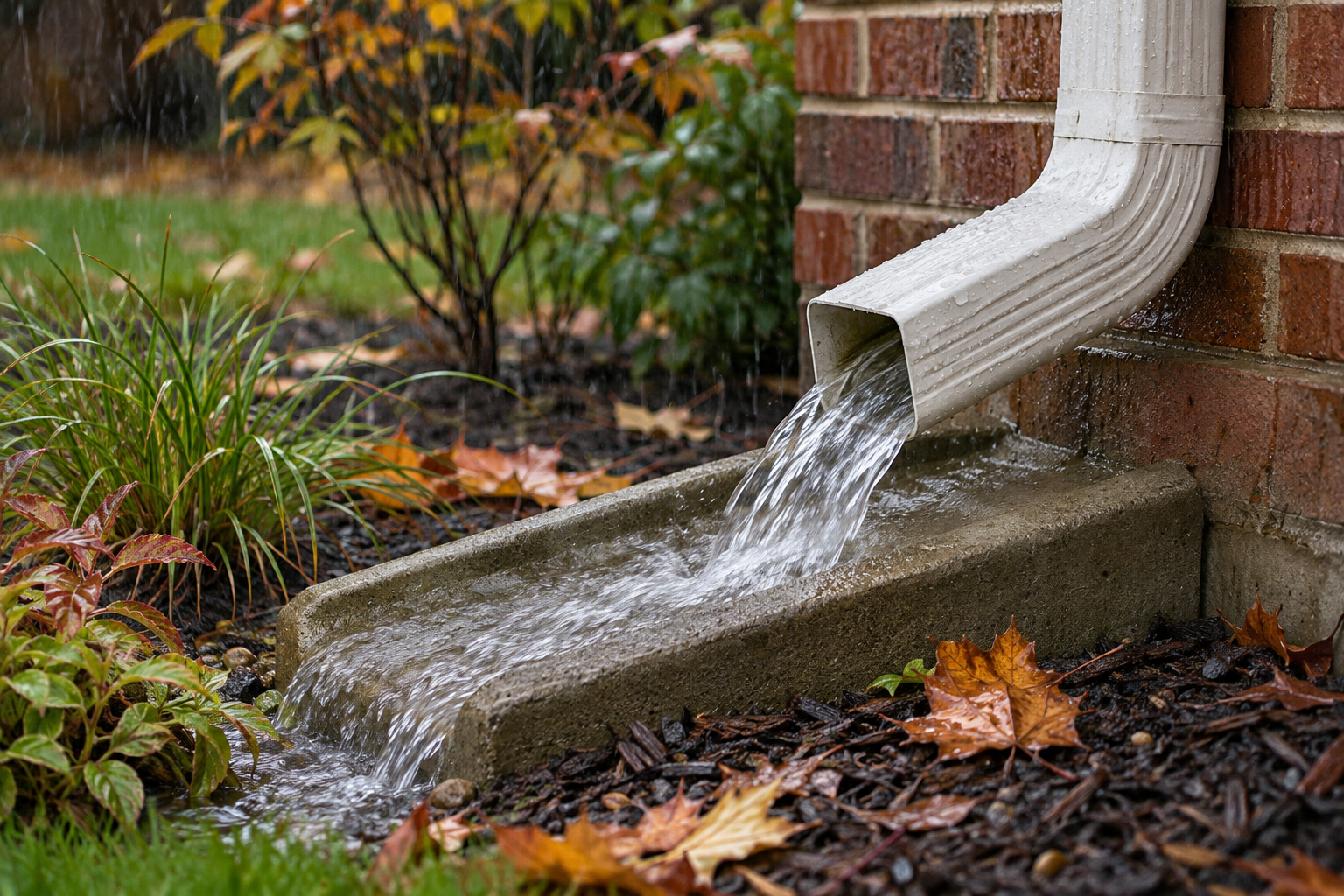
A clean gutter does not solve a drainage problem if its downspout releases water where it can return to the foundation. Before buying more drainage equipment, follow the entire route from roof edge to discharge point. The useful question is where the water goes next, including during heavier rain.
The Environmental Protection Agency’s weather-resilience guidance recommends maintaining gutters and downspouts, directing water away from the home and addressing ground that allows puddles against the foundation. Those are planning principles, not a substitute for a site-specific drainage design or local approval.
Observe from a safe place
From ground level, note overflows, leaking joints, disconnected extensions and areas where water collects. Photograph the location and record the weather conditions. Stay away from electrical hazards and unstable ground; do not climb a ladder in rain to reproduce a problem for a contractor.
Look beyond the end of the pipe. Does the discharge cross a walkway, disappear into an unknown underground line or flow toward another part of the building? Record what you can see without excavating or opening unfamiliar drainage components. These observations help a qualified professional investigate instead of guessing from one damp interior spot.
Distinguish maintenance from redesign. Clearing an obstruction may restore an existing route, while recurring ponding may require evaluation of slopes, outlets or drainage capacity. Ask the contractor which problem the proposal addresses and what evidence supports that diagnosis. A longer extension alone may not resolve a poorly located outlet.
Choose an appropriate destination
NC State Extension’s gutter management guidance emphasizes carrying roof runoff to a suitable release location and warns that short splash-block arrangements can discharge too close to a house. Its recommendations describe one guidance approach; soil, slope, site constraints and local stormwater rules still require attention.
For a hypothetical side yard, sending water farther from one wall could direct it toward a basement stairwell or neighboring property. Before approving that change, ask where the water will travel across the entire affected area. Discuss permitted discharge locations with the local authority when necessary.
Ask about maintenance access for any proposed underground line. Who checks it, how can blockages be investigated and what visible signs indicate trouble? A concealed system is not maintenance-free simply because the pipe no longer crosses the lawn. Keep its route and outlet recorded for future owners and service visits.
Verify the result
After work, compare the completed route with the proposal and observe it during ordinary rain from a safe location. Report continued pooling or unexpected discharge rather than assuming an invoice marks the end of the investigation. Persistent interior moisture can have other causes that drainage work alone will not resolve.
Include nearby paths, planted areas and neighboring boundaries on that sketch. The goal is to evaluate the discharge destination in context, with enough detail to discuss maintenance and any effects beyond the repaired wall.
Use NDR’s Rebuilding & Prevention guides for related repair decisions. Start with a clear simple sketch of existing downspouts, outlets and problem areas, then ask a qualified professional to explain how the proposed work changes that water path.