Wet drywall does not automatically require wholesale removal, but a surface that looks dry is not enough to justify keeping it. The decision depends on the water source, the board’s condition, the time involved and whether the wall assembly can be inspected and dried. Ask for that reasoning before approving either demolition or repainting.
The Environmental Protection Agency’s clean-water cleanup table says wallboard may dry in place when it has no obvious swelling and its seams remain intact. Its recommendations address prompt response to clean-water damage. They are not a salvage rule for sewage, contaminated floodwater or every concealed wall condition.
Start behind the visible stain
First establish that the leak has stopped and that the area can be approached safely. Describe where the water came from and when it was discovered. Unknown water history deserves investigation, not an assumption that a clear puddle was clean. A restoration professional should explain how those uncertainties affect the proposed work.
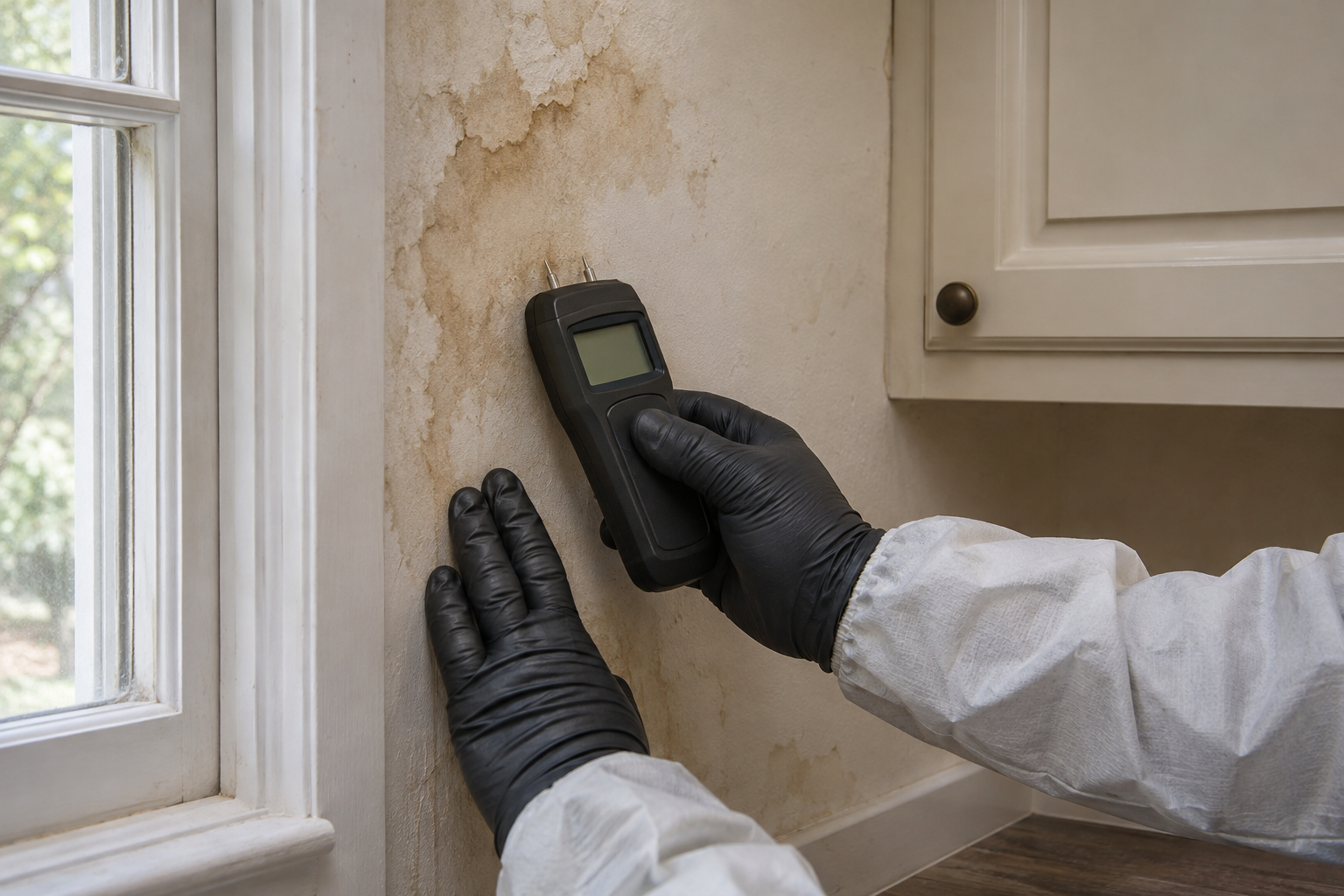
Ask what is behind the board. Insulation, framing, wall coverings and adjoining cabinets can affect access and drying. A painted face can conceal a different condition inside the cavity. Request a description of the inspection method and any access needed, rather than treating one surface reading as an answer for the entire wall.
EPA’s table identifies wet cellulose and fiberglass insulation for replacement. That distinction matters: preserving the drywall face does not necessarily mean everything behind it is salvageable. The contractor should separate material decisions and explain how each inaccessible area will be evaluated.
Set a reason to reassess
EPA frames rapid response around 24 to 48 hours, while noting that this is a guideline, not a guarantee about mold. Its table also warns against using fans before determining that water is sanitary. Contamination, visible growth or uncertainty about hidden conditions can require a different professional response.
For a hypothetical supply-line leak discovered quickly, intact board may be a candidate for controlled drying. A swollen seam or deteriorated panel changes that discussion. Neither example establishes the correct scope for your property; it shows why the proposal should connect observed conditions to the recommended action.
Agree on reassessment before equipment is removed. Ask which locations will be checked, how findings will be documented and what result would trigger additional investigation. A useful record explains changes over time and the basis for stopping, rather than simply stating that equipment ran for a certain number of days.
Separate drying from finishing
Do not let the painting schedule become the drying criterion. Discuss finishing only after the moisture problem and material decisions have been addressed. Replacement work may also involve permits, concealed services or older materials requiring specialist assessment; cutting into a wall is not a routine homeowner inspection step.
Ask whether adjacent rooms were checked. Water can affect more than the stained area, so the inspection boundary should be explained as carefully as proposed repairs.
Use NDR’s water damage estimate guide to compare how proposals describe investigation, drying and repairs. Ask for a written explanation of what can remain, what must go and what evidence will resolve uncertain areas.