
Prepare for access away from home
An emergency document kit should help you reach the right institution and retrieve the right record after leaving home. Build it around useful copies, current contacts and secure access, rather than carrying every original document you own.
The Consumer Financial Protection Bureau’s disaster preparation guidance recommends gathering financial and household information, keeping copies in separate places and protecting digital records. Start with the information you would need to contact insurers, identify accounts and manage essential obligations while displaced.
Create a short index that names the record, its location and the person authorized to retrieve it. An account may appear on a household list without placing its complete number on every paper copy. Decide what must travel with you and what can remain in separate secure storage.
Balance portability with privacy
The Federal Trade Commission’s document preparation guidance, published in November 2023, recommends secure storage and protected digital copies. It advises strong passwords and multifactor authentication for cloud accounts, and password protection for portable drives. These are standing recommendations, not a new disaster announcement.
Consider a hypothetical couple who evacuates with a phone but leaves the insurance policy in a desk drawer. A secure copy can help, but only if they can sign in from their temporary location. Their preparation needs to include access arrangements, not merely a successful upload at home.
Review recovery options for important accounts through each provider’s supported security settings. Keep recovery material protected and separate from an easily lost device. Do not put passwords, identification numbers or account details into a widely shared family message thread just to make them convenient.
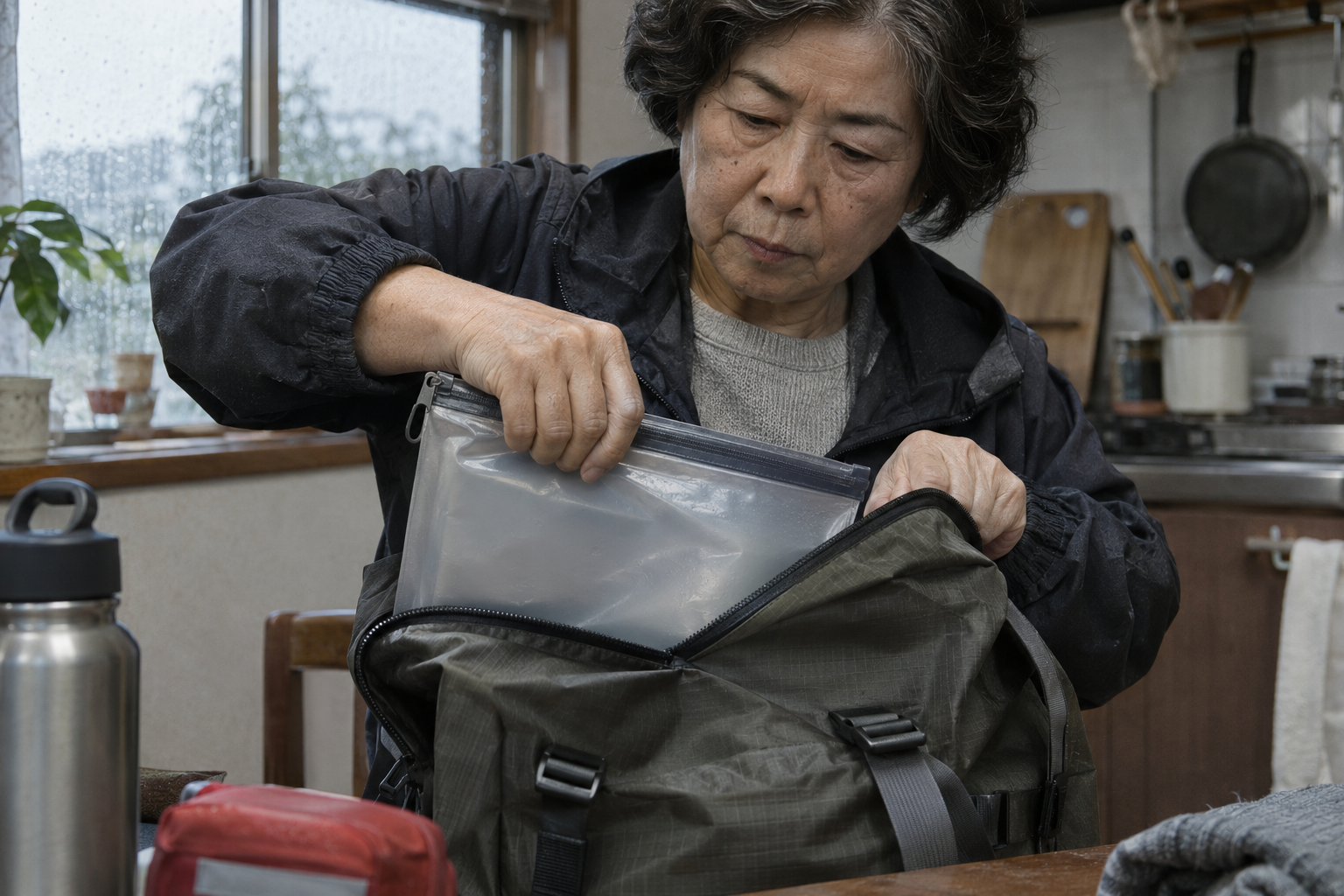
For paper copies, choose a portable protective container and a location that fits the household’s evacuation plan. Give a trusted, authorized person enough information to help retrieve records without casually distributing sensitive files. Ask an attorney or relevant institution about handling originals that have particular legal significance.
Test what the kit lets you do
Run a short tabletop exercise: You are away from home, the usual computer is unavailable and an insurance representative asks for your policy information. Identify how you would find the contact, authenticate yourself and retrieve the relevant copy. Fix any missing step while normal services are available.
Include practical contact details for essential bills and a current household inventory. Keep the inventory separate from any assertion about what insurance will pay. Coverage depends on the policy and circumstances; the kit’s role is to make records available for those conversations.
For a household sharing responsibilities, identify one person to maintain the index and another who knows how to find it. Discuss the arrangement directly. A carefully assembled kit will not help an authorized family member who does not know it exists or where it is securely stored.
The FTC recommends reviewing important papers at least annually. Also revisit the kit after a move, policy renewal or change in household responsibilities. Remove obsolete copies securely and confirm that the index still points to accessible records. Link this exercise with your broader emergency planning so documents, transportation and household communication support the same practical plan.
