Treat the stain as a starting point
A leaking commercial ceiling needs an investigation before a cosmetic repair. Keep occupants away from the affected area while appropriate building professionals assess access, overhead conditions and any electrical concerns. Replacing a stained tile does not explain where the water came from or what remains wet.
EPA’s commercial-building mold guidance calls for identifying and fixing the moisture source, assessing affected materials and planning the work around occupant and worker protection. It notes that hidden mold can occur above ceiling tiles and within roof materials.
Connect the investigation to the scope
Ask the recovery team to document the leak location, discovery time, suspected source and materials requiring assessment. Distinguish a confirmed cause from an initial explanation. A roof leak, plumbing failure and condensation problem may require different repair specialists.
EPA’s clean-water response table recommends discarding and replacing water-damaged ceiling tiles. That table addresses action within 24 to 48 hours to help prevent mold; it is not a universal procedure for contaminated water or established mold. Conditions outside its scope require an appropriate remediation assessment.
If mold is discovered or suspected, coordinate removal methods, containment and protective equipment with experienced personnel. EPA cautions that investigating concealed mold can release spores. Office staff should not lift tiles simply to take a closer photograph.
Close the record, not just the ceiling
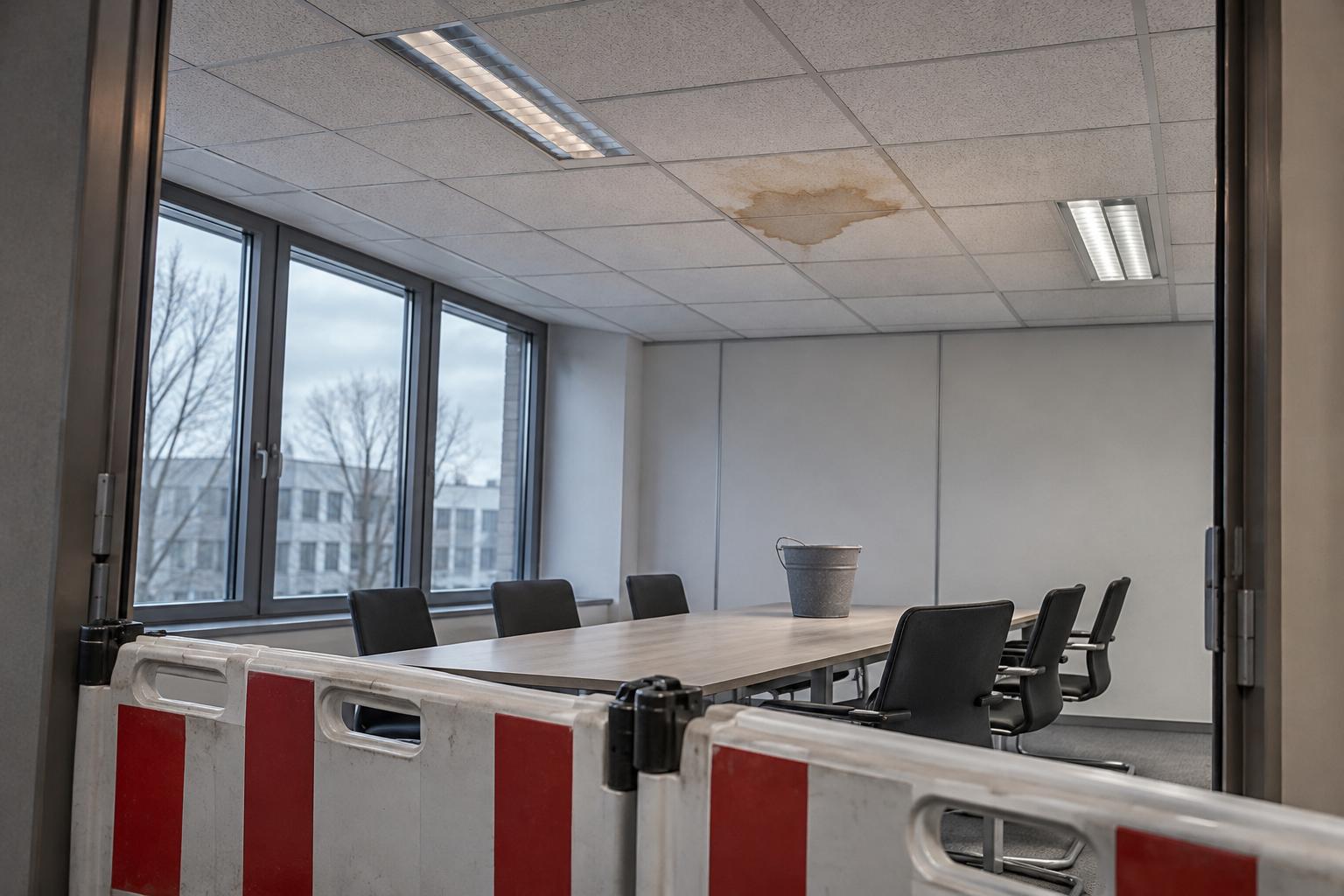
Consider a hypothetical conference room where a stained tile appears after heavy rain. Installing a matching tile may restore appearances while leaving the roof repair unresolved. A useful work order instead connects source correction, affected-material decisions and the follow-up inspection.
Before approving completion, request photographs, the repair description and documentation of remaining concerns. Identify who will check the area after another rain or relevant operating cycle. Record the agreed contact if staining, odors or moisture return. Include the affected room and inspection date.
Communicate the room’s status to tenants and staff without describing a visual improvement as a safety clearance. Relevant professionals and authorities determine what assessments or approvals the property requires.
NDR’s Commercial Property Recovery coverage follows related repair coordination. Give the contractor a documented problem to solve, then verify the source repair and follow-up plan before treating new ceiling tiles as a completed recovery.