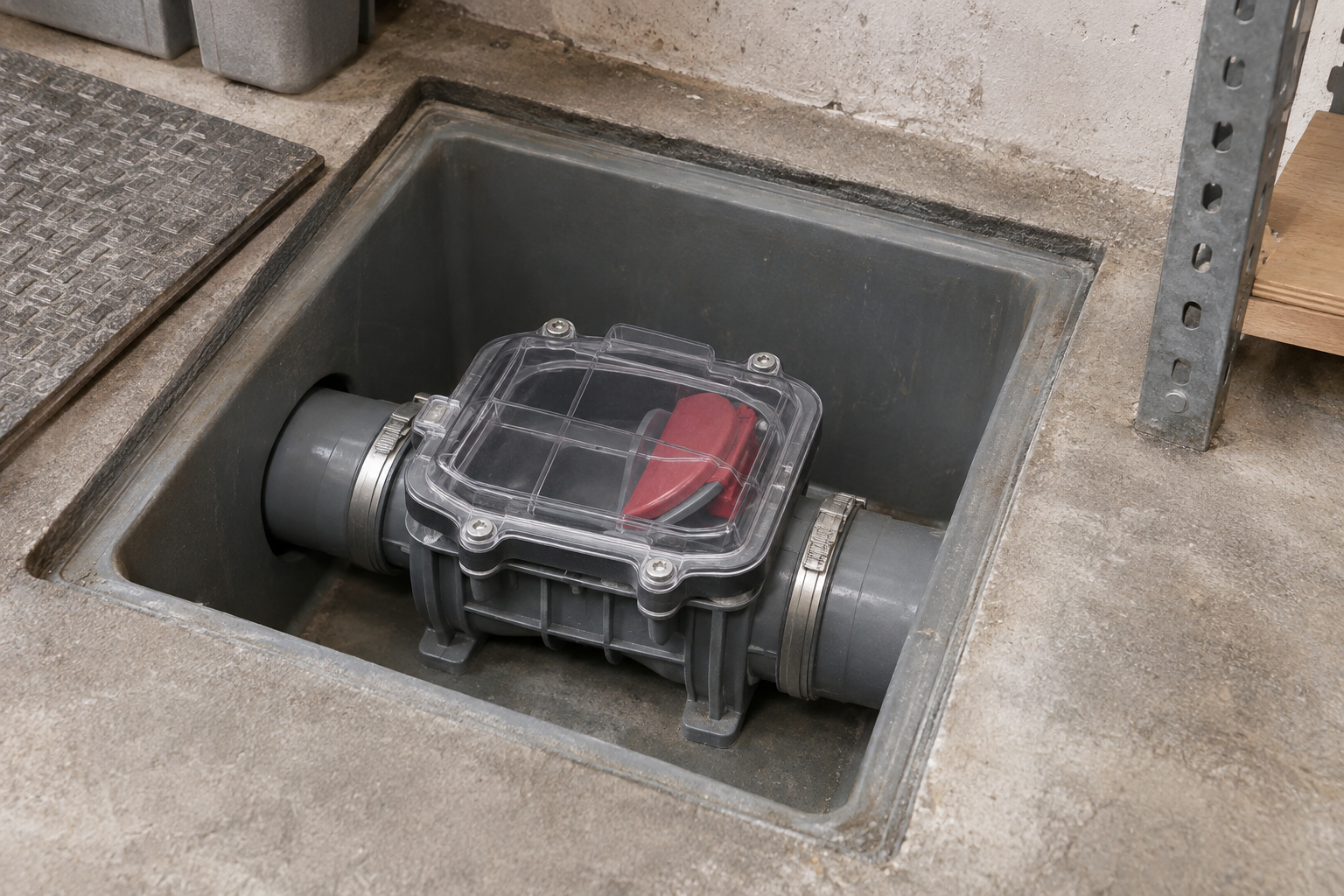
Establish whether the device fits the problem
Before installing a backwater valve, ask a licensed plumbing professional to determine the cause of previous backups and whether the device is appropriate for the property. A valve is one potential measure within a plumbing system; it does not address every way water can enter a building.
Public Safety Canada’s technical guidance describes backwater valves as devices that allow wastewater to leave and close against reverse flow. It distinguishes different valve types and emphasizes professional selection and installation. That explanation is useful background; Canadian code references do not establish requirements for a U.S. property.
For a U.S. installation, ask the local plumbing or building authority about applicable permits, inspections and device requirements. Have the plumber coordinate those requirements with the existing drainage arrangement and manufacturer instructions. Avoid buying a valve solely because its package mentions flood protection.
Make the assessment specific
Describe where backups occurred, what fixtures were affected and what was happening at the time. Provide previous plumbing reports if available. Ask the plumber to distinguish a blockage, a public-system surcharge and other possible causes rather than treating every wet basement as the same problem.
Request a proposal identifying the recommended device, installation location and access needed for inspection and maintenance. Ask how the work affects existing pipes and finished surfaces, what testing or inspection follows and who will explain normal operation after installation. Those details belong in the scope before work begins.
A hypothetical basement renovation may make a valve accessible today but bury its access beneath future flooring or cabinetry. Coordinate the plumbing plan with the rebuilding team so the maintenance location stays usable. A neat finish should not erase access that the installed system requires.
Ask what household members should do when the valve closes. Public Safety Canada notes that continued water use can create a backup on the building side of a closed valve. Have the installer explain the implications for the selected model and connected fixtures rather than relying on general advice alone. Include access requirements when discussing the project with a rebuilding contractor.
Plan for ownership after installation
Keep the model, installation record, instructions and inspection documentation together. Ask the installer to identify maintenance tasks, warning signs and the appropriate service interval. Follow the actual product instructions and local professional advice; a generic calendar reminder is not a substitute for the required work.
If the property changes hands or tenants change, make the system information available to the responsible people. Identify who arranges service, reports a problem and keeps the access clear. An installed device without an ownership plan can be overlooked until the next incident.
Continue evaluating other water pathways separately. Surface drainage, foundation conditions and plumbing connections may need their own assessments. Do not interpret the presence of a valve as assurance that flood insurance, drainage work or emergency planning is unnecessary.
NDR’s Rebuilding & Prevention guides address related improvements. Start with a diagnosis and a written installation-and-maintenance plan. The important result is a suitable, accessible system whose operation the responsible people understand, not simply another device beneath the floor.