Assess before choosing a finish
After a clean-water leak reaches a wood floor, document the affected materials and moisture conditions before deciding whether to refinish, repair or replace them. A surface that looks better after wiping is not a complete assessment of the flooring assembly or the space below it.
EPA’s clean-water response guidance recommends prompt moisture removal and drying for wood surfaces, with caution about applying heat to hardwood floors. Its table addresses response within 24 to 48 hours to help prevent mold. It does not provide a universal salvage decision for every flooring product.
The water source matters. EPA cautions against using fans before determining that water is clean or sanitary, and contaminated-water situations require different precautions. If contamination, electrical concerns or unsafe access are possible, have professionals resolve them before beginning ordinary drying or inspection activities.
Ask for a material-specific record
Identify whether the floor is solid wood, engineered wood or another product. Record the affected rooms, discovery time, changes and product details. Ask the restoration professional how the subfloor and adjacent materials will be assessed, not just the exposed walking surface.
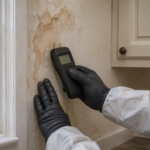
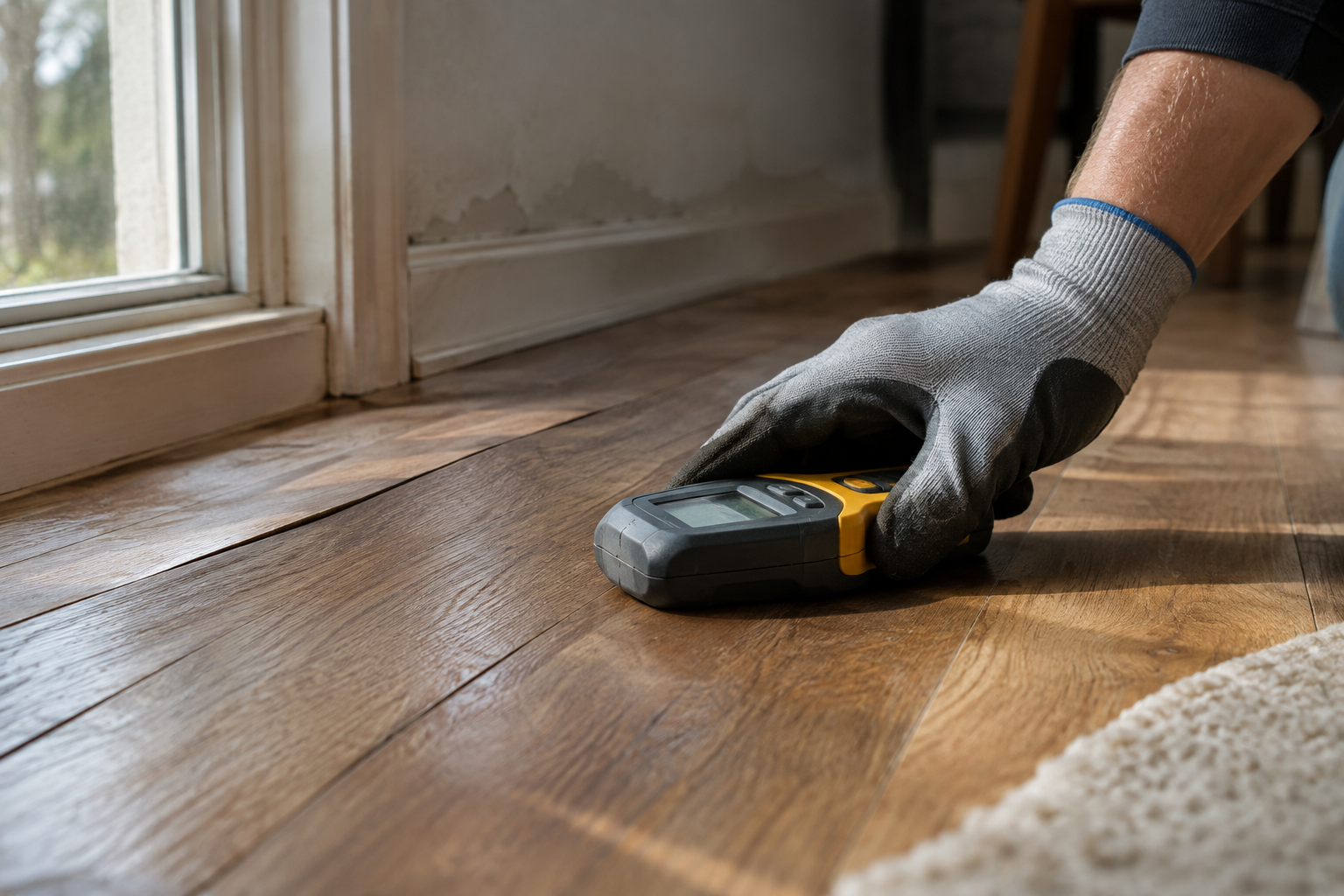
A moisture reading is a measurement at one location. Ask what instrument was used, where readings were taken and what comparison supports the interpretation. Avoid treating one number or an unmarked photograph as a complete record of the affected area.
In a hypothetical kitchen leak, the visible wet area may end near a cabinet while the assessment identifies moisture in an adjoining floor section. The useful question is how the team established the extent, rather than whether the entire floor looks equally damaged. Document the answer before selecting a cosmetic repair.
Ask the flooring contractor to distinguish drying decisions from finishing decisions. The product, installation method, observed damage and manufacturer guidance may affect the proposed work. A restoration contractor and flooring specialist may need to coordinate their assessments rather than issue unrelated recommendations.
Compare the proposed outcomes
Request a written explanation of the intended outcome: retain the existing floor, replace selected material or evaluate a larger replacement. Ask what remains uncertain and what additional inspection or drying information could change the recommendation. This makes competing estimates easier to compare on the same scope.
Clarify how transitions, adjoining rooms and access beneath cabinets are addressed. These are planning questions, not permission to remove fixtures or disturb concealed materials without assessment. Older assemblies may require additional investigation before invasive work proceeds.
Keep photographs and moisture records with the repair proposal. Record when the source was corrected and who will review the floor again. If new staining, movement or odors develop, provide those observations to the responsible professional rather than assuming the finishing work solved the underlying problem.
Insurance approval and technical suitability are separate matters. Ask the insurer about documentation requirements while qualified contractors explain the material assessment. Neither a payment estimate nor a surface appearance should stand in for the other decision.
NDR’s Water Damage guides cover related moisture decisions. Begin with a documented assessment of the floor and supporting materials, then choose a repair approach supported by that record.