Define the conditions for return
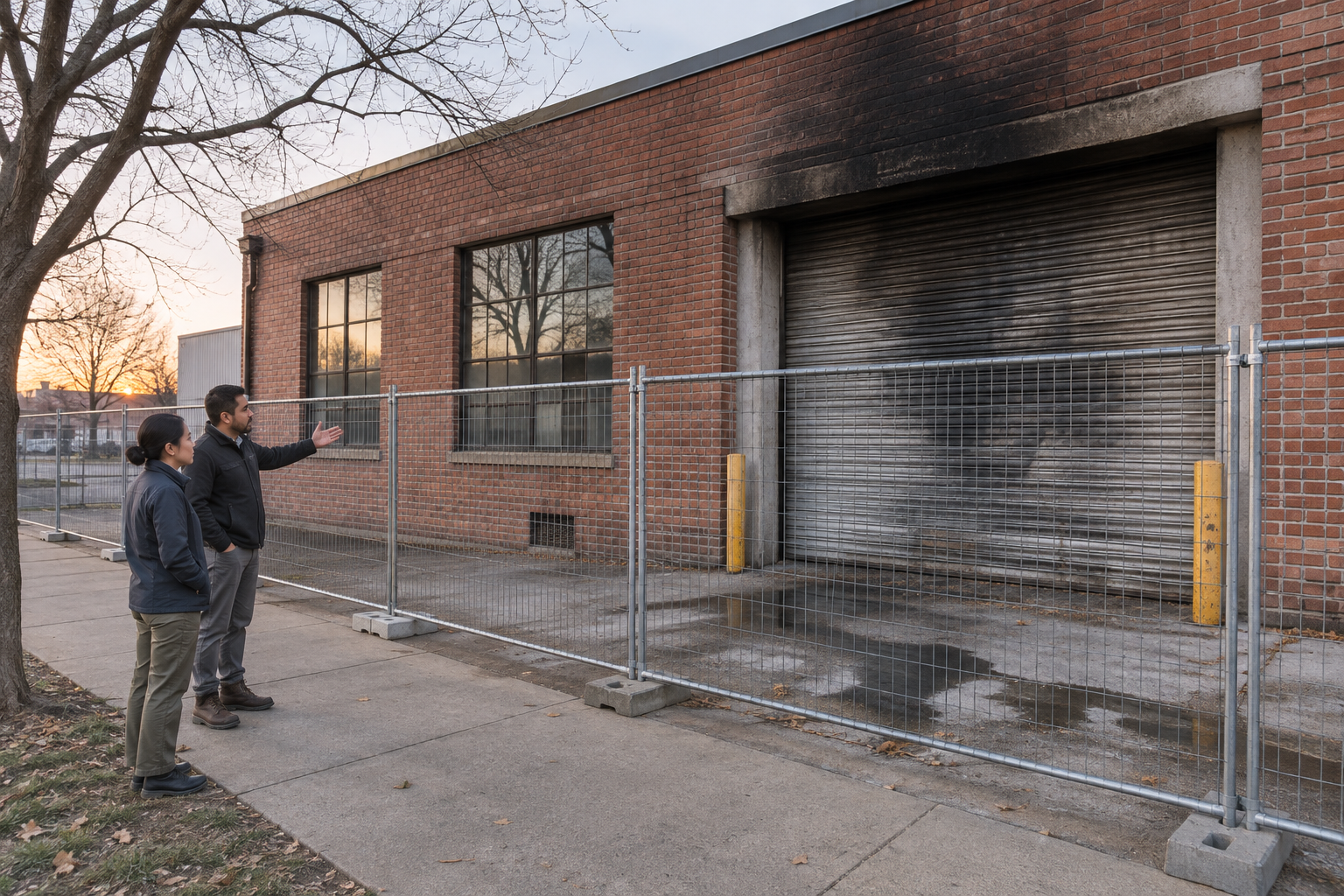
After a commercial fire, treat reopening as a series of documented decisions rather than a target date that drives every repair. Identify who evaluates the structure, building systems and remaining contamination, then record which authorities must approve the proposed use before employees or customers return.
A cleaned storefront is not evidence that concealed systems are ready. Separate permission for a contractor to perform controlled work from permission for normal occupancy. Ask the fire department and local building officials what restrictions, inspections and permits apply to this property and its intended operations.
OSHA’s disaster recovery assessment guidance recommends controlled access until structural stability is known and inspection by a competent person before workers enter. Although the resource addresses hurricane recovery, its structural and utility hazard controls are relevant planning considerations after fire damage. Apply requirements appropriate to the actual job.
Assign each unresolved question
Create a recovery register with five fields: affected area, unresolved issue, responsible party, evidence needed and decision status. Link photographs, inspection reports and contractor proposals to the relevant entry. Mark unknown conditions explicitly instead of letting a scheduled delivery or tenant request imply that they are resolved.
For electrical, gas, ventilation and fire protection systems, identify the qualified specialist and the authority responsible for acceptance where required. Ask what was inspected, what was repaired and which areas remain isolated. A contractor’s invoice and a required inspection approval serve different purposes; retain both when applicable.
OSHA’s wildfire recovery guidance warns that utility restoration and hazardous material cleanup require properly trained, equipped and experienced workers. Its wildfire context should not be confused with a site-specific commercial assessment. Do not assign untrained staff to enter damaged areas or handle residues simply to accelerate reopening.
Connect repairs to operating needs
In a hypothetical retail property, repairs to the sales floor may finish before a shared electrical room is released for use. Record that dependency before announcing a reopening. Ask how the unresolved system affects lighting, alarms, equipment and access rather than assuming the repaired floor can operate independently.
Coordinate owners, tenants and contractors through one current action list. Identify who communicates with customers, receives official notices and authorizes scope changes. Record lease and insurance questions separately for the appropriate advisers; a recovery meeting does not resolve contractual responsibility or establish coverage.
Ask each contractor to describe the intended result, verification method and remaining limitations. Where moisture from suppression efforts is involved, request a documented assessment and drying record. Where concealed materials require investigation, resolve the assessment before authorizing disturbance or covering the affected assembly.
Use NDR’s commercial recovery guides to prepare coordination questions. Keep dated reports and approvals accessible to the people making the reopening decision, with the affected area and permitted use clearly identified.
When responsibilities change, update the register and notify affected teams. Record who accepted each handoff so a departing contractor’s unfinished item does not disappear from the recovery plan.
Before setting the public date, review every unresolved entry with the responsible professionals. Reopen only when the relevant assessments and authorizations support the planned occupancy and operations.