Separate the immediate decision
After a house fire, distinguish urgent property protection from the larger restoration contract. Before authorizing work, confirm who may enter, what the contractor will do and how charges will be documented. An emergency visit should produce a clear record, even when the final repair scope remains uncertain.
The U.S. Fire Administration’s recovery guide advises residents to check with the fire department before entering a damaged home. It also recommends contacting the insurer promptly and obtaining written cleaning estimates. Permission to enter does not settle which belongings can be restored or what repairs require further assessment.
Ask the responding authority about access restrictions and utility status. Do not restore disconnected utilities yourself. Keep children and pets away from damaged areas. Arrange temporary housing and essential medications before trying to manage every repair decision at once.
Make the authorization specific
For emergency protection, ask the contractor to identify the openings, rooms or materials involved, the proposed measures and the price or billing method. Clarify whether the authorization covers only securing the property or also allows demolition, contents removal, equipment rental and continuing services.
Request a contact name, an expected update time and a process for approving additional work. Ask which charges continue daily and how equipment removal will be recorded. These questions help establish responsibility; they do not establish what an insurer must reimburse.
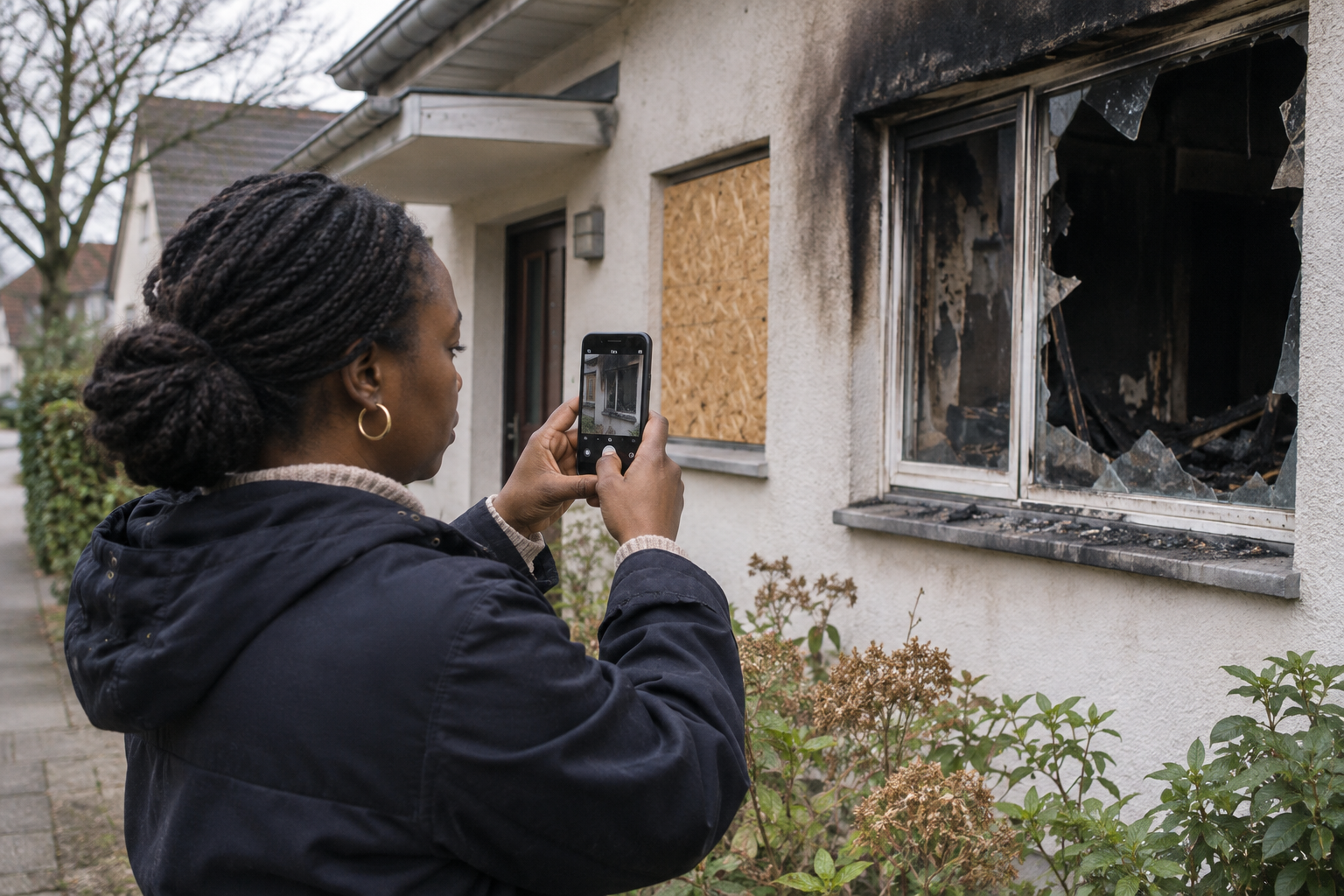
When access is permitted, photograph conditions without handling damaged items unnecessarily. The American Red Cross’s home fire guidance advises staying outside fire-damaged homes until local fire authorities say it is safe to re-enter. Keep records with estimates, messages and receipts rather than relying on memory.
Compare decisions, not just totals
In a hypothetical kitchen fire, one proposal might cover boarding a window and documenting affected rooms, while another includes removing cabinets and transporting belongings. Comparing their totals alone misses the difference. Ask each company to separate immediate protection, assessment, cleaning, storage and reconstruction.
For belongings leaving the property, request an inventory identifying each item, its condition, destination and proposed treatment. Ask how storage charges, access requests and decisions about unsuccessful cleaning will be handled. Keep a copy before the items leave whenever circumstances allow.
Ask what evidence supports cleaning rather than replacement and what remains unknown. A written proposal can identify additional inspection or testing without pretending every concealed condition is already understood. Discuss payment timing and disputed items with the insurer; coverage depends on the policy and circumstances.
Before signing, review exclusions, cancellation provisions, change orders and responsibility for permits. Use NDR’s contractor selection guidance to organize follow-up questions. Do not let an urgent protective measure become an unexplained authorization for the entire rebuild.
If a price is provisional, ask which assumptions could change it and when a revised estimate will arrive. Write down whether you are approving an inspection, a proposed treatment or a completed repair. Those are distinct decisions with different information needs and financial consequences.
Choose the next documented step: approved access, a limited protective scope or a fuller assessment. Keep the authorization and supporting records together so subsequent decisions build on evidence.