A repaired foundation does not automatically solve the water-management problem that contributed to the repair. Before new landscaping hides the site, observe where ordinary rain goes, where it pauses and whether it moves toward the building.
Start with documented conditions
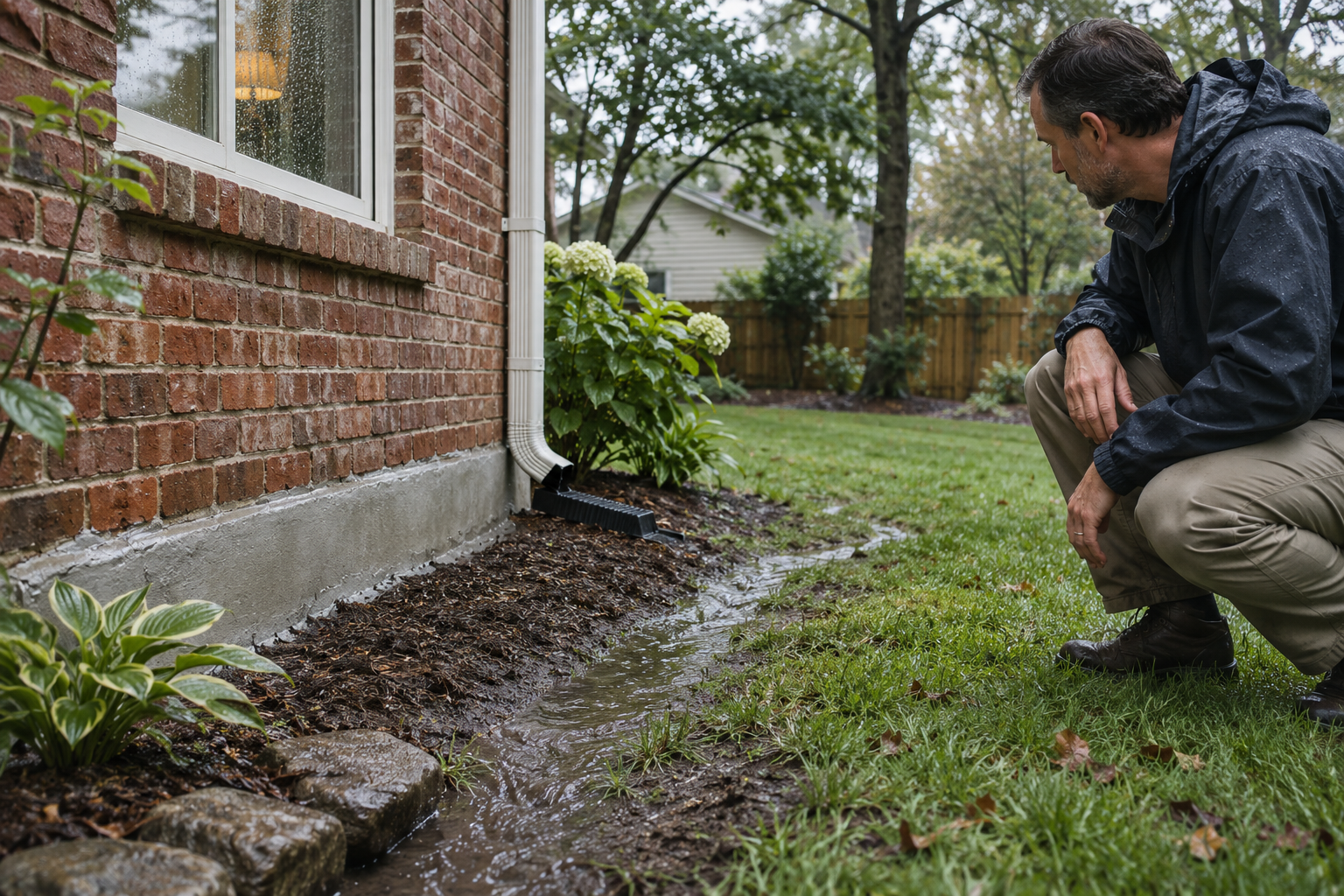
Walk the perimeter during a light rain or soon after it ends without entering slippery or unstable areas. Note downspout discharge, low spots, window wells, paved edges and water that reaches the foundation. Take comparable photos after several events.
The Department of Energy’s home-maintenance guidance includes attention to exterior drainage. Local soil, slope, utilities, codes and neighboring properties affect what a suitable solution looks like, so do not copy a generic grading plan.
Keep the next decision clear
Coordinate before adding a patio, garden bed or mulch. New material can alter grades or direct water differently. A finished landscape that looks level from a patio can still create a shallow path toward a basement wall. Qualified local help may be appropriate.
Keep repair documents with drainage observations. Report persistent ponding, seepage, cracks or settlement promptly. This is not a design instruction or safety clearance; it is a way to preserve visibility of the water path before a finished yard obscures the evidence.
Questions that keep the response useful
Create a short written timeline for after foundation repairs, check whether the ground still moves water away from the home. Include the first observed condition, contacts made, access limitations, temporary protections, information still being confirmed and the date of the next review. A precise timeline helps separate facts from assumptions when several people are responding at once.
Use questions that invite a specific answer: What is known? What cannot yet be determined? Who owns the next decision? What document or observation will change that decision? This approach is more useful than a broad request for reassurance and makes later communication easier to check.
Keep the advice proportional to the condition. Local rules, contract terms, policy language, building systems and safety hazards can change the appropriate response. Where a qualified professional, authority or insurer must decide, preserve that limit rather than treating general guidance as a clearance or guarantee.