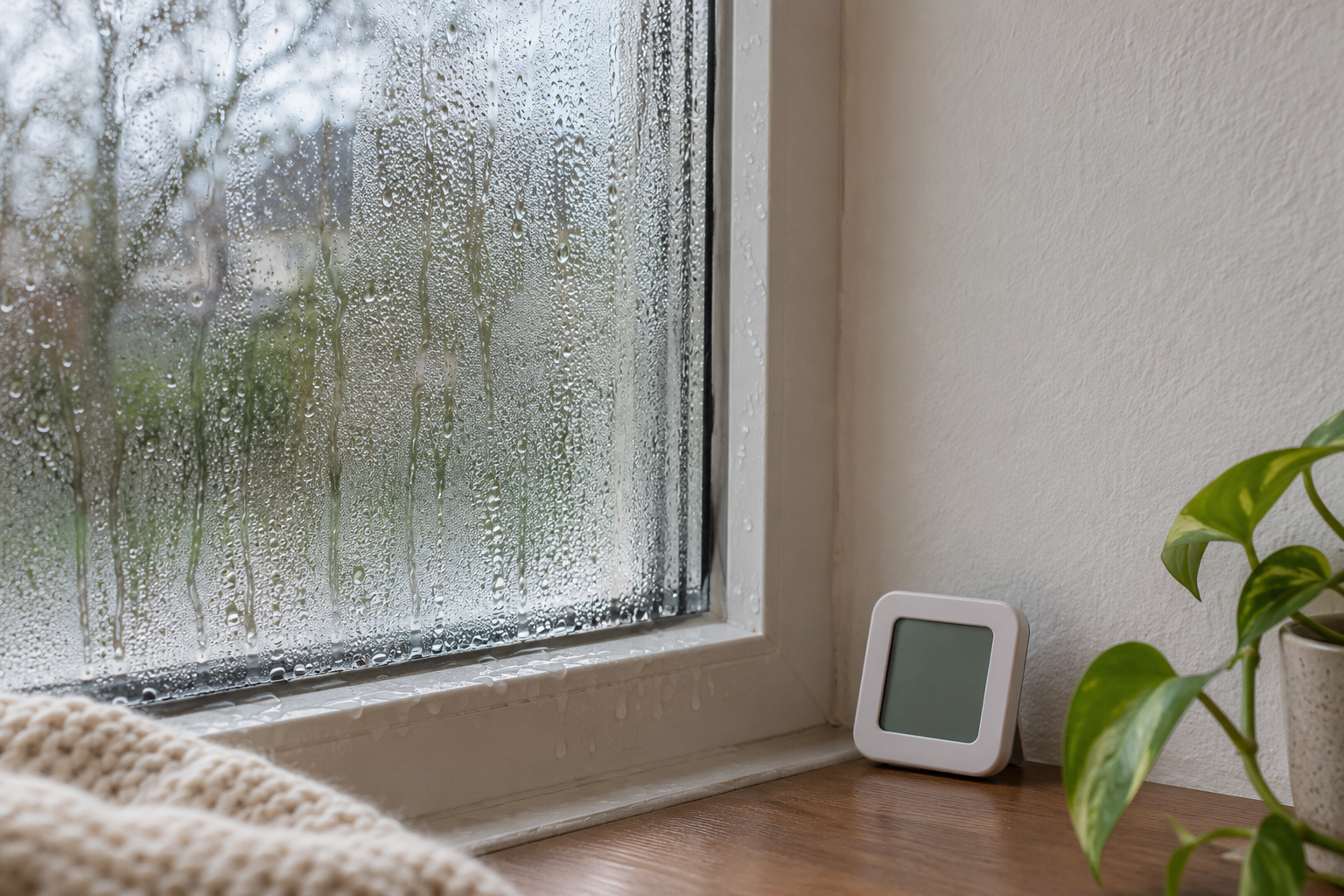
Moisture on a wall or window is evidence, not a diagnosis. Condensation, plumbing failure, roof intrusion and outdoor water can leave different patterns, but one photograph rarely identifies the cause. Start by documenting when and where the moisture appears before opening a wall or choosing a repair.
What to establish first
Note weather, room use, ventilation, the location of pipes and whether the condition follows rain, showering, cooking or temperature changes. Photograph the area over several days from the same position. EPA’s moisture guidance emphasizes finding and correcting the water problem rather than repeatedly treating the visible symptom.
Look for limits on a do-it-yourself response. Persistent staining, soft material, a musty odor, recurring wetness, a suspected concealed leak or potentially contaminated water can require qualified evaluation. Do not assume that surface drying establishes that the cavity, insulation or adjacent framing is dry.
Keep decisions traceable
In a hypothetical bathroom, moisture that appears only during showers may point to ventilation or use patterns, while a wet area that continues when the room is unused needs a different inquiry. The observation does not settle the cause; it helps a plumber, building professional or restoration provider ask a more focused question.
Keep the record with repair invoices and any claim file. The appropriate solution depends on the building, climate, source and local requirements. The first useful action is to map the moisture pattern, reduce the source where safe and avoid sealing or painting over evidence before it is understood.
Document the next review
Use a simple decision table for condensation or a leak? start with the moisture pattern before opening a wall: observation, immediate protection, responsible person, information still needed and next review time. It helps distinguish a prudent precaution from a final conclusion and explains why the sequence changed.
Keep primary-source guidance close to consequential choices, but preserve its limits. General guidance cannot inspect this property, interpret a contract or determine local compliance. Record the question for the appropriate qualified party instead of converting uncertainty into reassurance.
Before closeout, compare the result with the first record: confirmed condition, authorized work, remaining monitoring and documents to retain. That turns the response into useful information for the next decision.
The next action should match the evidence and the role of the person taking it. Document that connection, then recheck conditions when the expected information arrives.
Before the next step
A practical review also asks what could make the condition worse before the next checkpoint. Protect the area, preserve the relevant record and communicate any restriction to the people who need to know. Avoid expanding the response beyond confirmed authority simply because the situation is inconvenient.
If new information conflicts with the initial understanding, revise the record rather than trying to fit it into an outdated explanation. Changes in access, moisture, source conditions, approvals or safety concerns can change the right sequence. A dated revision gives the next decision-maker a clearer starting point.
Finally, make the next review concrete: identify who will check, what evidence they will use and how the result will be communicated. That approach supports prompt action while leaving room for qualified assessment and local requirements.