Water-damaged records can be a continuity issue and evidence for insurers, regulators, clients or litigation. Before cleanup discards boxes, files or devices, identify what must be preserved and who owns that decision. Speed matters, but so does a documented chain of custody.
Start with documented conditions
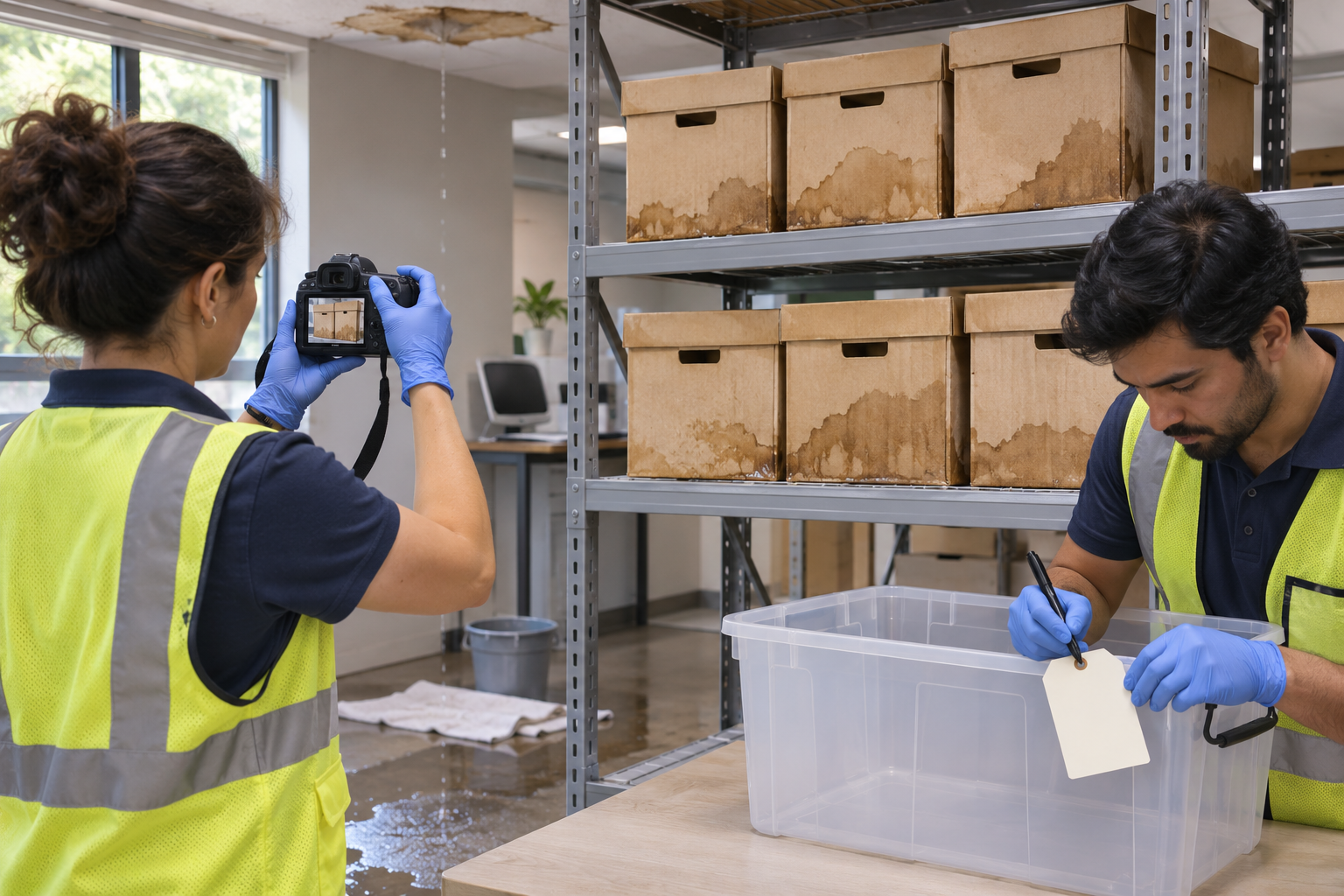
Photograph condition and location, note the water source if known and separate records from routine debris when safe. For electronic media, do not assume a device is usable or disposable based only on its exterior. Follow retention, privacy and legal-hold obligations.
Assign one records contact and one secure staging location. In a hypothetical office leak, the property manager may control access while a tenant decides which files need preservation. Those are different responsibilities. Record transfers, vendor pickups and disposal authorizations.
Keep the next decision clear
EPA’s moisture guidance supports prompt drying and correction of the water problem; extensive or contaminated damage may require qualified help. Recovery does not make a record automatically safe, complete or admissible.
Keep preservation decisions separate from any reopening decision. A short log of what was found, who handled it and where it went helps the organization explain its actions after the urgent cleanup phase ends.
Questions that keep the response useful
For records recovery, keep supporting records together and date each update. Clear records make it easier to compare new information with the initial condition, while avoiding conclusions that the available evidence cannot support.
The practical next step is to confirm responsibility, save the relevant evidence and agree on the next checkpoint. That is a durable recovery practice whether the issue is resolved quickly or requires further review.