Restoration & Service Businesses in Kentucky
Find the right fit for your property
Filter by service and location, then select up to three providers to compare contact details, recorded coverage and source-check status.
Our listing criteria & source-check process · Source checks cover the named facts, not workmanship or licensing.
Compare providers
Select providers below to start a comparison.
Browse cities served in this state
8 businesses
Louisville, KY
1-800 WATER DAMAGE of East Louisville
(502) 547-9126View business →Not yet source-checked
View comparison ↑Louisville, KY
Absolute Services
(502) 221-3735View business →Not yet source-checked
View comparison ↑Louisville, KY
BELFOR Louisville
502.893.7059View business →Not yet source-checked
View comparison ↑Ashland City, KY
Lightspeed Restoration of Ashland
Cleaning Services · Fire Damage Restoration · Mold Remediation · Storm Damage Restoration · Water Damage Restoration
(606) 896-2084View business →Not yet source-checked
View comparison ↑Nicholasville, KY
Paul Davis Restoration & Remodeling of Lexington Inc
859-350-1660View business →Not yet source-checked
View comparison ↑Hermitage, TN
ProTek Crane Solutions
(877) 938-6718View business →Not yet source-checked
View comparison ↑Nicholasville, KY
Rainbow International of Lexington
(859) 272-0066View business →Not yet source-checked
View comparison ↑Louisville, KY
ServiceMaster Cleaning and Restoration by PLH
(502) 804-2345View business →Not yet source-checked
View comparison ↑STORM DAMAGE & PROPERTY RECOVERY
Kentucky: storm damage risks and recovery
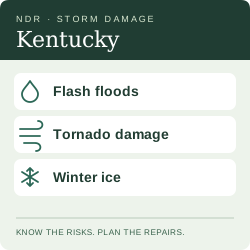
Kentucky storm damage varies between steep eastern watersheds, river communities, urban drainage areas and the more open western part of the state. NOAA identifies flash flooding, severe thunderstorms, tornadoes and winter ice or snow as important hazards. The state's recent flood and tornado history illustrates why recovery cannot be reduced to one seasonal checklist. A property's terrain and the route of water or wind damage should guide the first inspection and the order of repairs.
Local challenges after a storm
In narrow valleys and other runoff-sensitive locations, flooding may affect access, supporting ground and utility connections as well as interior finishes. Ask which site and structural questions need specialist attention before restoration proceeds. Document waterlines, deposited material and exterior openings from safe locations. An estimate focused on extraction should state clearly whether it includes cleaning, material assessment and later repairs, or whether those stages require separate agreements.
Tornado and ice damage create a different coordination problem. A fallen tree or damaged roof can expose a building to additional rain while utility and access issues remain unresolved. Establish who organizes temporary protection, tree removal and any structural assessment. Ask how coverings will be checked if more weather arrives. The contractor should distinguish immediate weatherproofing from permanent roofing and explain which interior areas will be examined for concealed moisture.
Choosing restoration help in Kentucky
Compare Kentucky storm damage restoration providers using written scopes and current coverage for your county. Request equipment and monitoring charges, proposed material removal and the criteria used to verify drying before rebuilding. Clarify the role of electrical, plumbing and reconstruction specialists. Discuss local permit requirements with the responsible building authority rather than assuming emergency cleanup authorizes every later repair. Keep photographs, inspection reports and approved changes together. In communities recovering from widespread damage, confirm the actual crew and communication arrangements; a general promise of rapid response does not establish when work can begin at your property.
For a valley property, describe damaged approaches and nearby deposited debris when scheduling inspections so access and specialist needs are considered from the outset. Before approving changes, ask the contractor to explain the findings, proposed work and any effect on the schedule.
Climate and hazard source: NOAA/NCEI State Climate Summary for Kentucky. The recovery questions are NDR editorial guidance, not a property assessment or a live weather warning. Follow current instructions from local authorities.