Plan around temperature, not guesswork
A power outage food plan starts before anyone is standing in a dark kitchen wondering whether dinner is still safe. Decide how the household will keep perishables cold, where supplies are stored and who will track the interruption. A cooler bought during the last storm is useful only if it is accessible and has an effective cold source ready.
The Centers for Disease Control and Prevention recommends appliance thermometers, a refrigerator at 40 degrees Fahrenheit or below and a freezer at zero or below. Check those conditions while power is available. Put frozen gel packs and containers of frozen water where they can be retrieved efficiently, and identify a cooler large enough for the foods you intend to move.
Give the household a simple sequence
When power fails, record the time and keep refrigerator and freezer doors closed. CDC says an unopened refrigerator can keep food safe for up to four hours. A full freezer can hold safe conditions for up to 48 hours, compared with 24 hours for a half-full freezer, when doors remain shut. Those estimates depend on keeping the cold inside.
Before an emergency, agree who will check utility updates and who will handle food decisions. Avoid having several people repeatedly open the refrigerator to inspect the same shelves. A paper note on the outside can record the outage time without requiring anyone to find a charged phone or remember what happened overnight.
Rehearse the cooler step
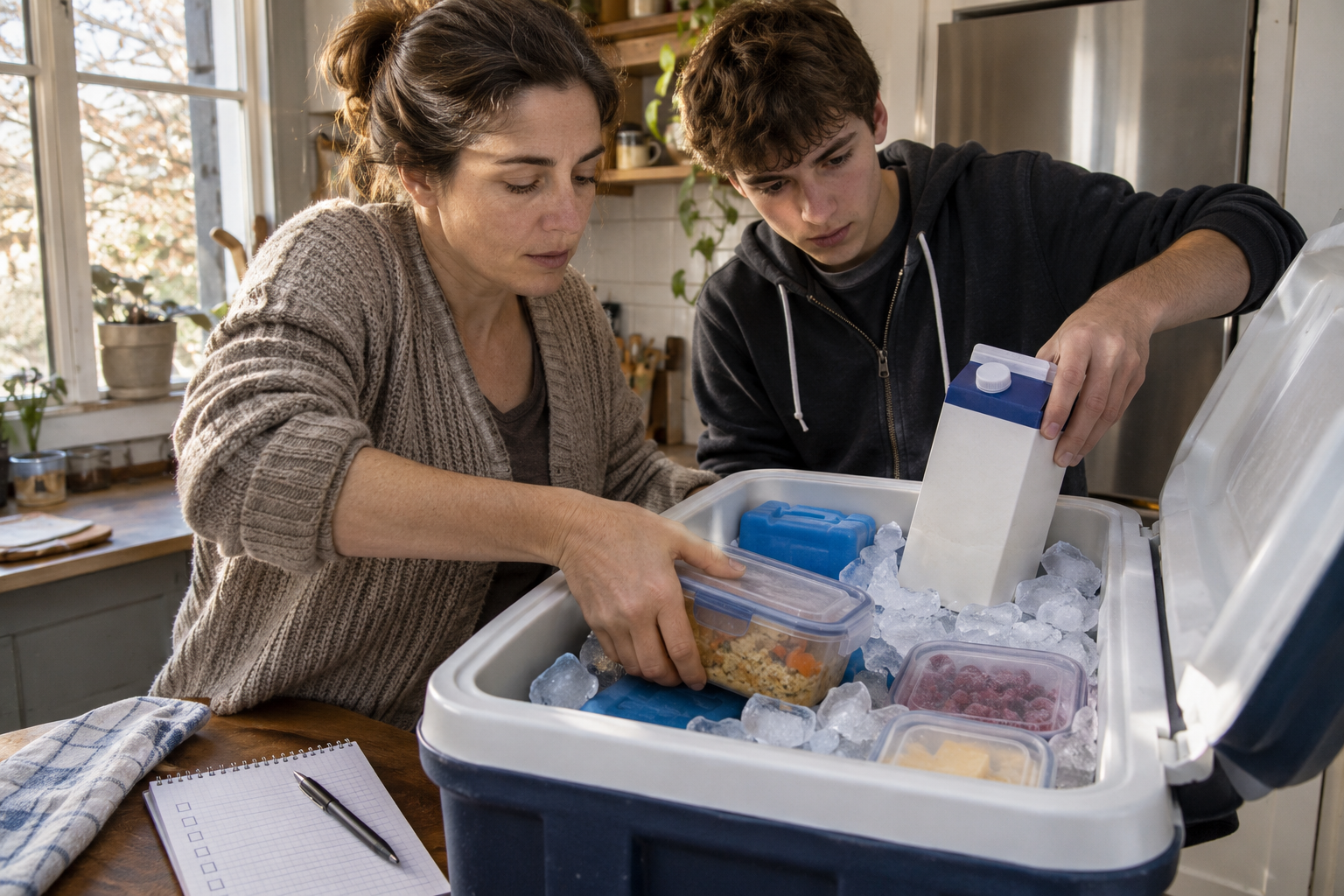
CDC advises moving refrigerated perishables to a cooler with ice or another cold source if the outage reaches four hours and those supplies are available. Keep the food at 40 degrees or below. Practice the arrangement beforehand using sealed containers, so the household knows which cooler, packs and thermometer belong together and where the supplies fit.
The Food and Drug Administration also recommends grouping frozen foods together and identifying sources of ice before a prolonged outage. Plan for the practical limits: Cooler space is finite, ice supplies can be uncertain and travel may be unsafe. Do not make an emergency shopping trip the only step between the household and a workable food plan.
Make the return-to-power decision carefully
Never taste food to decide whether it is safe. CDC advises discarding refrigerated perishables after four hours without power or a cold source. FDA notes that appearance and odor alone cannot establish safety and that inadequate refrigeration can leave food unsafe even after thorough cooking. Follow the agencies’ item-specific guidance when deciding what to discard or refreeze.
Add the food plan to your broader household preparation, alongside NDR’s emergency communication plan practice. Assign one person to replace used ice packs and review the cooler after an outage. A brief review can reveal whether the plan matched your actual groceries and storage space. Prepare the supplies now, while the kitchen is bright and decisions are unhurried. Set a reminder to check the supplies before the next busy season. A cooler repurposed for a picnic or packs left elsewhere can undo an otherwise sensible plan. Make the final check a household task with an owner and a specific date.
Sources and editorial note
Prepared Nov. 5, 2026. Original practical guidance informed by the following primary sources, checked for this article. This article does not describe a specific customer or event.