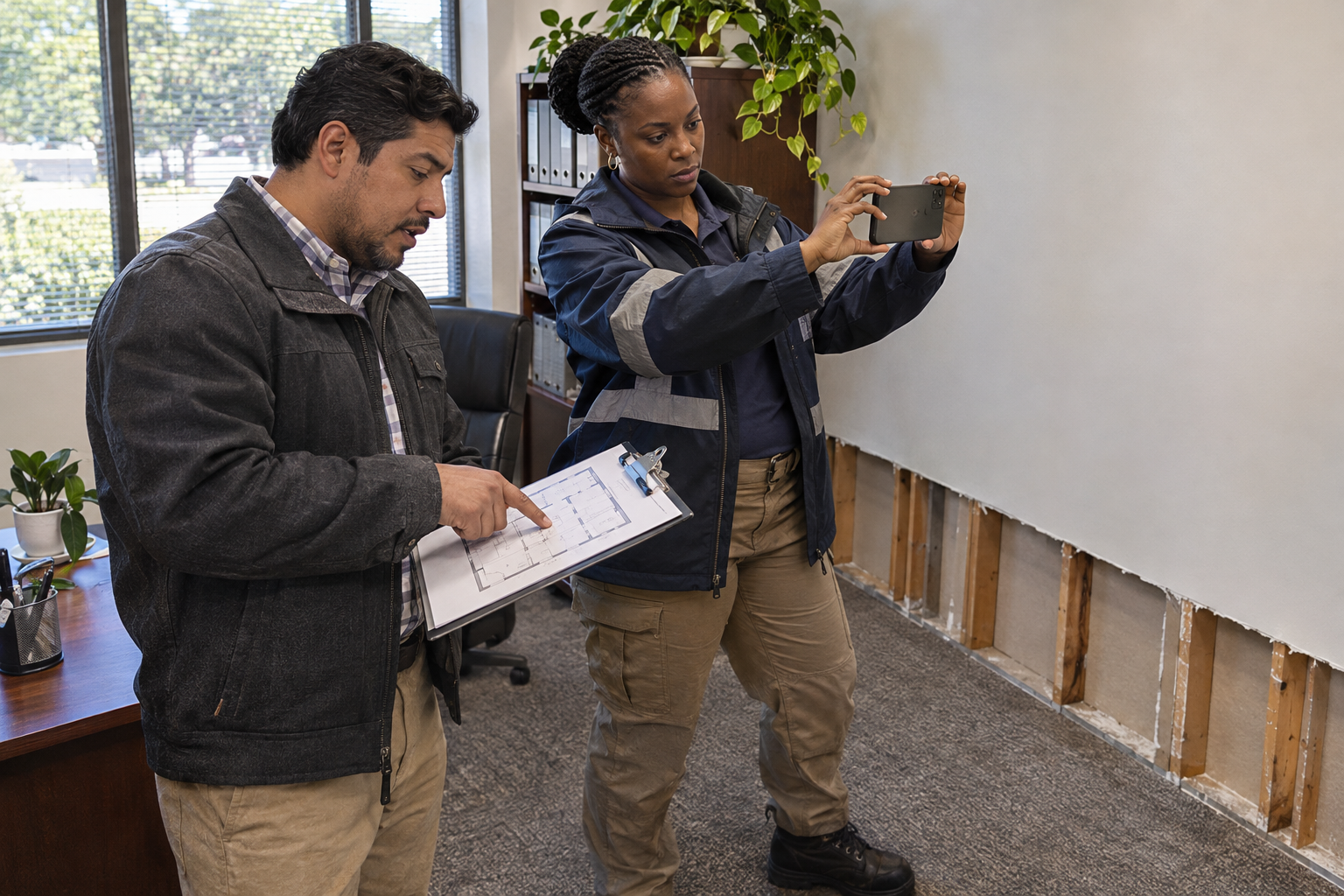
A commercial property repair handoff should tell the next team what was observed, what has been authorized and what remains unresolved. A folder of photographs is useful evidence, but it does not assign the next action. Organize recovery information around decisions so owners, tenants and contractors can work from the same record.
Give every area a consistent identity
Create a room or zone list using names that match the floor plan. For each area, record the observation date, affected materials, photographs and the person responsible for follow-up. Keep observed conditions separate from a contractor’s proposed treatment or an unconfirmed explanation of the damage.
Michigan’s insurance regulator advises commercial policyholders to preserve estimates, invoices, receipts, photographs, inventory records and relevant expense documentation. That guidance supports organized records; it does not establish coverage under a particular policy. Keep the originals and link working notes to the corresponding evidence.
Separate work status from permission
Use distinct entries for emergency stabilization, assessment, proposed repairs, approved work and completed work. Identify who can authorize changes under the applicable contract or lease. Record questions about permits, inspections or tenant access instead of allowing an empty field to imply approval.
For example, a hypothetical office manager might mark carpet removal complete while leaving subfloor readiness unresolved. The handoff should name the contractor responsible for that assessment and the decision needed before replacement, rather than describing the entire room as finished.
Close the loop on the next decision
The Environmental Protection Agency warns that damaged buildings can contain contaminated floodwater and hazardous materials, including asbestos. A handoff document is not a safety clearance. Leave suspected hazardous materials undisturbed and obtain the appropriate professional assessment before scheduling work that could disturb them.
Share the working handoff with the people who need it, while limiting access to tenant records and sensitive business information. Confirm that each contractor understands the current version before starting a newly approved stage of the project.
At each coordination meeting, review open decisions, name the responsible person and agree on the next update. Use NDR’s hiring guidance to clarify scope and authorization with vendors. Finish with a dated summary of changes, and retain earlier versions so the record shows how the repair plan developed.