After water reaches commercial heating or cooling components, ask for a material-specific assessment before approving a blanket duct-cleaning proposal. Metal surfaces, internal insulation, filters and mechanical equipment are different parts of the recovery scope. Cleaning one component does not establish that the entire system can return to service.
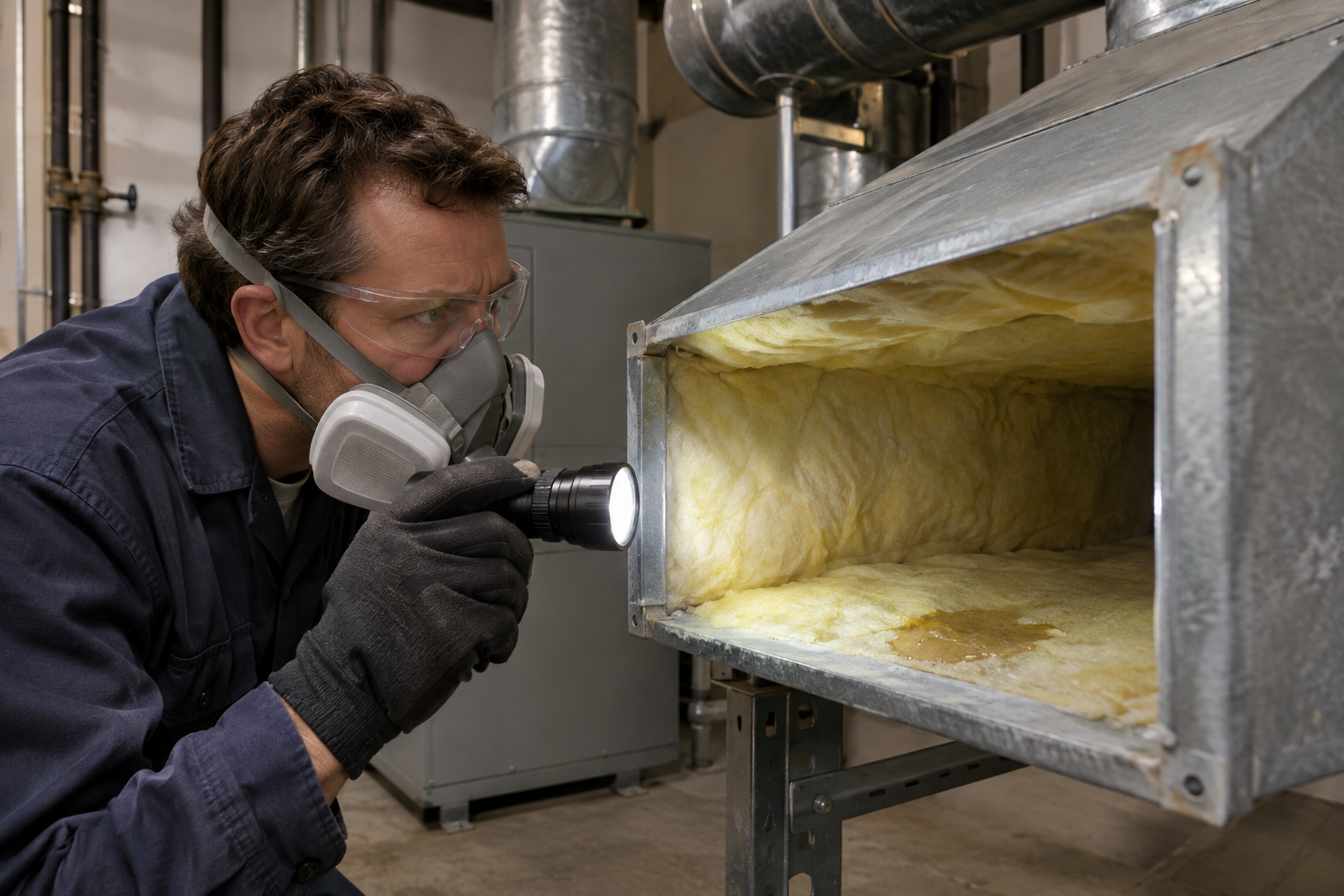
The Environmental Protection Agency’s flood cleanup guidance directs readers to its duct-cleaning information when HVAC ducts are contaminated. Its duct guidance says wet or moldy insulation in insulated ducts cannot be effectively cleaned and should be removed and replaced. Commercial systems still require qualified assessment of their specific construction and operating requirements.
Locate the affected components
Ask the HVAC professional to identify where water entered, which components were exposed and what inspection access is available. Request photographs tied to locations. An image of one accessible section does not describe an entire building, and the absence of visible damage at a register does not settle concealed conditions.
For a hypothetical ceiling leak above a tenant suite, the scope might include both building repairs and duct insulation decisions. Ask who coordinates those trades and prevents renewed moisture exposure. Replacing a damaged section without correcting the source leaves an important recovery task unresolved.
Discuss isolation, inspection and restart with qualified personnel. Do not operate suspect equipment simply to dry the building or test airflow. The appropriate sequence depends on electrical condition, contamination, component requirements and other building constraints. This article does not provide a restart authorization.
Request a clear handoff
Require the proposal to distinguish inspection, cleaning, material replacement and verification. Ask what remains uncertain, who will resolve it and what documentation the facilities team will receive. Avoid accepting unsupported health or efficiency guarantees as a substitute for that scope.
Include the locations of replaced materials in the handoff record. That detail helps a later technician distinguish previously affected sections from untouched areas instead of treating the entire system as having the same repair history or condition.
Browse NDR’s Commercial Property Recovery guides for related coordination decisions. Before authorizing work, establish the component list and responsible professionals so the owner, tenant and repair team share the same understanding of what is being restored.