Look beyond the visible panel
A wall advertised as water resistant is not automatically a suitable flood recovery choice. Ask how the complete assembly handles flood exposure, drainage, cleaning and drying, and confirm the requirements that apply to the building before choosing replacement materials.
FEMA’s January 2025 Technical Bulletin 2 addresses flood damage-resistant materials under the National Flood Insurance Program. Its definition concerns prolonged floodwater contact, meaning at least 72 hours, without damage requiring more than cosmetic repair. This is not a promise that a finished room will remain usable or that contamination can be ignored.
The bulletin also explains that combining otherwise acceptable materials can create a system that traps moisture or prevents drying. That is why the visible finish cannot answer the whole rebuilding question. The backing, framing, insulation, adhesives and connections deserve attention too.
Request an assembly-level explanation
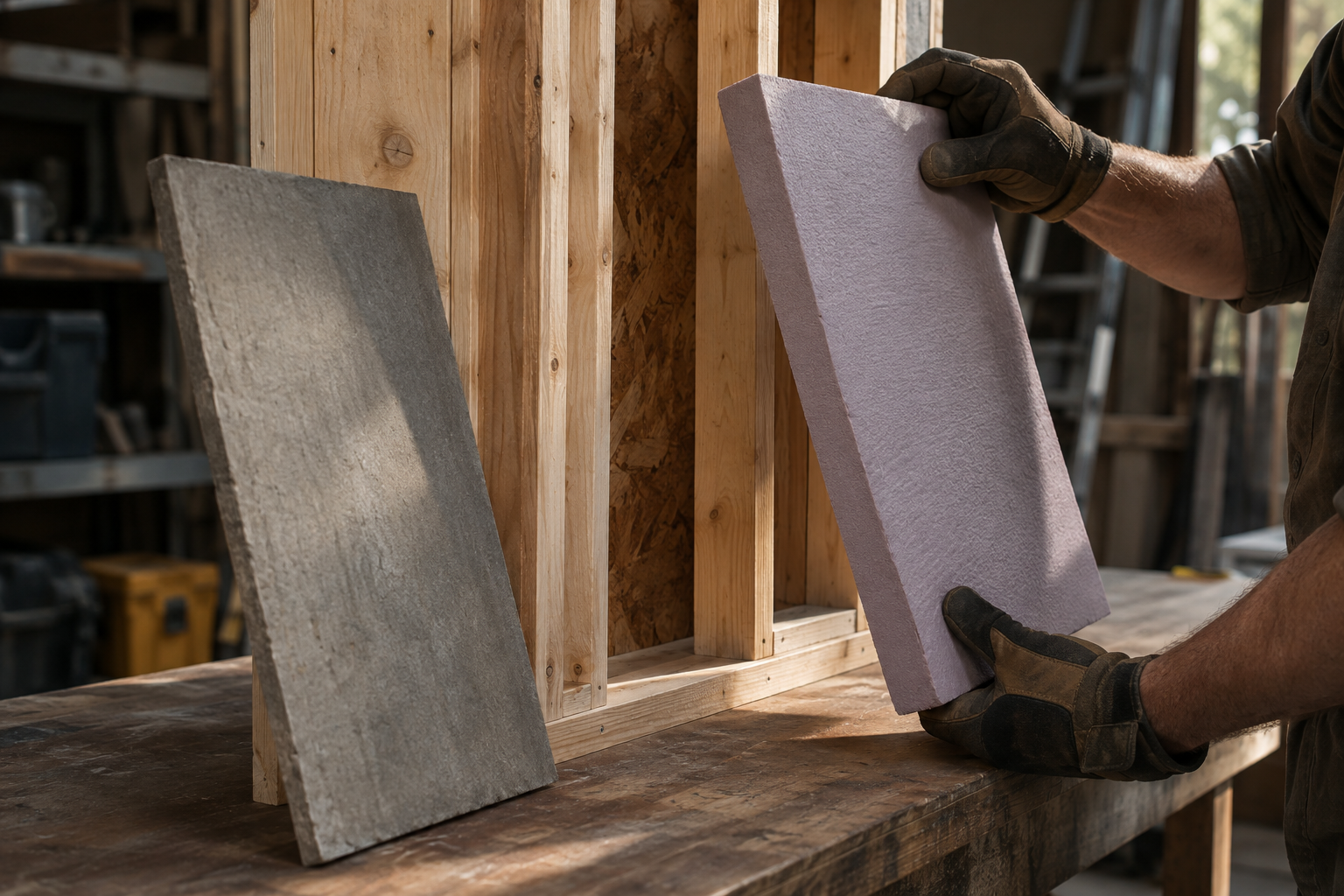
Ask the designer or contractor to describe the proposed wall from the exposed surface to the structure behind it. Identify which components would be accessible after another flood, which might require removal and how the assembly would be evaluated before closing it again.
Consider a hypothetical owner comparing two wall finishes with similar surface claims. One proposal describes only the panel; the other identifies the supporting materials and the intended drying approach. The second proposal provides more useful information, but its details still need appropriate technical review. A longer specification is not proof of performance.
Request the product names, installation instructions and relevant evidence supporting the proposed use. Ask whether a substitution changes compatibility or the drying path. Keep those documents with the repair record rather than relying on a salesperson’s description or a sample displayed in a store.
FEMA notes that its material ratings do not account for certain extended flood exposures or contaminants. A material’s resistance rating therefore does not settle whether an existing contaminated assembly can remain. Qualified assessment and the circumstances of the loss still matter.
Confirm what the rules require
Talk with the local building or floodplain official before ordering materials. Explain the building location and proposed work, and ask which floodplain and construction requirements apply. Technical Bulletin 2 discusses National Flood Insurance Program requirements; local requirements and the project’s regulatory status need separate confirmation.
Use the discussion to resolve responsibilities. Who selects the assembly, who checks its suitability and who documents accepted substitutions? Ask for unresolved conditions to be identified before the purchase becomes difficult to reverse. If another professional’s assessment is needed, make that a clear project step.
Keep published performance claims separate from warranties. Ask what the manufacturer actually covers and which installation or exposure conditions limit that coverage. Save the relevant version of the documentation with the specification, especially when a product name remains the same but its published instructions later change.
Flood resistance is one part of rebuilding, alongside the building’s other performance and code requirements. Keep the material decision connected to the repair plan rather than treating it as a cosmetic upgrade. NDR’s Rebuilding & Prevention guides can help frame questions, but project-specific design and local approval must guide the final selection.