Resolve the material question first
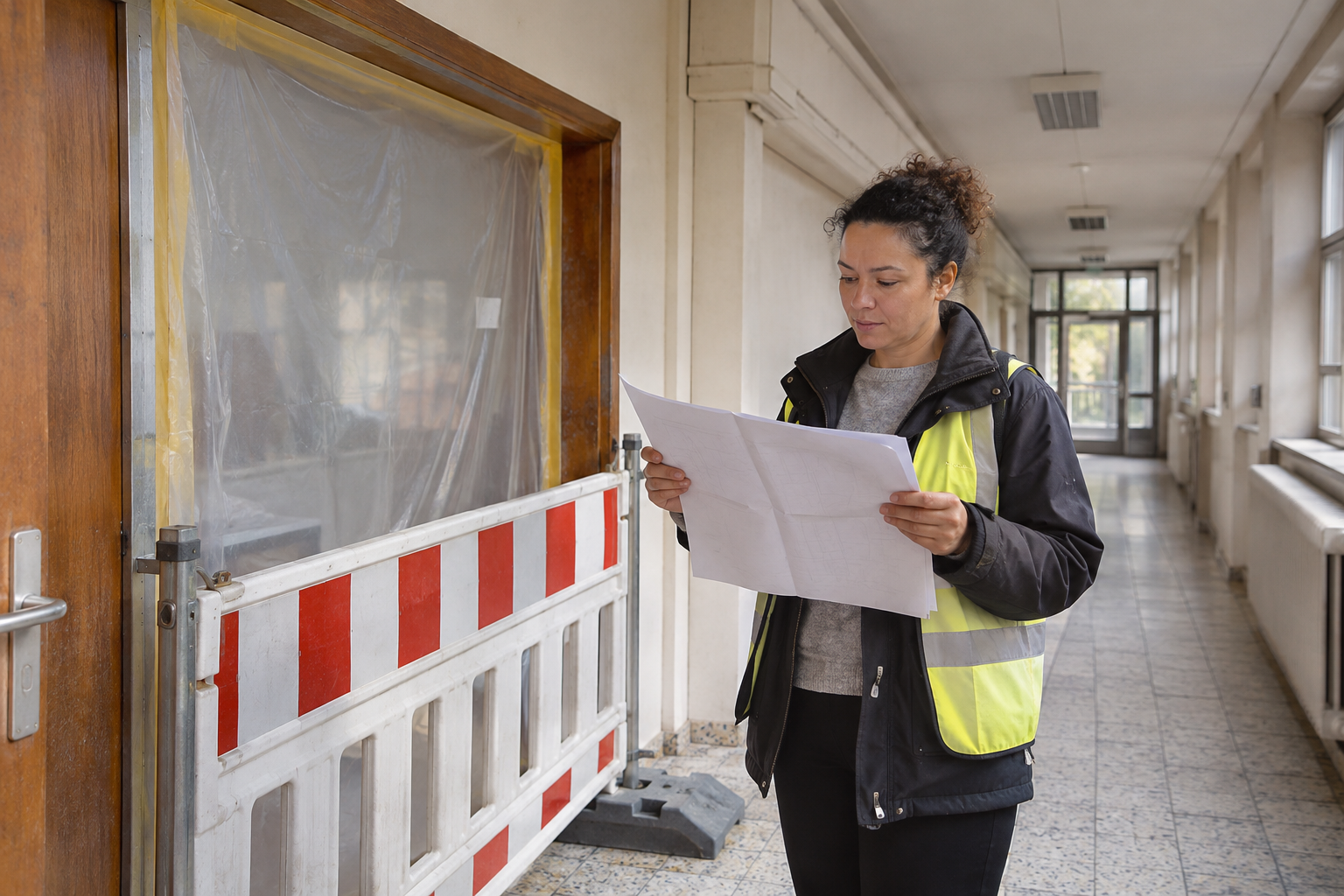
Before commercial repair work cuts, removes or opens existing building materials, have qualified professionals determine whether asbestos requirements affect the planned scope. Damage urgency does not turn ordinary demolition into an appropriate method for investigating potentially regulated material.
EPA’s guidance for building owners explains that federal asbestos rules address renovation and demolition, with requirements that depend on the building and work involved. State and local rules may be more stringent. Schools also have distinct requirements. Do not assume a general commercial repair checklist resolves every applicable obligation.
Tie the assessment to the actual work
Give the assessor a specific description of materials and areas the contractor proposes to disturb. Existing records can help, but ask whether they address the current scope and concealed locations. A report for one room or an earlier project may not answer a different repair question.
EPA identifies accreditation requirements for asbestos professionals working with asbestos-containing materials in public and commercial buildings. Ask the relevant authority and qualified provider which credentials, notifications and work practices apply. Avoid selecting a firm solely because an ordinary demolition quote says hazardous materials are excluded.
Consider a hypothetical office recovering from a pipe leak. Removing damaged finishes may affect adjacent flooring or insulation that was not included in the emergency drying assignment. The property manager should connect the revised scope to the asbestos assessment before authorizing additional disturbance. Ask who will communicate the findings to tenants and explain any work-area restrictions before the next trade arrives.
Document the boundary between trades
Record who evaluates the materials, who performs any regulated work and what documentation the next contractor needs before proceeding. Coordinate access restrictions and occupant communication through the responsible professionals. A schedule should identify these dependencies rather than placing demolition first and questions afterward.
Keep reports, applicable notifications and work records with the recovery file. If newly exposed material changes the assessment, stop the affected activity and request qualified review. Do not ask office staff to take samples or break material apart to identify it.
NDR’s Commercial Property Recovery coverage addresses related coordination. Resolve the material question and applicable requirements before disturbance, then give each contractor a clear, documented scope to follow.