Confirm collection before moving debris
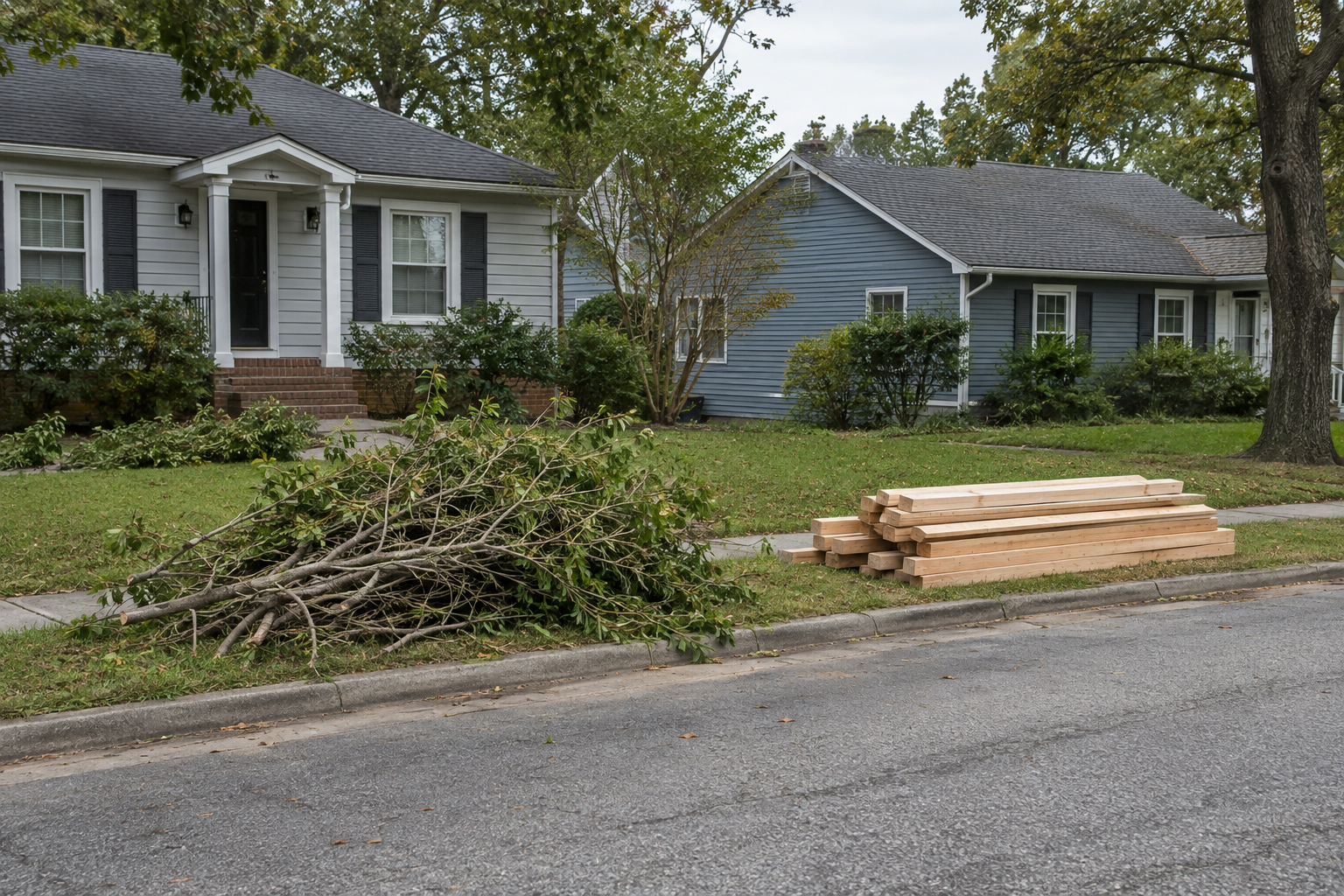
Before building a curbside pile after flooding, ask the local collection authority what it will accept, where materials should go and when pickup is authorized. A photograph of another community’s debris piles does not establish the rules for your street or the eligibility of your property.
North Carolina’s emergency-management guidance illustrates why local instructions matter. It distinguishes construction debris from vegetation and says approved collection locations and schedules are coordinated with local officials. It also directs residents to local emergency management for disposal information on appliances and household hazardous materials.
That is a jurisdiction-specific example, not a national collection promise. Flood recovery programs, municipal services and private haulers can have different arrangements. Confirm the current instructions for your location before hiring a crew or placing materials where collection equipment is expected to operate.
Make the sorting decision first
Ask whether building debris, vegetation, appliances, electronics and hazardous household products require separate handling. Request the authority’s published instructions when available. Give the same information to anyone helping clear the property so separate loads do not become one mixed pile by the end of the day.
Do not assume every damaged item belongs in ordinary trash. Describe paint, chemicals, fuel containers and other questionable material to the relevant collection authority and ask for an approved destination. Avoid opening containers or combining unknown substances to make a pile easier to transport.
Consider a hypothetical homeowner replacing soaked flooring while clearing fallen branches. If the local program requires different collection streams, combining them creates a coordination problem before the truck arrives. A simple sketch showing the approved locations can help the cleanup team preserve the separation.
Keep roads, walkways and access needed by emergency personnel clear. Ask the collection authority how close materials should be to the roadway and what nearby obstacles matter. Do not move debris near downed lines or into an area that has not been assessed for safe access.
Connect disposal to the recovery record
Before disposal, document damaged belongings and building materials as safely as conditions allow. Ask the insurer what records it needs and how urgent removal should be documented. Do not keep contaminated material in an occupied area solely because an inspection date has not been arranged.
Agree on the contractor’s scope in writing. Identify sorting, loading, transport, disposal charges and the destination, along with who is responsible for verifying acceptance. A general promise to clean everything up leaves important details unresolved when a facility rejects part of the load.
Keep receipts and disposal records. Record the collection instructions used and the date they were checked. If the program changes, share the revised directions before the next load is moved rather than relying on the original conversation.
Debris collection does not establish that a building is ready for occupancy. Continue separate assessments of utilities, structure and affected materials through the appropriate professionals and authorities.
NDR’s Flood Damage coverage addresses related cleanup decisions. Start with your local pickup instructions, then organize the material, helpers and records around that plan. The useful first question is what your collection program actually accepts.