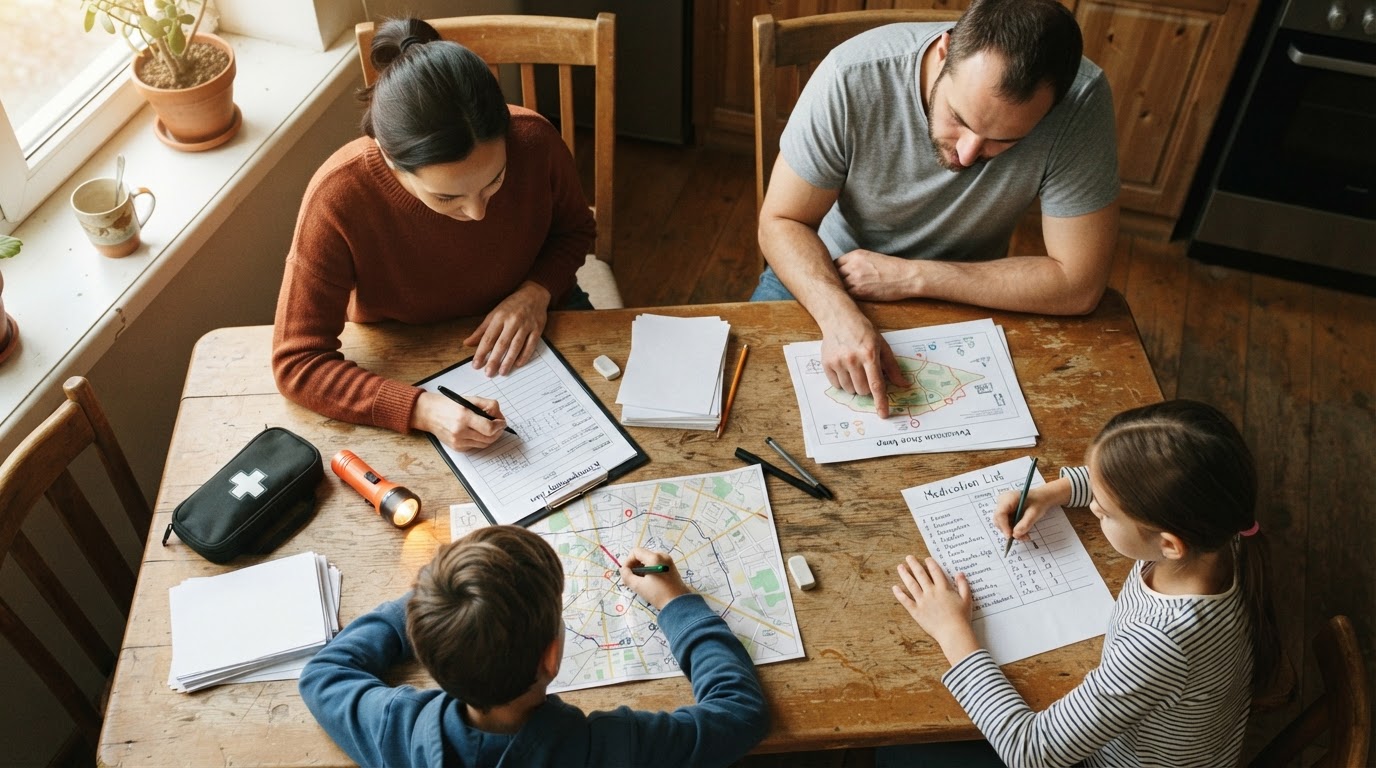

A household emergency plan should answer the decisions people must make before they can reach for a phone: how will we contact one another, where will we meet, when do we leave, and what do we take? A long binder may be useful later. In the first minutes, a clear shared plan is more valuable.
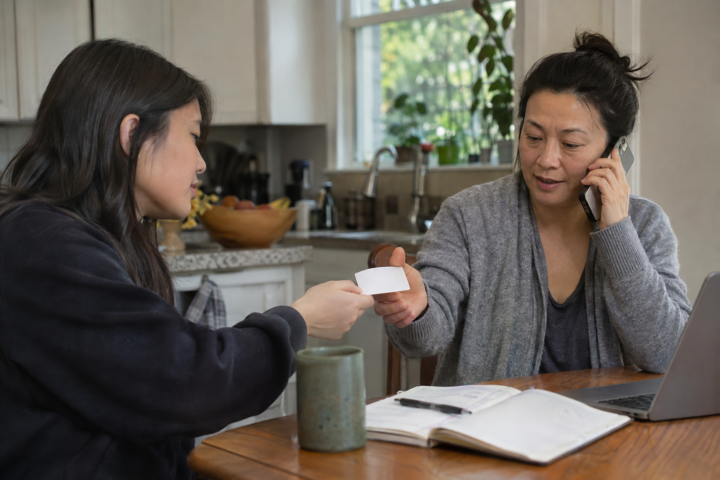
Begin with the people who may be separated. Write down each person’s usual daytime location, the adults authorized to pick up children, medication or mobility needs, and the best ways to reach each other when normal service is disrupted. Ready.gov recommends a family communication plan and suggests selecting an out-of-town contact, since local networks can be overloaded after an emergency.
Choose more than one meeting place. One can be near the home for a sudden event. Another can be outside the neighborhood in case local access is blocked. Use familiar locations and explain the route in simple terms to every household member. If someone relies on a caregiver, transit service or medical equipment, include that person or provider in the planning conversation rather than assuming help will be available.
Make the plan usable without perfect conditions. Keep key phone numbers on paper as well as in phones. Decide how household members will receive official alerts, and identify which local sources you will use for evacuation or re-entry information. Do not rely on a social-media post to establish whether an area is safe or accessible; follow local authorities and emergency managers.
Match supplies to the plan. A go-bag needs more than food and water. Include necessary medicines, backup power or charging options, copies of important information protected appropriately, basic hygiene items and supplies for pets or service animals. Review expiration dates and household needs regularly. If leaving is not appropriate, know the safest room or area for the hazards common to your location.
Practice a short scenario. For example, imagine a storm warning arrives while one adult is at work and a child is at school. Who checks official updates? Who contacts the school? What exact message tells the family which meeting place applies? A practice run exposes missing phone numbers, unclear roles and unrealistic travel assumptions while there is time to fix them.
Plans need revision after a move, a new school, a medical change or a new pet. Keep the first page short, give every household member a copy they can use, and revisit it before the season when your local hazards are most likely. Preparedness is not predicting a disaster; it is reducing avoidable confusion when conditions change quickly.