Start with access and essential needs
After a house fire, treat food and medication as separate recovery decisions. An intact package does not establish that its contents remain usable. Arrange safe meals and contact your pharmacy promptly while determining what was exposed to heat, smoke, firefighting chemicals or interrupted refrigeration.
First, follow the U.S. Fire Administration’s return guidance: enter a damaged home only when the fire department permits it. Do not return simply to retrieve groceries or prescriptions. Ask disaster relief providers about immediate food, medicine and temporary housing needs.
Separate contamination from temperature
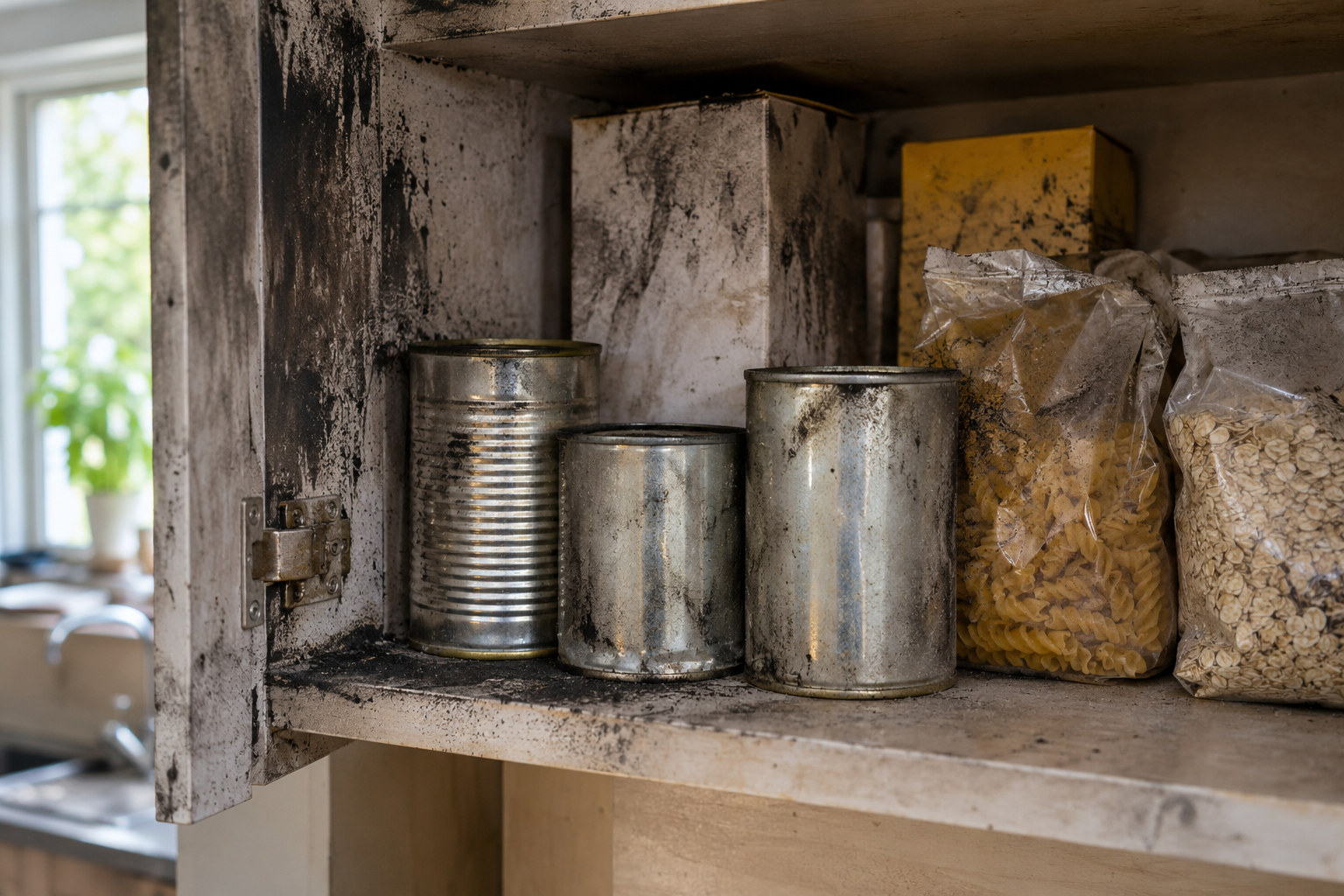
FoodSafety.gov’s wildfire guidance advises discarding food exposed to flames, smoke fumes or firefighting chemicals. It explains that fumes can penetrate packaging and that refrigerator doors are not airtight. A sealed jar or closed refrigerator therefore does not establish protection from fire contamination.
Do not taste suspect food to test it. If food escaped fire contamination but lost refrigeration, evaluate that separate problem using the FDA’s outage guidance. Record the outage duration and any reliable temperature readings. Outage rules cannot establish whether smoke or chemicals contaminated an item.
In a hypothetical kitchen fire, canned goods in the affected pantry and frozen food in an unaffected detached building present different questions. The pantry raises exposure concerns; the detached freezer may require an outage assessment. Keep those findings distinct instead of applying one blanket decision to everything.
Bring medication questions to a pharmacist
The FDA’s disaster medication guidance warns that excessive heat can reduce or destroy a medicine’s effectiveness. It advises considering replacement after heat exposure. For medicines stored outside their recommended temperatures, check the instructions or contact a pharmacist, health care provider or manufacturer about continued use.
Tell the pharmacist the medicine’s name, strength, storage requirements, likely exposure and when the next dose is due. Explain whether the bottle was wet, altered or inaccessible. Ask about replacement arrangements and any prescription information the pharmacy can retrieve. Do not improvise a substitute or change a prescribed dose yourself.
FDA guidance includes a limited exception when an exposed medicine is needed for a life-threatening condition, a replacement is unavailable and the medicine appears unchanged. Wet or otherwise altered medicine should not be used. Seek urgent professional guidance about that situation rather than treating the exception as general permission to reuse damaged supplies.
Document the decision without delaying help
Assign one household member to keep the replacement list while another contacts essential providers. For each uncertain item, record the specific question and who will answer it. A useful entry identifies the product, exposure and decision; a single undated, unlabeled photograph alone may not explain whether the concern was contamination, heat or lost refrigeration.
When permitted access allows documentation, photograph affected storage areas and keep a loss list with product names, quantities and replacement receipts. Ask the insurer how to document disposal; coverage depends on the policy and circumstances. Never delay essential care or keep questionable food available merely to preserve a claim.
Use NDR’s house fire work authorization guide for the separate cleanup decision. Today’s priority is reliable meals and a documented medication plan, with unresolved exposure questions directed to the appropriate professional.
Source notes
Prepared Nov. 13, 2026, using standing U.S. agency guidance reviewed that day. This is service guidance, not a report of an active fire. Examples are hypothetical; property conditions, local requirements and individual needs vary.