After a leak, the important question is not whether a room looks dry. It is whether the water source is controlled and the affected materials have been evaluated before repairs hide the evidence. A damp baseboard, swollen flooring edge or musty odor can signal moisture beyond the obvious stain.
Start by stopping the water if it is safe to do so. Shut off a fixture supply, contain a small spill or contact the appropriate emergency service for a larger failure. Do not enter an area with suspected electrical hazards, structural damage or contaminated water. Photograph the condition before moving materials when an insurance claim may be involved, and keep records of emergency work and receipts.
Next, separate the source from the visible result. A one-time clean-water fixture leak calls for a different response than a sewage backup, floodwater or water that has passed through unknown materials. EPA says moisture control is central to mold control and advises prompt attention to plumbing leaks and other water problems. Where sewage or other contaminated water is involved, EPA recommends using a professional experienced with that type of damage.
A useful drying plan identifies what became wet, not just where water was first seen. That can include floor finishes, trim, wall cavities, insulation, cabinets, furniture and contents. Materials differ: a hard surface may be cleaned and dried, while porous materials such as carpeting, ceiling tile or insulation can be difficult to fully clean once moldy. Do not paint or caulk over visible mold; EPA advises cleaning and drying the surface first.
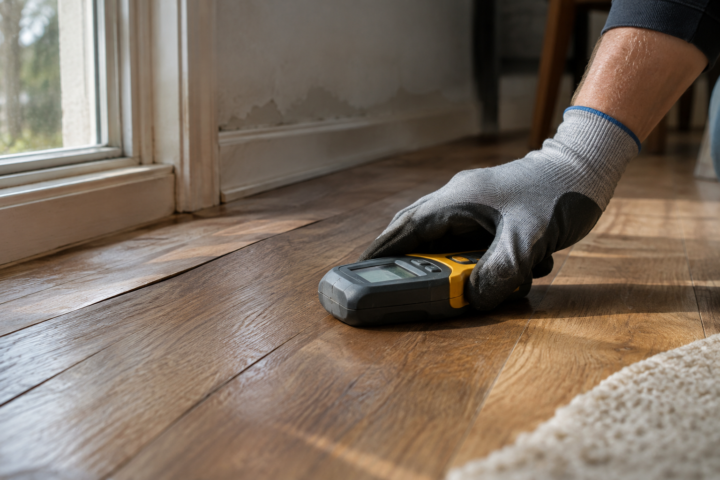
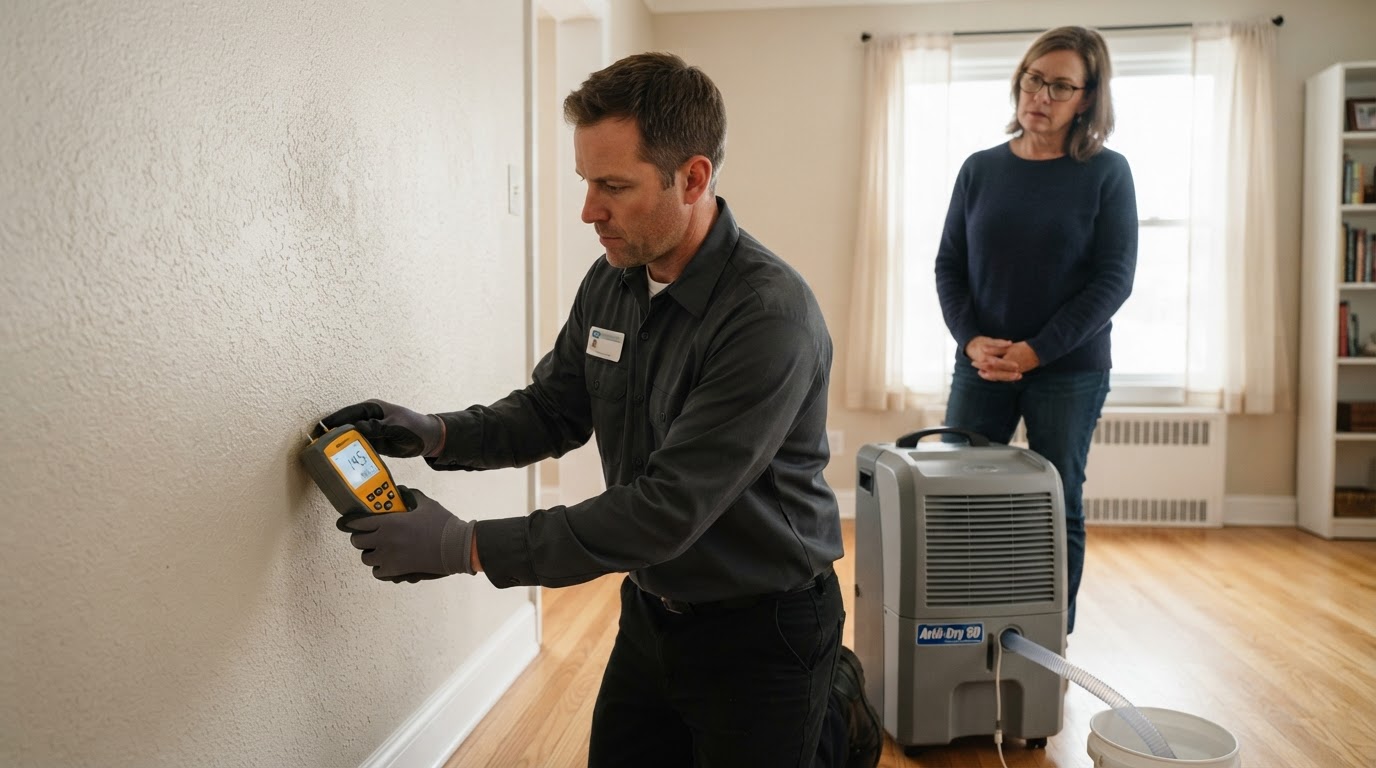
Equipment can speed evaporation, but placement alone does not prove success. Ask the person directing work how they are tracking conditions: which materials are being checked, what readings are being compared, and what work will be documented before reconstruction. A qualified restoration professional may use moisture measurement and other assessment methods suited to the material and situation. The appropriate endpoint depends on the assembly and the source of water.
Be cautious with HVAC. EPA advises consulting appropriate guidance if a system may be contaminated and not running it if contamination is known or suspected, because it can spread material through the building. A musty smell after drying, recurring staining or unexplained humidity warrants a closer look at the unresolved moisture source rather than a cosmetic repair.
Drying is not a promise that no future problem can occur. It is a documented process: stop the source, protect people, identify affected materials, dry or remove what cannot be reliably restored, and verify the work before closing the structure. That record helps owners make repair decisions and gives insurers and contractors a clearer common reference.