
Before insulating a basement after repairs, establish why it became wet and what evidence shows that problem has been addressed. New insulation and wall finishes should follow the moisture assessment. A dry-looking surface on installation day does not explain recurring seepage, condensation or water concealed within the assembly.
Investigate both sides of the wall
The Building America Solution Center’s basement assessment guidance calls for investigating and treating moisture problems before air sealing or insulation. It identifies interior sources, including plumbing and equipment condensate, as well as exterior sources. That distinction matters because adding a drainage feature cannot repair an indoor pipe leak.
Start a location record rather than buying a product. Note where staining appears, whether it follows rain or equipment operation, and what repairs have already been made. Photograph accessible conditions without disturbing suspect materials. Give that record to the contractor assessing the basement so the proposed solution addresses an observed pattern.
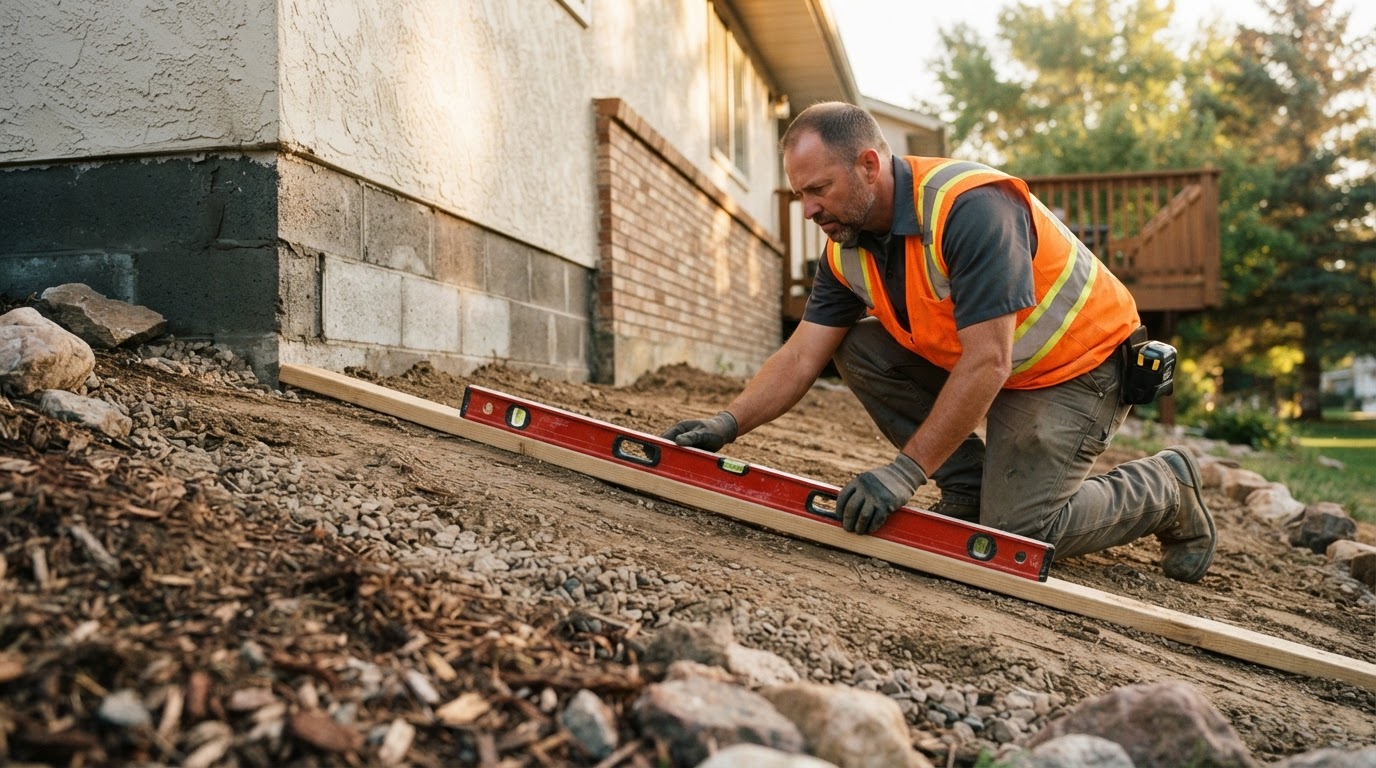
Outside, consider roof runoff, adjacent ground and hard surfaces as parts of one drainage route. The Solution Center’s site drainage guidance connects grading, gutters and drainage systems with localized water accumulation. A qualified designer should determine an appropriate route and discharge location for the actual property, including local requirements and neighboring conditions.
Set a decision point before covering
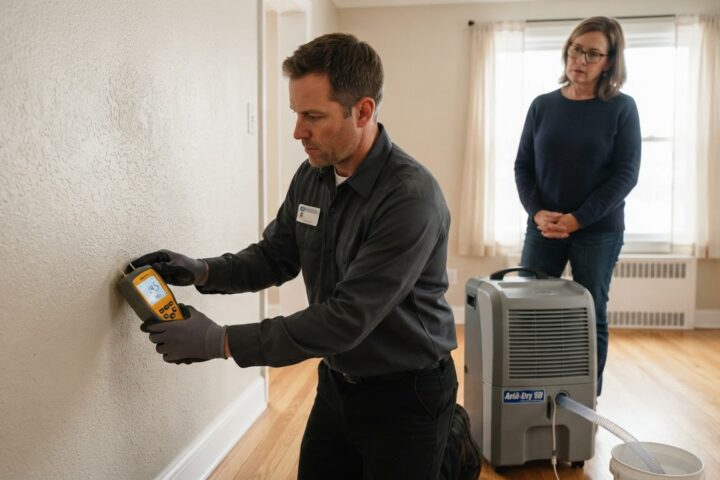
Ask the repair team to explain what will be inspected or measured before insulation conceals the structure. Identify the materials, locations and conditions being evaluated. There is no single reading that proves every basement assembly is ready for every insulation product. The assessment must fit the material, water history and proposed construction.
In a hypothetical project, a wall dries after a drainage repair during a rainless week. The owner and contractor agree to check the previously affected locations after subsequent rainfall before closing the wall. That observation can help assess the repair, but it does not guarantee performance during every future storm or replace professional investigation.
Have the contractor explain the complete wall assembly, including how it manages liquid water, air movement and water vapor. Climate, foundation type and existing materials affect that choice. Avoid assuming that a product described as water resistant makes the whole wall flood resistant. Confirm applicable requirements with the local building department.
Include conditions beyond dampness
The basement assessment guidance also addresses damaged wiring, structural deterioration and combustion appliances. Those issues require appropriate qualified assessment; they are not resolved by insulation. Air sealing around an existing fuel-burning appliance can change conditions, so have the relevant professional evaluate the proposed work before it proceeds.
Discuss future access as well. If a sump, valve or drainage component will sit behind the proposed finish, ask how it can be inspected and maintained. Record the agreed access arrangement on the repair drawings. A moisture strategy is less useful when routine maintenance checks require dismantling new construction or moving permanently installed cabinetry.
Keep the investigation, repair description and pre-covering checks with your reconstruction records. NDR’s Rebuilding & Prevention archive covers related material decisions. Before approving insulation, ask the contractor to identify any unresolved moisture question in writing and explain how it affects the installation plan.