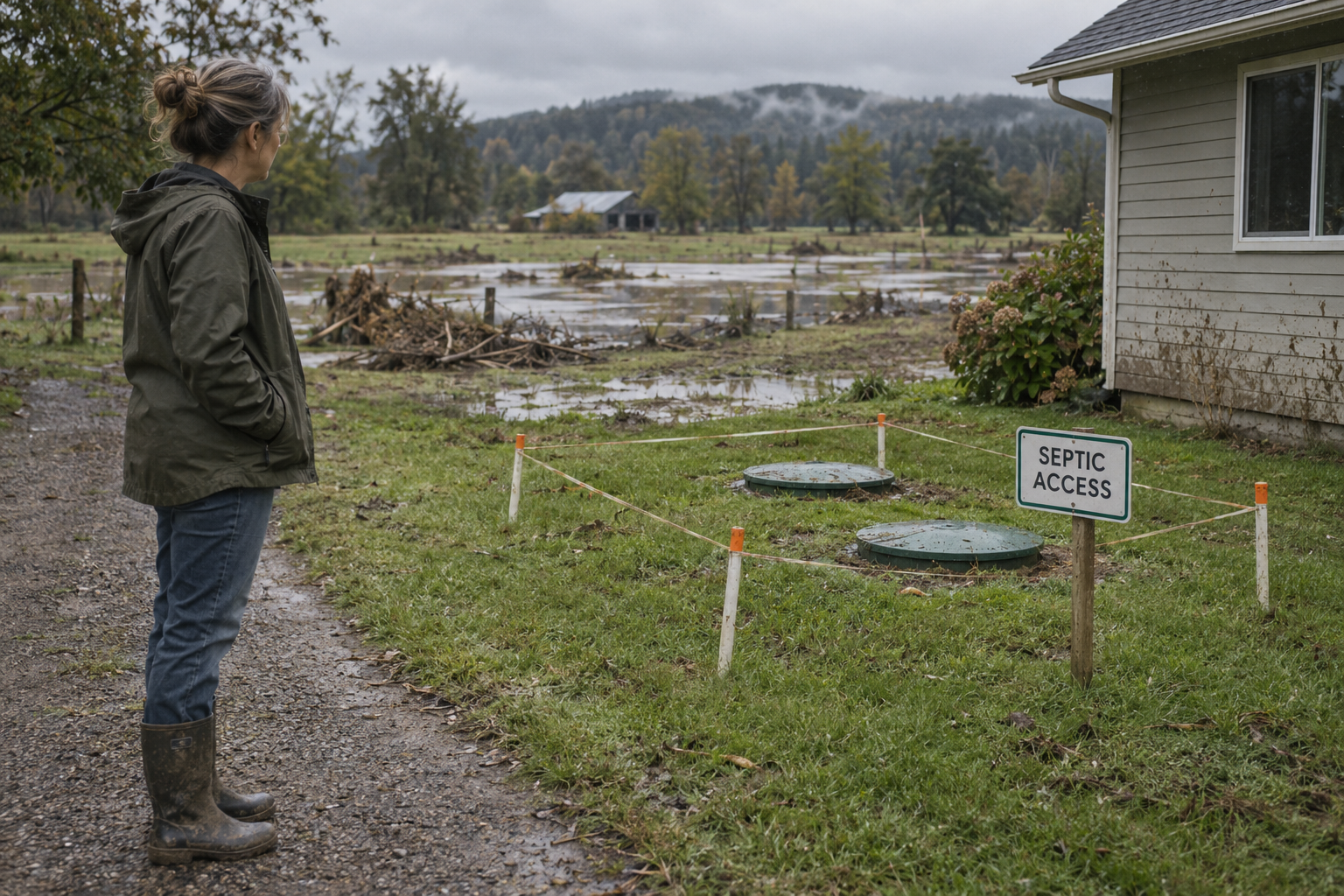
A flooded septic system is not simply a plumbing inconvenience. Saturated soil can prevent normal treatment, floodwater can enter components and damaged covers or electrical equipment can create hazards. Limit water use and avoid opening or entering any tank, pit or damaged area.
What to establish first
The EPA’s septic-system flooding guidance advises homeowners to reduce water use and take precautions after flooding. Local health departments, septic professionals and emergency instructions may set additional requirements, especially where wells, surface water or community systems are involved.
Do not pump a tank simply because the yard is flooded unless a qualified local professional advises it. Groundwater pressure and site conditions can affect the system. Keep vehicles and heavy equipment away from components that may be weakened or hidden, and do not use electrical controls that may have been submerged.
Keep decisions traceable
Document standing water, backups, odors, visible damage and any official direction. In a hypothetical rural property, a family may need to postpone laundry and reduce toilet flushing while the drain field remains saturated. That is not a permanent solution; it is a way to reduce additional loading while the system is assessed.
Return to normal use only after the relevant local or qualified guidance supports it. A septic system’s condition can depend on soil, flood depth, component damage and contamination. Record service findings with other flood-recovery documents so the next decision relies on more than an assumption that the water has gone down.
Document the next review
Use a simple decision table for after flooding, protect your septic system before returning it to normal use: observation, immediate protection, responsible person, information still needed and next review time. It helps distinguish a prudent precaution from a final conclusion and explains why the sequence changed.
Keep primary-source guidance close to consequential choices, but preserve its limits. General guidance cannot inspect this property, interpret a contract or determine local compliance. Record the question for the appropriate qualified party instead of converting uncertainty into reassurance.
Before closeout, compare the result with the first record: confirmed condition, authorized work, remaining monitoring and documents to retain. That turns the response into useful information for the next decision.
The next action should match the evidence and the role of the person taking it. Document that connection, then recheck conditions when the expected information arrives.
Before the next step
A practical review also asks what could make the condition worse before the next checkpoint. Protect the area, preserve the relevant record and communicate any restriction to the people who need to know. Avoid expanding the response beyond confirmed authority simply because the situation is inconvenient.
If new information conflicts with the initial understanding, revise the record rather than trying to fit it into an outdated explanation. Changes in access, moisture, source conditions, approvals or safety concerns can change the right sequence. A dated revision gives the next decision-maker a clearer starting point.
Finally, make the next review concrete: identify who will check, what evidence they will use and how the result will be communicated. That approach supports prompt action while leaving room for qualified assessment and local requirements.