Choose a room people can actually use
During outdoor wildfire smoke, a useful cleaner-air room combines a manageable space, suitable filtration and a plan for leaving if conditions deteriorate. Choose somewhere your household can comfortably spend time. This approach applies to an intact home where staying indoors remains appropriate, not a fire-damaged building awaiting clearance.
The Environmental Protection Agency’s clean-room guidance recommends a room large enough for everyone, with doors and windows kept closed during smoke conditions. Avoid activities that add particles, including smoking and cooking. Keep evacuation instructions and local air quality information accessible; filtration never cancels an evacuation order.
Size filtration for the space
The EPA’s air cleaner selection guide explains clean air delivery rate, or CADR, as a particle filtration measure. Choose a unit whose rating fits the area it will serve. Consider connected open space and higher ceilings rather than buying solely by the equipment’s physical size or advertised appearance.
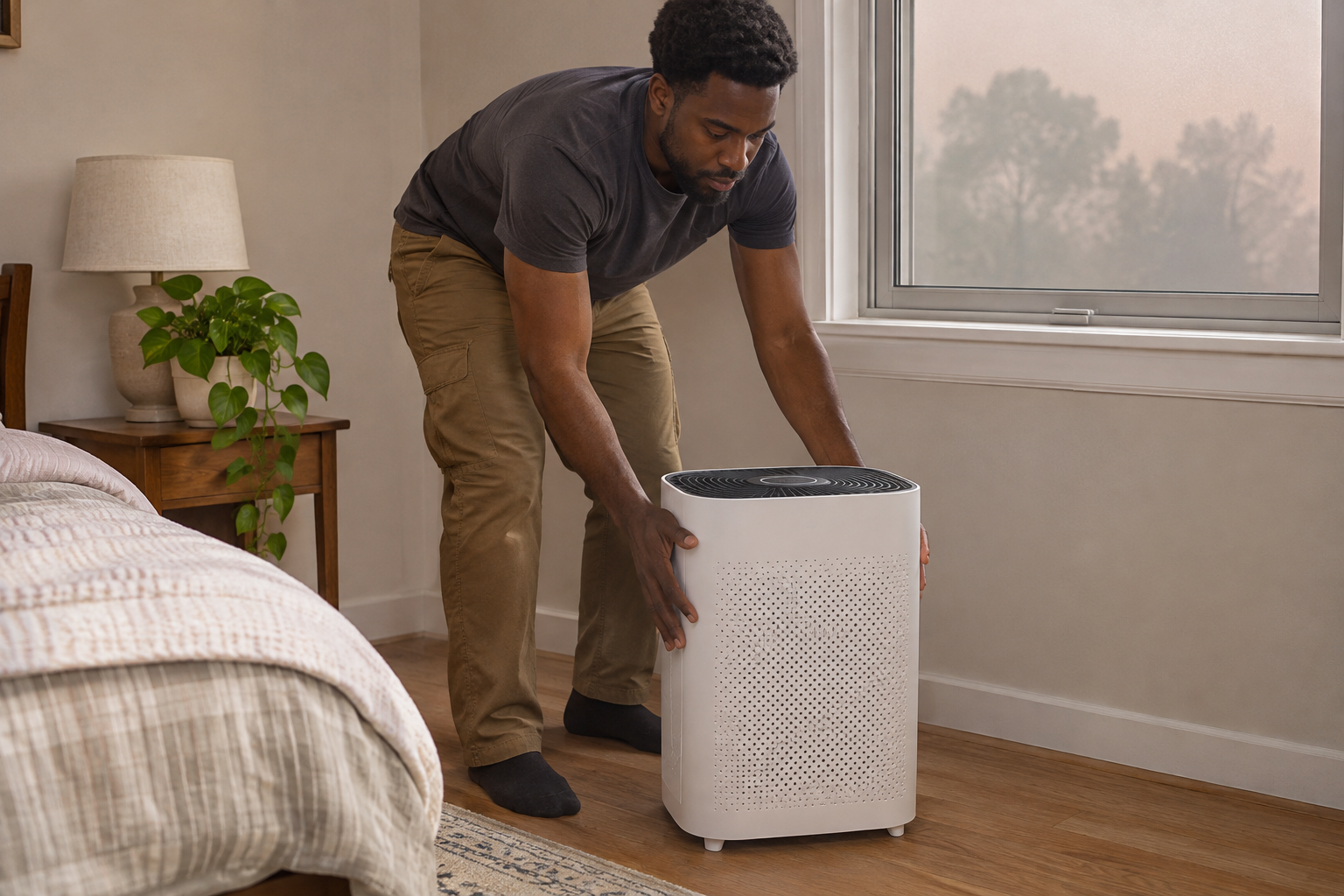
Keep air moving through the cleaner without curtains, bedding or furniture blocking it. Follow the manufacturer’s placement and filter instructions. Compare operating noise before relying on a high fan setting that nobody will tolerate overnight. A practical setup must be usable for the hours people actually occupy the room.
In a hypothetical apartment, a bedroom that closes off from the kitchen may be more workable than an open living area connected to several rooms. Measure the intended space, identify where occupants can sit or sleep and locate an unobstructed position for the cleaner before choosing equipment.
Understand what the equipment cannot establish
EPA’s overview of household filtration notes that air cleaners and filters cannot remove every pollutant. Particle filtration does not establish that all gases have been removed. A less noticeable odor or a running machine is therefore not proof that indoor conditions are suitable for everyone.
Avoid equipment that intentionally produces ozone, which EPA identifies as a lung irritant. For central heating and cooling, ask a qualified technician which filter the system can accommodate. Do not force a restrictive filter into equipment or assume a portable room cleaner addresses the entire building.
This plan also does not resolve deposited ash, damaged materials or a source of contamination inside the property. Keep those assessment questions separate. If the building itself burned or sustained damage, follow the responding authorities and relevant professionals rather than treating an air cleaner as permission to re-enter.
Make a backup plan before it is needed
Before smoke arrives, check whether the alternative destination can accommodate mobility needs, pets and essential equipment. Confirm who can provide a ride if the usual driver is unavailable during a neighborhood evacuation.
EPA advises considering shelter elsewhere when the home cannot stay cool, power fails or too much smoke continues entering. Identify a possible destination and transportation arrangement early. Household members with heart or lung conditions should discuss smoke planning with their health care provider before conditions become urgent.
Keep a brief setup record: chosen room, equipment instructions, replacement filter location, emergency contacts and the alternative destination. Review NDR’s preparedness resources alongside local alerts. The goal is a usable exposure-reduction plan with clear limits and a realistic next step when staying becomes unsuitable.
Source notes
Prepared Nov. 13, 2026, using standing U.S. agency guidance reviewed that day. This is service guidance, not a report of an active fire. Examples are hypothetical; property conditions, local requirements and individual needs vary.