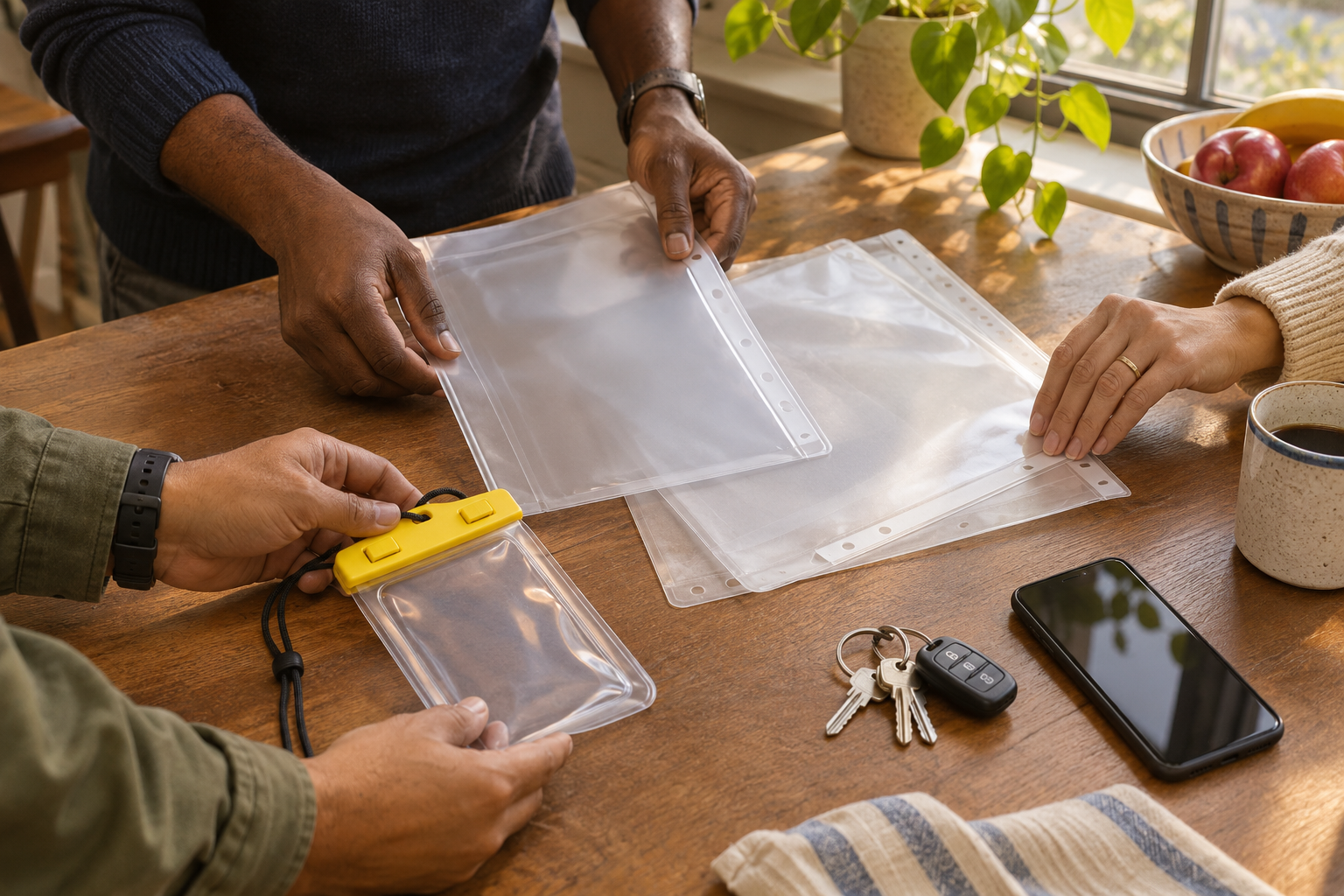
An emergency document kit is a small, secure system for proving identity, locating accounts and contacting people who can help if the home cannot be entered. Build it before an evacuation or loss, when there is time to decide what is essential.
Start with documented conditions
Start with copies of identification, insurance declarations, property records, medical information, financial-account contacts, vehicle information and trusted contacts. Ready.gov’s emergency-kit guidance identifies important documents as an item households should consider. Avoid storing passwords or full account numbers in an unsecured paper folder.
Use two protected locations. A portable water-resistant copy can travel with the household; an encrypted digital copy or secure off-site copy may remain reachable if it is lost. Test access from another device. A file that depends on a phone left at home is not a backup.
Keep the next decision clear
Make it usable under pressure: put a dated front page with insurer, bank, landlord or mortgage-servicer contact routes, an out-of-area contact and the location of originals. A tenant may need only the portable copy; a homeowner may need property records as well.
Review after a renewal, move, household change or major purchase, and securely dispose of stale copies. Retention and privacy needs vary, so this is not legal advice. The practical objective is a calm first call with accurate information when the filing cabinet is unavailable.
Questions that keep the response useful
Create a short written timeline for build an emergency document kit that works when your home is inaccessible. Include the first observed condition, contacts made, access limitations, temporary protections, information still being confirmed and the date of the next review. A precise timeline helps separate facts from assumptions when several people are responding at once.
Use questions that invite a specific answer: What is known? What cannot yet be determined? Who owns the next decision? What document or observation will change that decision? This approach is more useful than a broad request for reassurance and makes later communication easier to check.
Keep the advice proportional to the condition. Local rules, contract terms, policy language, building systems and safety hazards can change the appropriate response. Where a qualified professional, authority or insurer must decide, preserve that limit rather than treating general guidance as a clearance or guarantee.