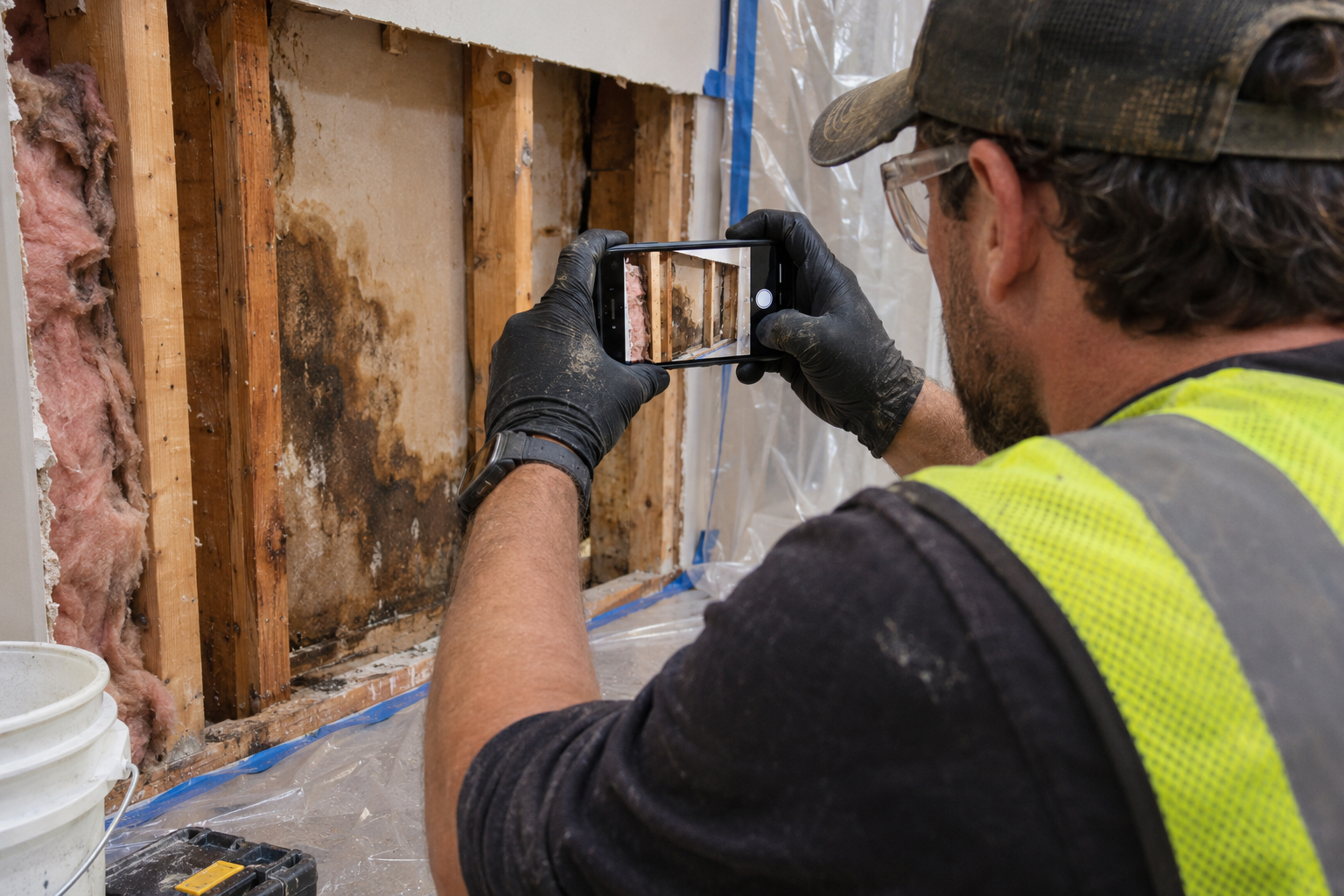
New damage discovered after repair begins can change the scope, but it does not automatically answer a coverage question. Preserve a clear record of what was found, where, when it was exposed and any immediate action needed to prevent further damage.
Start with documented conditions
Take dated photos and retain damaged material when safe and practical. Notify the insurer or adjuster promptly, describe the change without guessing at cause and ask what documentation is required. NAIC consumer claim guidance supports keeping records and communicating during recovery.
Ask the contractor to separate confirmed observations from proposed work. A change order can explain cost and scope, but it is not an insurer’s coverage decision. Coverage depends on policy language, facts, exclusions, limits and state rules.
Keep the next decision clear
Protect the property from further damage, but save receipts and note why urgent work could not wait. Ask for written insurer instructions when possible before authorizing non-emergency work. Escalate or seek licensed local help when the answer remains unclear.
A tidy supplemental record keeps a necessary repair decision from becoming a dispute over what changed and when. It does not guarantee payment, but it gives all parties a factual place to start.
Questions that keep the response useful
For supplemental claim, keep supporting records together and date each update. Clear records make it easier to compare new information with the initial condition, while avoiding conclusions that the available evidence cannot support.
The practical next step is to confirm responsibility, save the relevant evidence and agree on the next checkpoint. That is a durable recovery practice whether the issue is resolved quickly or requires further review.