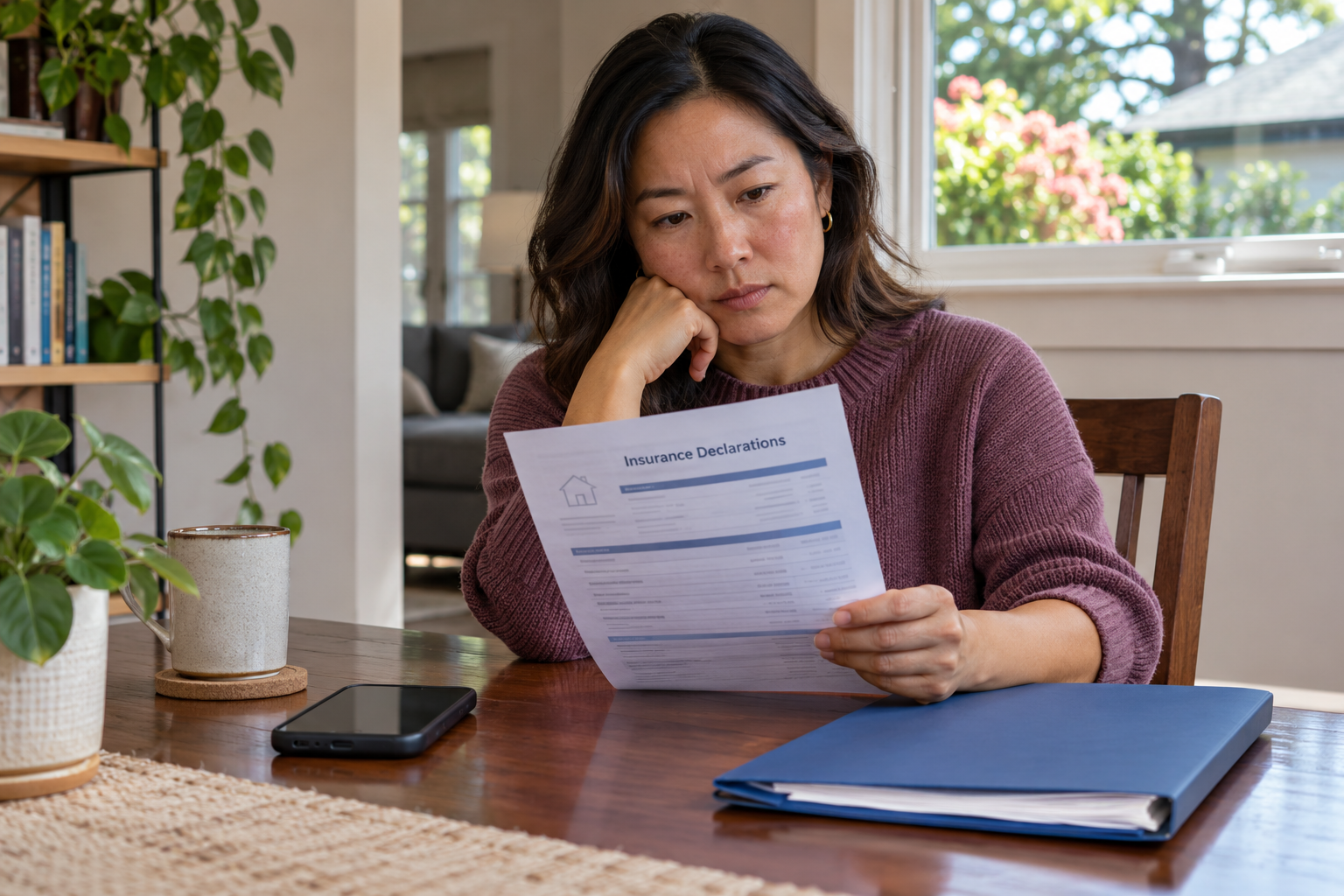

The declarations page is often the fastest place to see a policy period, insured location, listed coverages, limits and deductibles. Reading it before a loss helps a household ask better questions; it does not determine coverage by itself.
Start with documented conditions
Compare it with the property and household as they now exist. Check the address, named insureds, dates and deductible types. Then locate the full policy, endorsements and insurer contact method. NAIC guidance recommends that consumers understand their policy and work with their insurer during a claim.
Make a short question list for the agent or insurer: Which endorsements apply? Does a deductible vary by cause? What documentation is expected? Record the answer, date and contact. Do not rely on a neighbor’s coverage or a generic online explanation.
Keep the next decision clear
Store the current page with the emergency document kit and update it at renewal. Policies and state rules differ, and only the insurer or appropriate adviser can address a particular interpretation. This review cannot promise payment.
It can, however, reduce the scramble to identify accurate policy information after a loss. That is a useful form of preparedness even when the policy itself remains the controlling document.
Questions that keep the response useful
For insurance policy, keep supporting records together and date each update. Clear records make it easier to compare new information with the initial condition, while avoiding conclusions that the available evidence cannot support.
The practical next step is to confirm responsibility, save the relevant evidence and agree on the next checkpoint. That is a durable recovery practice whether the issue is resolved quickly or requires further review.