After floodwater recedes, turning the key can feel like the quickest test. It is not a reliable one. Water can affect electrical components, lubricants, brakes and safety systems that cannot be evaluated from the driver’s seat.
Start with documented conditions
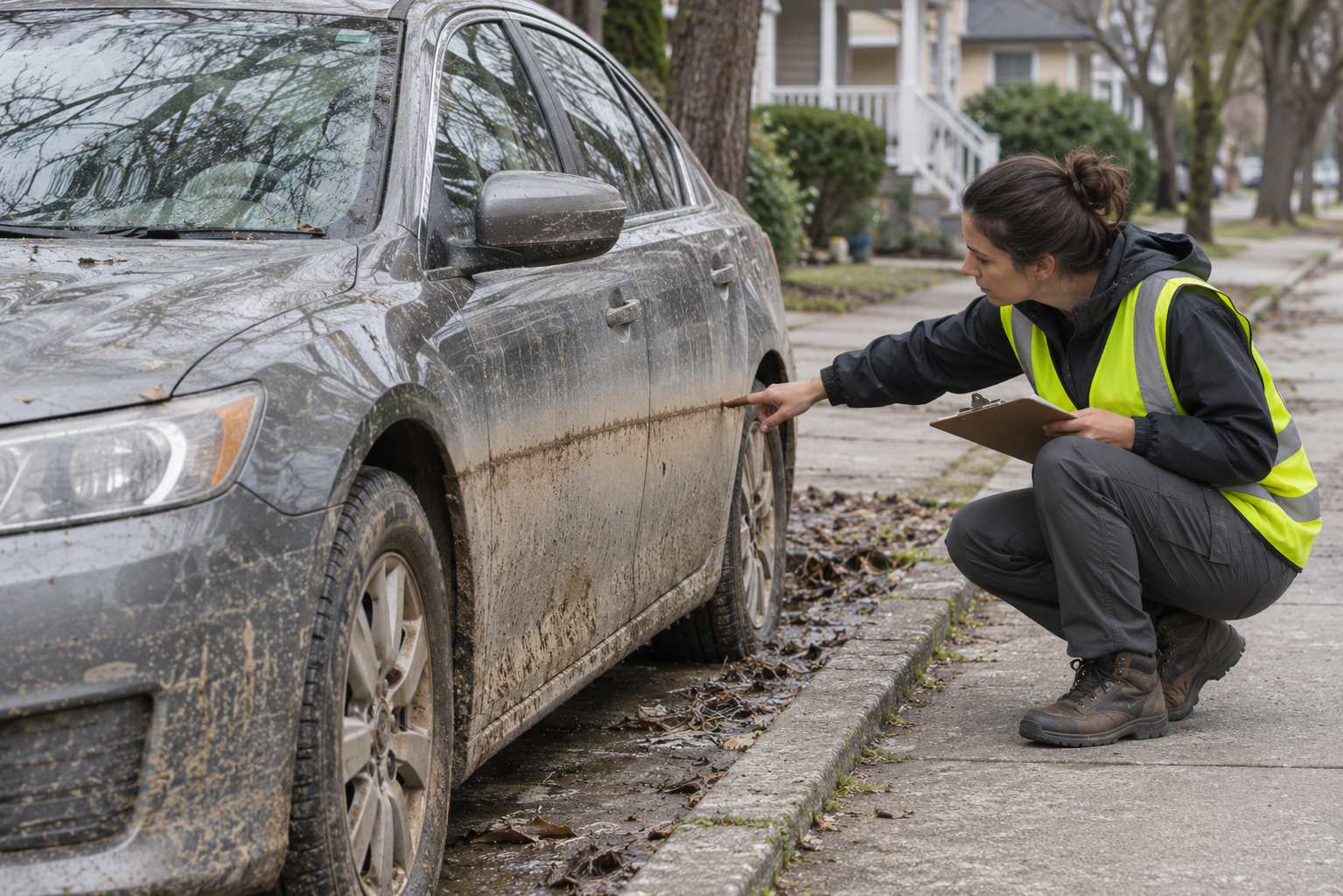
Photograph the waterline, interior, exterior, vehicle identification number and surrounding conditions from a safe location. Note timing and possible contamination. Do not enter standing water around the vehicle; electrical and slip hazards can change quickly.
The National Highway Traffic Safety Administration’s flood-damaged-vehicle guidance explains why damage is not always obvious. An apparently dry cabin does not establish that wiring or restraints are sound.
Keep the next decision clear
Call the insurer or roadside-assistance provider for instructions, then use a qualified repair facility. Ask what systems were checked and what limits apply to the finding. The process can involve state title rules, a lender and an insurer, so it is not the same in every jurisdiction.
Keep photos, tow information, inspection findings and claim communications together. If belongings must be removed, use appropriate protective measures and local disposal guidance. The next safe action is an assessment—not a driveway experiment.
Questions that keep the response useful
Create a short written timeline for a flooded vehicle should not be started before it is assessed. Include the first observed condition, contacts made, access limitations, temporary protections, information still being confirmed and the date of the next review. A precise timeline helps separate facts from assumptions when several people are responding at once.
Use questions that invite a specific answer: What is known? What cannot yet be determined? Who owns the next decision? What document or observation will change that decision? This approach is more useful than a broad request for reassurance and makes later communication easier to check.
Keep the advice proportional to the condition. Local rules, contract terms, policy language, building systems and safety hazards can change the appropriate response. Where a qualified professional, authority or insurer must decide, preserve that limit rather than treating general guidance as a clearance or guarantee.