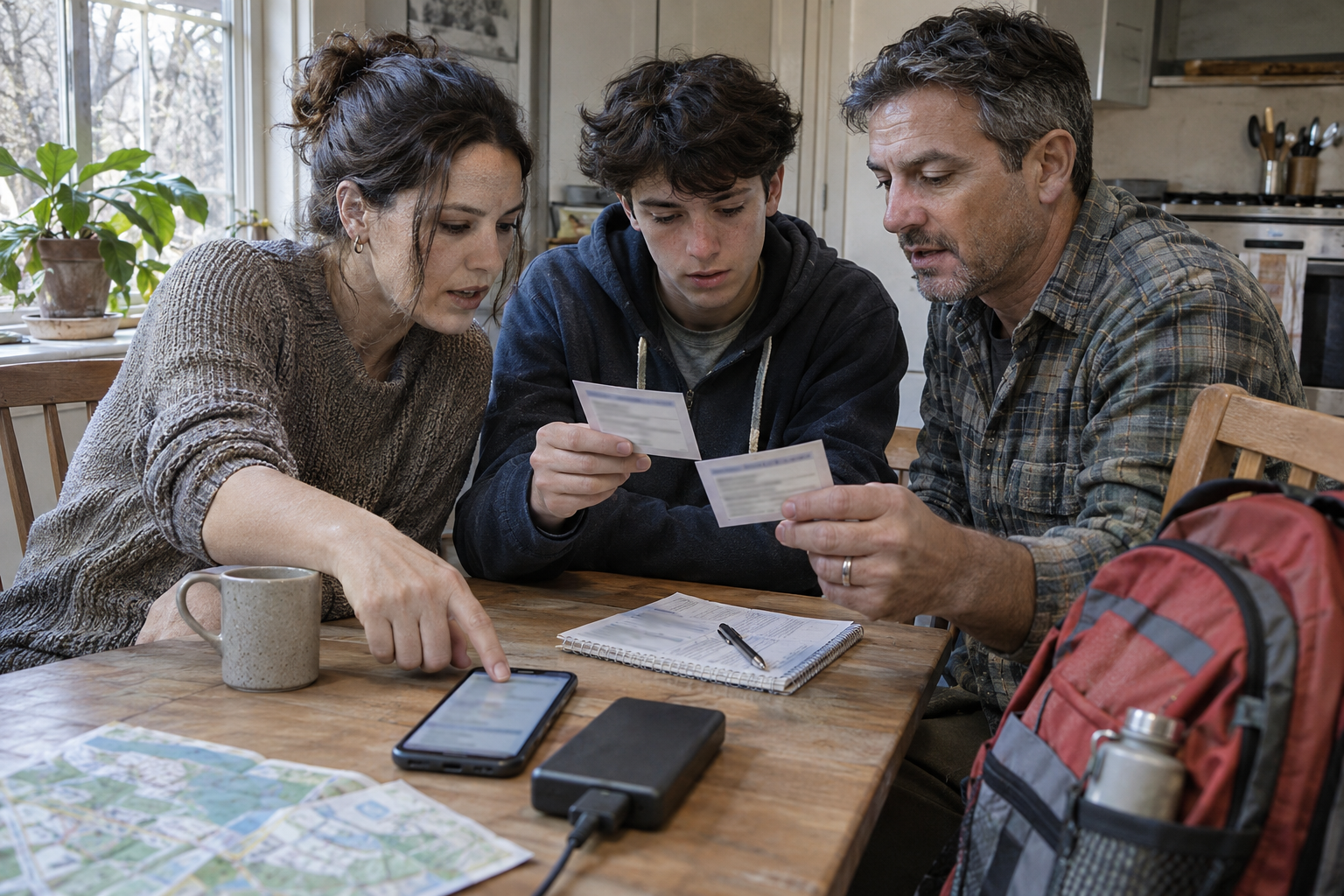
A household emergency plan can look complete on paper and still leave someone wondering what to do next. A short practice session exposes those gaps before an outage or evacuation makes communication difficult. The goal is simple: Everyone should know whom to contact and where to find the plan.
Pennsylvania’s emergency planning guidance recommends a local contact and another outside the general area, along with a discussion of meeting places and pets. An outside contact provides an additional connection when the same disruption affects people living near one another.
Make the contact list usable
Illinois emergency management officials advise households to plan several ways to communicate because normal systems may be limited during a widespread emergency. Share essential numbers with everyone who needs them, rather than leaving the entire plan in one person’s phone.
Ask your chosen outside contact whether they are willing to serve in that role. Check the number together. Make a brief paper copy for each household member, using readable type and language they understand. Keep sensitive medical or identity details separate from a card intended for everyday carrying.
Practice a realistic message
Choose a calm time and announce that this is a drill. Ask each participant to locate the contact card and explain the next step without prompting. Someone who cannot find the card has identified a fixable problem, not failed the exercise.
The federal family communication planning guide recommends practicing contact methods and reviewing what worked afterward. Rehearse a short message that reports where the person is and whether help is needed. Explain which contact should receive updates so several relatives are not all trying to relay conflicting information.
Plan for messages that do not arrive
Texting may work when calling is difficult, but no single method is guaranteed. Discuss what each person should do if there is no reply. Make the plan consistent with local emergency instructions, school procedures and the needs of anyone who relies on a caregiver.
Talk through the meeting arrangements without sending anyone into traffic or simulating an unsafe evacuation. Ask whether the location is accessible and whether everyone knows its actual name and address. A familiar nickname may not help a child or visiting relative explain the destination to someone else.
Give participants time to explain their choices. A teenager returning from practice may imagine a different starting location than a parent working at home. Discussing those differences reveals assumptions that a shared contact list cannot resolve by itself. Keep the exercise calm, brief and suited to the people who will actually use the written plan.
Finish with specific improvements
After the exercise, collect the questions that caused hesitation. Perhaps the outside contact changed numbers, a child could not read the card or the backup meeting place was unclear. Assign a person to make each correction and give everyone the same updated version.
Review the plan when school, work, household membership or contact details change. NDR’s planning resources can support broader preparation, while local recovery contacts belong in a separate property recovery file. A communication drill is successful when the next action becomes easier to explain and carry out.
Source notes
Published Nov. 4, 2026. Primary guidance and NDR reference links checked for this article. Original NDR editorial synthesis; illustrative exercises are suggestions, not reports of actual events.