
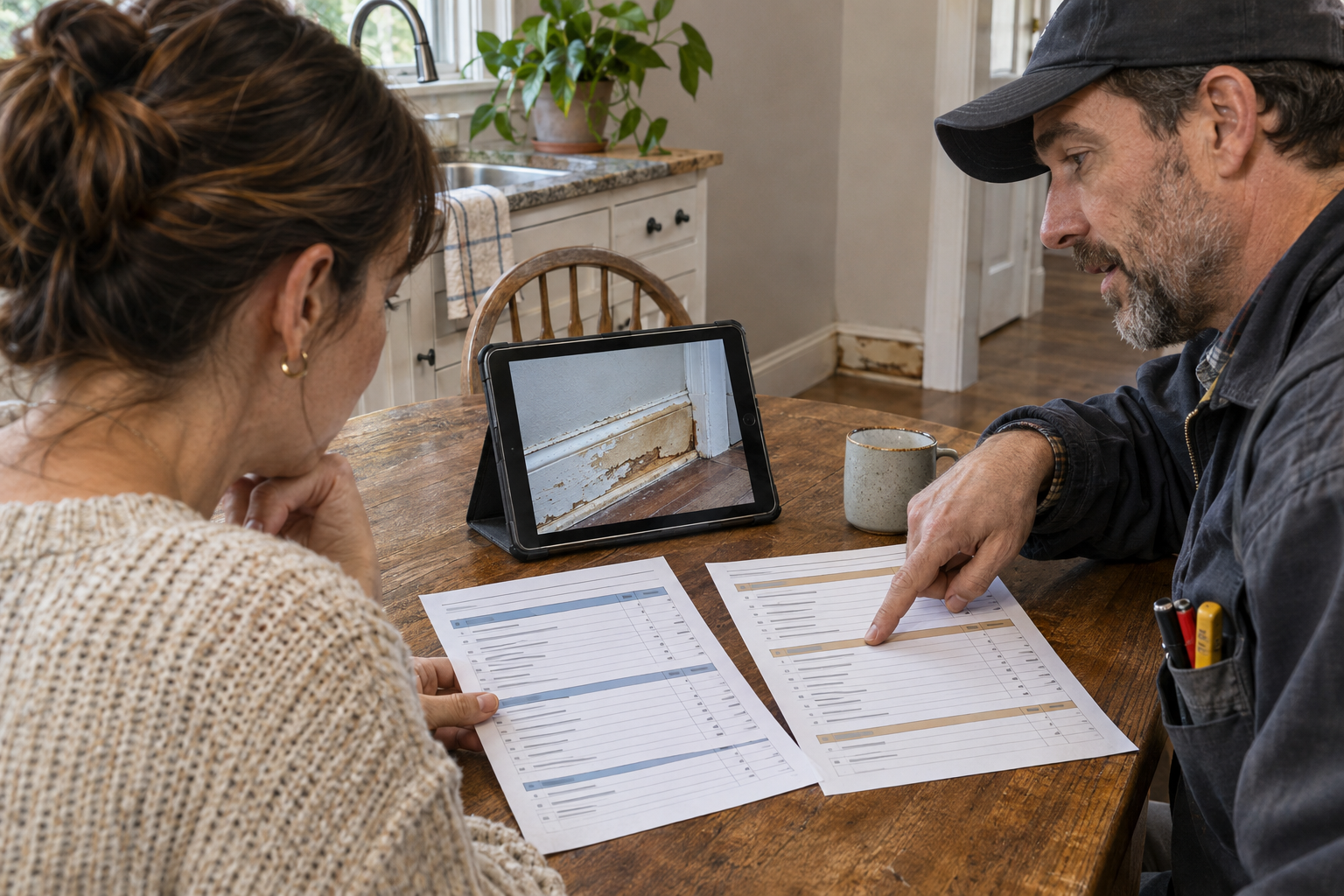
When a contractor’s bid exceeds an insurance estimate, compare the proposed work before deciding which total is right. The difference may involve measurements, materials or omitted tasks rather than a single disputed price. A clear comparison gives the homeowner and adjuster something specific to resolve without assuming that either document establishes coverage.
Start with matching documents
Request the insurer’s itemized estimate and a written contractor proposal describing the same affected areas. California’s Department of Insurance explains that a scope of loss records damage, material quality and measurements; it differs from a completed estimate. Its residential claims guide recommends detailed contractor bids with prices listed by line item.
Build a simple comparison by room or building component. Match each proposed task with its counterpart, then flag missing work, different quantities and different material descriptions. Keep the original documents intact. A short list of discrepancies is easier to discuss than an unsupported statement that the entire estimate is too low.
Separate the repair from the payment
The National Association of Insurance Commissioners says adjusters review policy terms, deductibles and coverage limits when calculating a settlement. That means the cost of proposed repairs and the amount payable under the policy are related but separate questions. Ask the insurer to explain both the repair calculation and any coverage-based reduction.
For example, if two estimates describe different amounts of damaged flooring, ask what measurements support each quantity. If one includes additional work, request the contractor’s explanation and supporting photographs. This hypothetical comparison identifies a question for review; it does not establish that every proposed task must be covered.
Send a focused request
Submit the identified differences with supporting records and ask for a written response. NAIC advises keeping paperwork, requesting any denial in writing and contacting the state insurance department when an unresolved settlement concern remains. Requirements and dispute procedures vary by state and policy. Check applicable deadlines rather than borrowing a neighbor’s timeline.
Keep inspection records organized alongside NDR’s flood damage documentation guide. Before approving permanent work, clarify the scope, payment responsibilities and remaining questions with the insurer and contractor. Ask who reviews newly discovered damage during authorized repairs and what documentation that review requires before work proceeds.
Prepared Nov. 6, 2026. General educational information based on linked regulator guidance, reviewed for this article. Coverage, valuation and claim procedures depend on the policy and applicable state rules. Examples are hypothetical.
