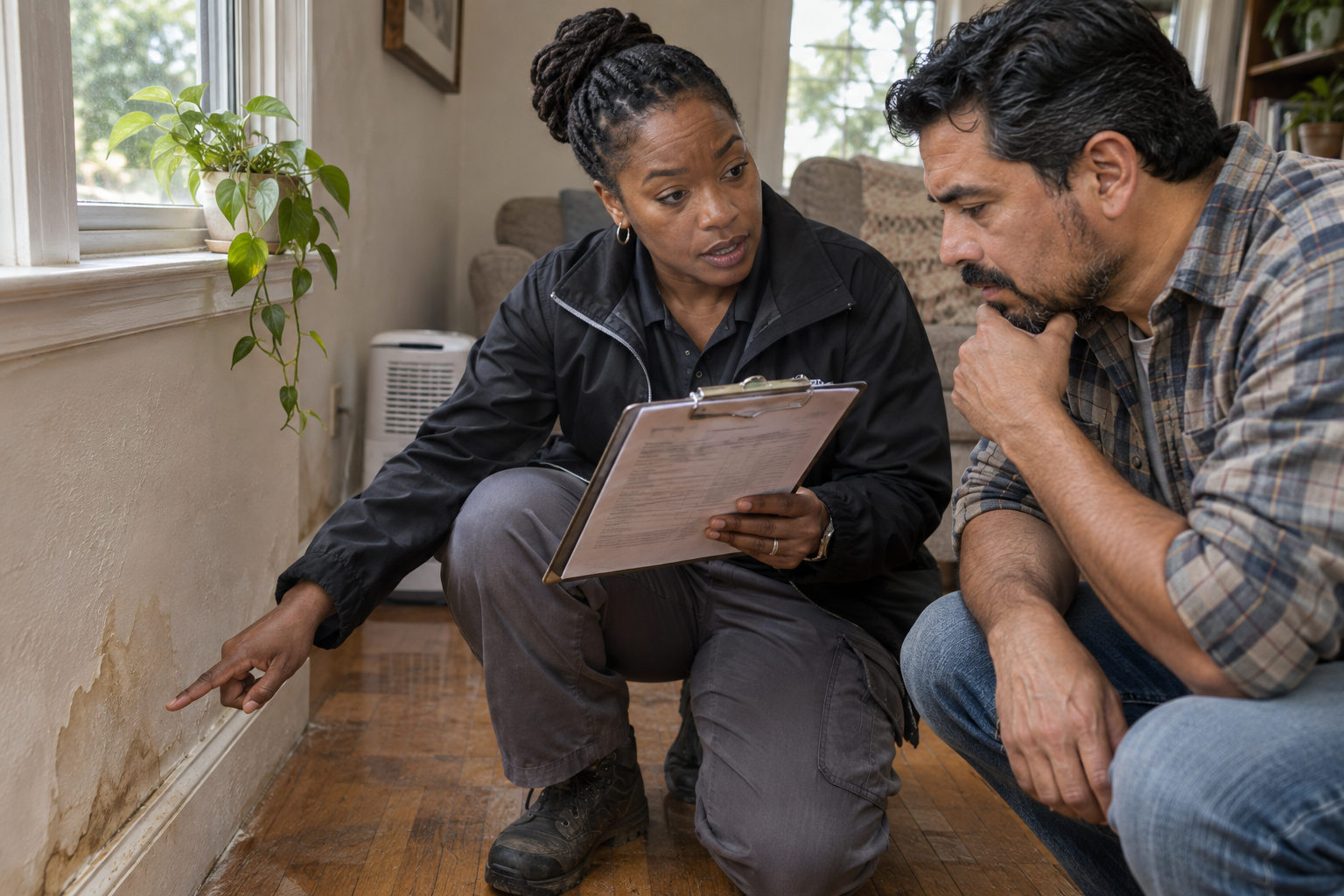
A water damage estimate should explain what the contractor found, what work is proposed and how charges will be calculated. A total alone cannot tell you whether two companies are pricing the same job. Before signing, ask for a written scope that connects the damage to specific tasks, quantities and exclusions.
Prompt action matters, but emergency authorization deserves clear limits. Separate the work needed immediately from later repairs so you understand what you are approving today and what still requires another decision.
Start with the affected areas
Ask the estimator to identify affected rooms, materials and accessible areas inspected. Request the observations supporting proposed removal or drying, including moisture readings when available. If concealed damage remains uncertain, the estimate should identify that uncertainty rather than treat every possible repair as an established need.
For example, two hypothetical proposals may both mention drying a bedroom. One includes lifting carpet, checking the underlying floor and monitoring progress; the other lists only equipment rental. Ask both companies to explain those differences before comparing totals.
The Environmental Protection Agency distinguishes clean-water damage from contaminated-water situations in its material-specific cleanup guidance. Its commercial-building guide advises experienced help when contamination exceeds the cleanup team’s expertise. Ask what water conditions the proposal assumes; do not assume every leak or flood calls for the same approach.
Make the charges understandable
Request separate descriptions for extraction, material removal, disposal, drying equipment, monitoring and reconstruction when those services are proposed. Ask whether quantities are measured, estimated or allowances, and whether pricing is fixed, hourly or based on equipment days.
Also ask who will supervise the job, how you will receive progress updates and which completion records you will receive. A named contact and an agreed communication schedule make it easier to raise questions while work is still underway.
For equipment charges, clarify when billing starts, how additional days are authorized and what documentation supports continued operation. For excluded work, ask who will handle it. A drying proposal may leave plumbing repairs, painting or replacement flooring to another contractor.
The Federal Trade Commission recommends obtaining several written estimates and questioning substantial price differences. Its guidance identifies work descriptions, materials, timing and price as useful comparison points. Treat an unexplained bargain or a higher total as a reason to investigate the scope, not as proof of quality.
Clarify approval before work begins
Read the document you are asked to sign. Does it authorize inspection, emergency services or a broader construction contract? Ask how newly discovered damage changes the price and who must approve written changes. Clarify payment dates, deposits and responsibility for charges an insurer does not pay.
The Consumer Financial Protection Bureau recommends checking contractor credentials and keeping contracts, receipts and progress records. Licensing and contract requirements depend on location and the work involved; verify applicable requirements with the responsible state or local agency.
Use NDR’s business directory to identify candidates, then independently check their qualifications. Keep the estimate, photographs and written explanations together. Your next step is straightforward: ask each bidder to resolve unclear quantities, exclusions and authorization terms before making your hiring decision.