
A working sump pump is only one part of a basement flood plan. Before heavy rain, establish what happens if the power fails, the pump stops or water arrives faster than the system can handle. A backup arrangement should come with a maintenance plan and an evacuation decision, not a promise that the basement will remain dry.
The Centers for Disease Control and Prevention’s flood preparedness guidance recommends sump pumps with backup power. The National Weather Service also advises checking the pump and considering a backup. These recommendations support advance preparation; they do not establish the right equipment size or installation for an individual home.
Ask what the backup covers
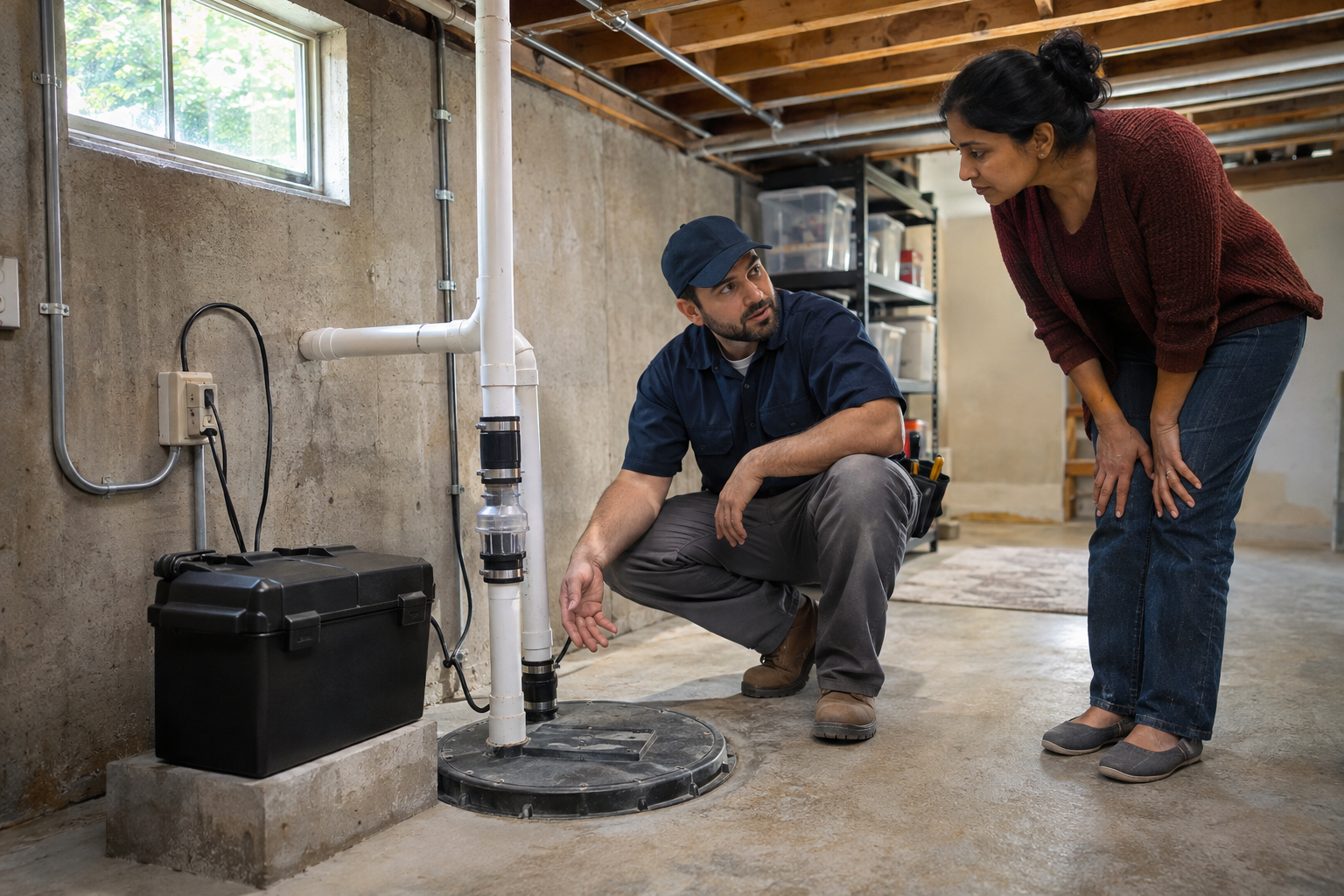
Have a qualified installer explain the system you already own. Does the proposed backup power the existing pump or use a separate pump? What conditions start it? How will you learn that the primary pump has failed? Record the model and instructions so a future service visit does not begin with guesswork.
Discuss battery maintenance and testing according to the manufacturer. A battery case beside the pit does not demonstrate that the battery is charged, compatible or able to operate the equipment as intended. Ask how to verify readiness without disconnecting unfamiliar electrical components or creating an unsafe condition.
Check the discharge arrangement with the installer. A pump needs somewhere appropriate to send water, and local rules can affect that location. Note visible obstructions or damage from a safe position. Do not treat a hose pointed outside as proof that water is being carried away effectively.
Keep backup power safe
If your plan includes a portable generator, address its location before an outage. CDC’s carbon monoxide guidance says generators belong outdoors, more than 20 feet from windows, doors and vents, never inside a home or garage. Use a qualified electrician for a safe connection arrangement; improvised wiring is not a backup strategy.
Consider a hypothetical household that discovers an alarm while the street is already flooding. The useful response is the prearranged contact and evacuation plan, not entering standing water to troubleshoot the pump. Keep service information available upstairs and on a charged phone, with another readily accessible copy if that phone fails.
Decide who checks weather alerts and who helps household members leave. CDC stresses following evacuation orders. A sump system is property protection equipment, not a reason to postpone leaving or to enter a flooded basement. Discuss assistance needs and safe destinations before a warning is issued.
Practice the handoff
Review the manufacturer’s maintenance schedule with the installer, then put the next check on the calendar. Show another responsible household member where the instructions and service contacts are kept. Identify what they should report and which conditions mean they should stop and call for qualified help.
Ask the installer to demonstrate the alarm safely under the manufacturer’s procedure. Write down what each signal means and who receives it when nobody is at home.
NDR’s Planning guides cover related preparedness decisions. Start with one question today: If the primary pump stops tonight, what safe, specific action will your household take next?
