
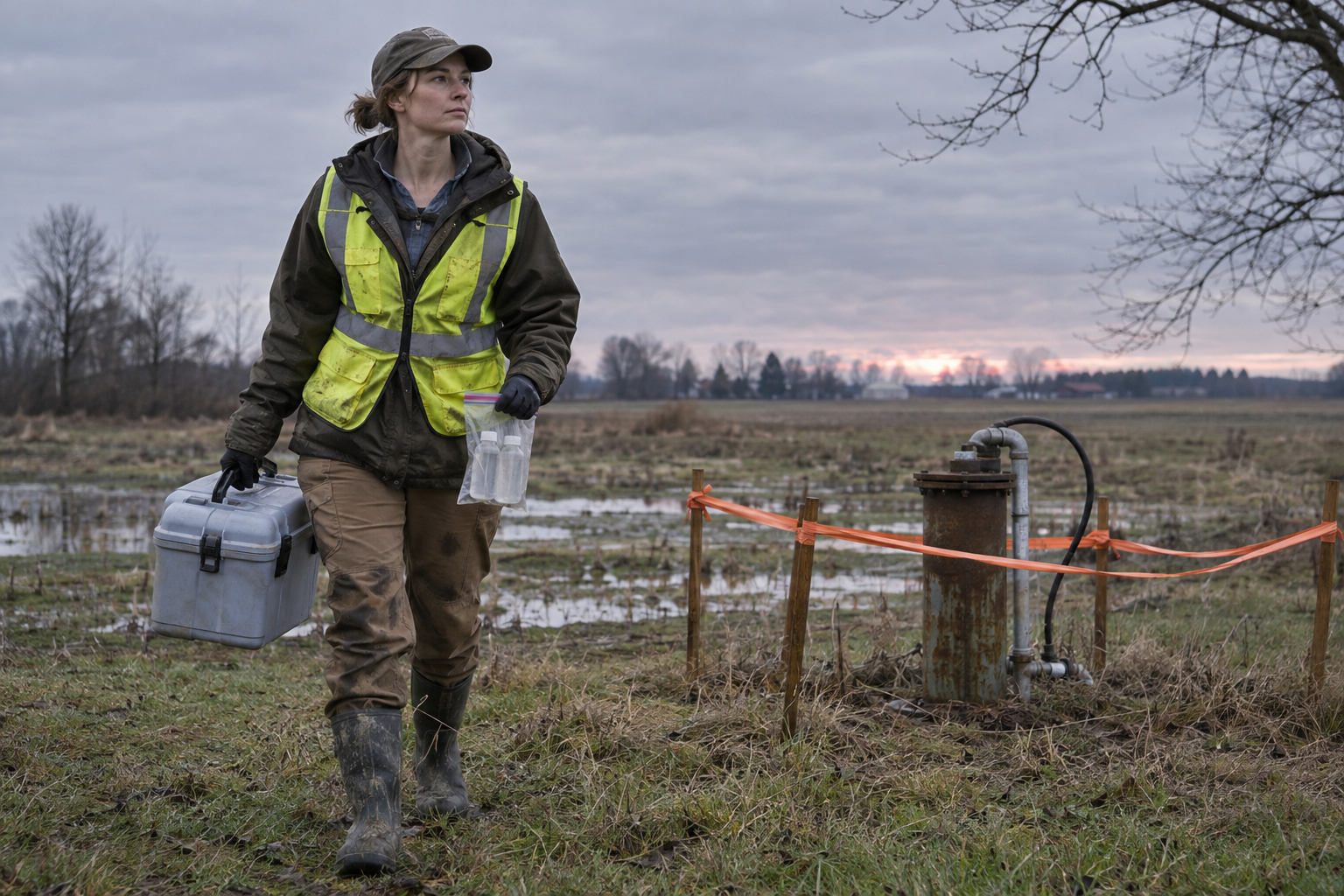
If floodwater reached your private well or contamination is suspected, use a safe alternative water supply and contact local health officials before returning to normal use. Clear water and a working faucet do not establish that a well is safe. The recovery sequence needs professional inspection, appropriate treatment and testing, not an improvised bleach calculation.
The Centers for Disease Control and Prevention’s well emergency guidance recommends involving a well or pump contractor because damaged systems can present electrical and other hazards. It directs owners to local or state health departments or extension agents for advice applicable to their wells.
Describe the exposure
Tell the health department whether water covered the wellhead, how long the area remained flooded and whether there are nearby fuel or chemical concerns. Report visible damage from a safe location. Do not enter floodwater or a well pit to obtain a better photograph, and do not restart suspect equipment simply to see whether it works.
CDC warns that boiling or disinfection will not make water contaminated with fuel or toxic chemicals safe. If such contamination is possible, tell officials explicitly. The choice of testing and treatment must reflect the suspected problem. A bacterial test alone does not answer every question about a flood’s chemical contaminants.
Make the immediate water plan practical. Count drinking and food preparation needs, and ask local officials about other uses. Label questionable outlets so visitors and family members do not use them by habit. Include water for anyone caring for children or dependent adults; do not assume everyone heard the first warning.
Coordinate the sequence
Ask the contractor what must be repaired before treatment, who will perform the work and what information the laboratory needs. Obtain instructions for your well type and plumbing arrangement. This is particularly important when treatment equipment, storage tanks or damaged electrical connections are involved. Save the written instructions with the service record.
CDC advises waiting at least seven to 10 days after disinfection before testing, allowing chlorine to flush from the system. Confirm the timing, sampling location and laboratory requirements with your health department. A sample taken at the wrong stage can make the record harder to interpret and may require another visit.
For a hypothetical rural household, repairing the pump on Monday would not by itself justify resuming drinking-water use that evening. The practical milestone is completing the locally advised inspection, treatment and testing sequence and receiving the interpretation needed to make a use decision. Keep the alternative supply available during that interval.
Keep a record for the next event
File the contractor’s findings, treatment date, sample details, laboratory results and health department instructions together. Record which uses remain restricted and who can explain the next step. If new odors, damage or water-quality concerns appear, contact the responsible professionals rather than relying on an earlier result indefinitely.
Give temporary occupants the same instructions; an unfamiliar kitchen can conceal a restriction.
NDR’s Flood Damage guides address other recovery decisions. For your well, the first call should establish who will guide inspection and testing and what water your household should use meanwhile.
