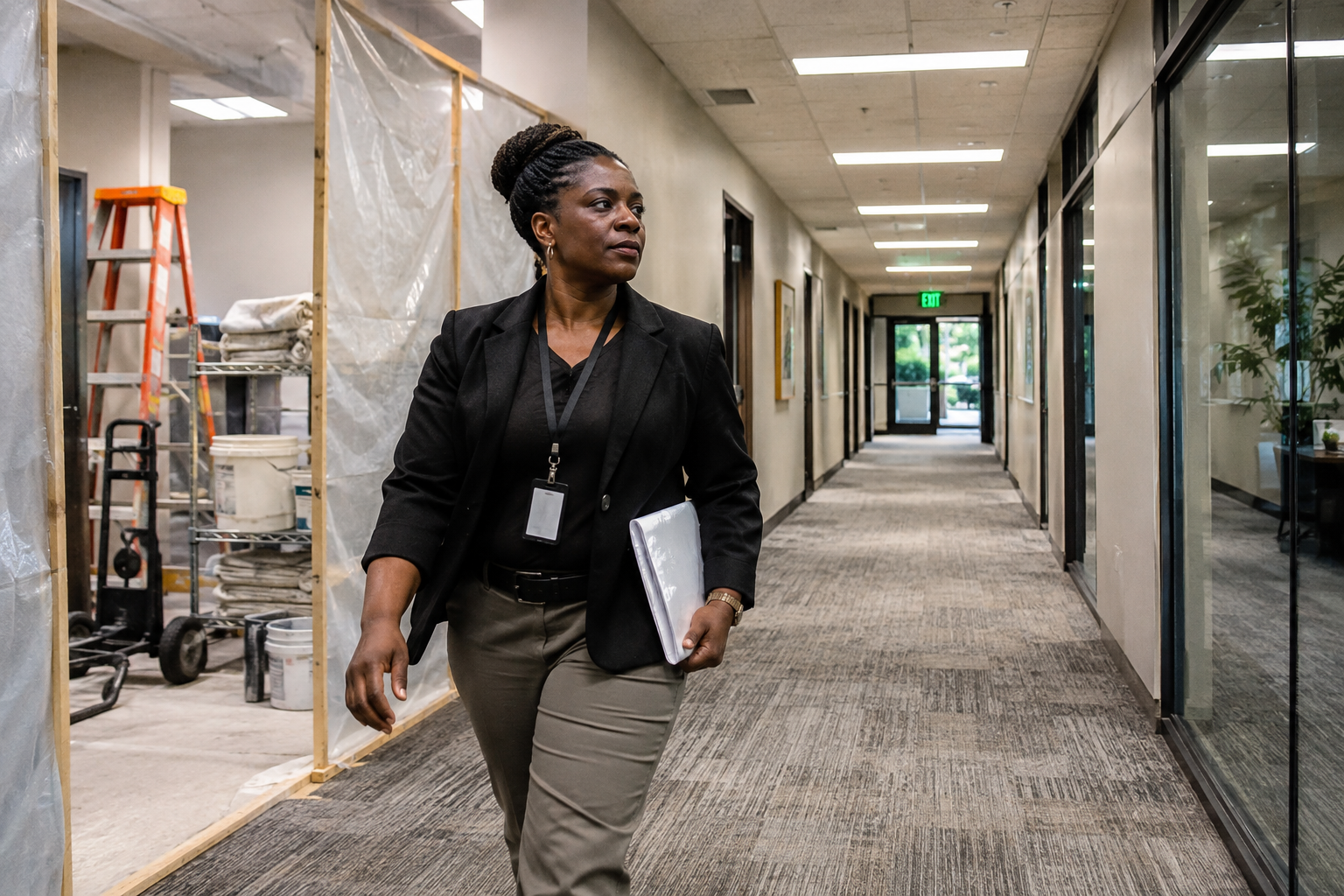
Before scheduling repairs in an occupied commercial building, identify how workers and occupants will leave if an emergency occurs. Equipment deliveries, temporary partitions and debris collection can change a route that was usable yesterday. Treat access planning as part of the repair scope rather than a cleanup detail after work begins.
OSHA’s exit-route maintenance standard requires workplace exit routes to remain unobstructed and addresses employee occupancy during repairs. Applicable building and fire requirements also matter. Have the responsible professionals and authorities determine what arrangements are acceptable; a property manager’s schedule is not an occupancy approval.
Map the work and movement
Bring the facilities representative, tenant contacts and contractor together before mobilization. Identify occupied areas, work zones, delivery points and debris routes. Ask where equipment will wait, not just where it will operate. A corridor can become obstructed before the repair itself starts.
For a hypothetical office suite, a drying machine staged outside a meeting room might conflict with the route employees use to leave. The useful response is to establish an appropriate staging location and verify the route, not simply attach a sign asking people to walk around it.
Discuss any affected alarms, fire doors, lighting or other protective systems with qualified personnel. OSHA’s standard addresses maintaining fire protections during repairs or providing equivalent alternatives. Do not assume a temporary impairment is acceptable because the work will finish before the next business day.
Check each handoff
Assign responsibility for checking conditions when crews arrive, when deliveries occur and before work areas are handed back. Tell occupants how approved temporary routes will be communicated. Changes need review when the work sequence changes, rather than relying on the original floor plan indefinitely.
Identify a backup contact for each organization. If the person who approved a delivery is unavailable, the arriving crew still needs someone who can resolve a staging conflict before equipment enters an occupied corridor.
Use NDR’s Commercial Property Recovery guides to organize related repair decisions. Before confirming the next occupied work phase, ask who has verified exit access and protective systems and who can stop the work if conditions change. Keep that responsibility clear in the coordination record.