Identify the valve before you need it
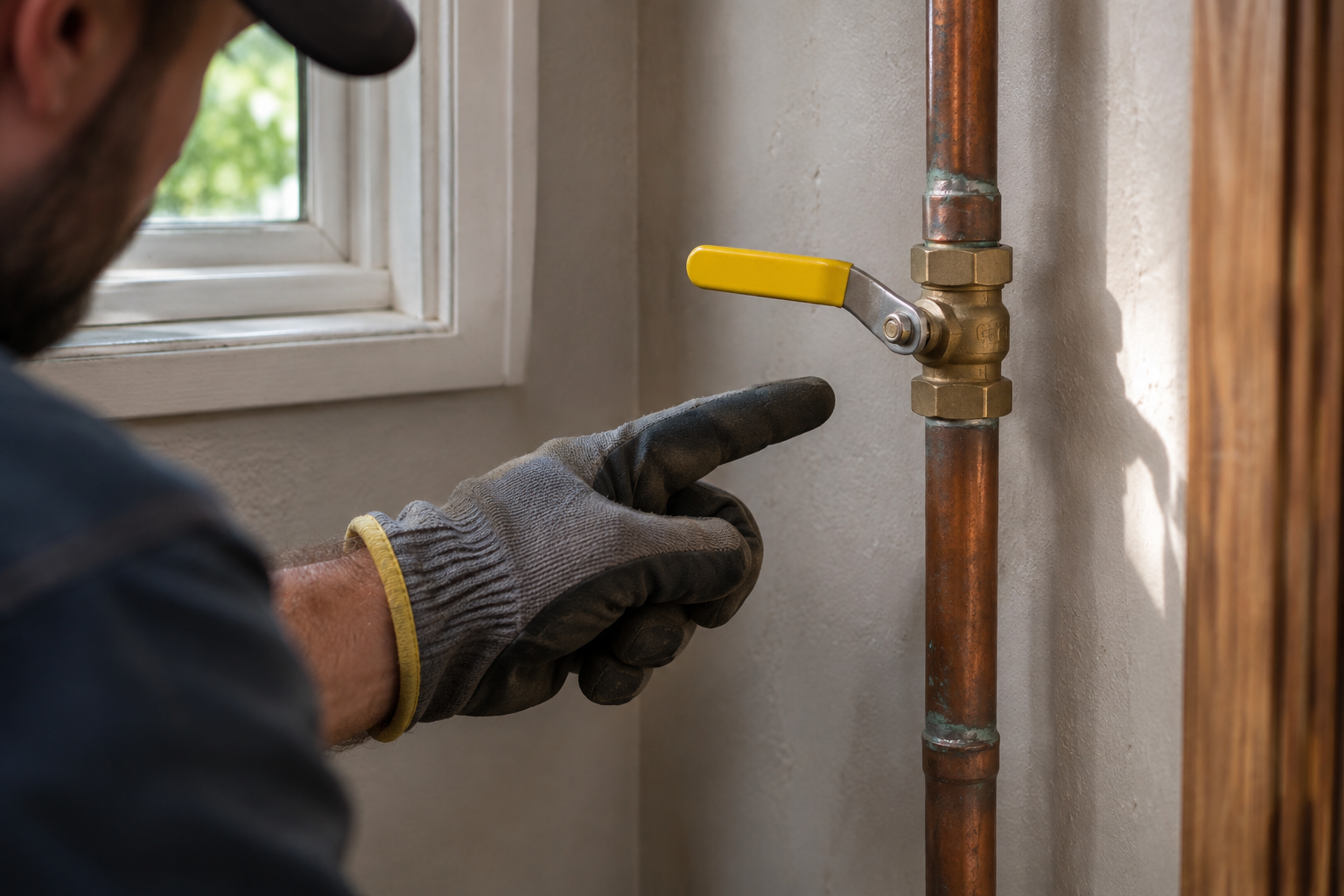
Find the valve that shuts off water to your home before a broken supply line forces you to search for it. Ask a plumber, property manager or water utility to identify the correct control and demonstrate its operation under normal conditions.
The San Francisco Public Utilities Commission’s shutoff guidance explains that valve locations and designs vary. A private shutoff may be outside or just inside the property. The utility also cautions that its water meters should be accessed only by its field staff. Follow your own utility’s rules rather than assuming every street-side box is yours to operate.
The useful outcome is a household instruction that fits the actual building: which valve, where it is, who can reach it and whom to call if it fails. A generic online picture cannot answer those questions for an unfamiliar plumbing system.
Separate the controls and responsibilities
A fixture valve and a whole-home shutoff serve different purposes. Have the professional identify both where appropriate and explain which problem each controls. Tenants should ask the landlord or manager how an after-hours leak is reported and who has authorized access to a shared building shutoff.
During the demonstration, ask whether the valve moves normally, whether it leaks and whether it needs service. Do not force a seized handle or experiment with an unidentified control. A planned plumbing visit is a better setting for resolving a questionable valve than an active leak.
Consider a hypothetical upstairs supply-line leak in a duplex. A resident might find a valve in a basement without knowing whether it serves one apartment or both. The preparation task is to clarify that arrangement with management and establish an emergency contact, rather than leave the next resident to guess.
Keep access clear without moving equipment into a hazardous location. Ask everyone who may need the instructions to locate the valve from the normal entrance. If reaching it requires a locked room, include the authorized access process and a backup contact in the household plan.
Keep the instructions useful
Create a simple location note and a clear reference photo after the professional identifies the valve. Keep a copy where household members can retrieve it without searching old messages. For a managed property, confirm that the instructions remain available when the usual manager is away.
Closing a water valve does not make a wet area electrically safe or determine what can be salvaged. Stay out of water near electrical equipment and seek appropriate emergency assistance when hazards are present. Once access is safe, qualified help can assess the leak and resulting damage.
For households with accessibility needs, include an alternative to personal operation. A useful plan can assign a reachable contact rather than expect someone to climb, lift a heavy cover or enter a confined space.
After a repair or change in occupancy, check that the instructions still match the plumbing and contacts. Ask the plumber who should restore service and what checks are appropriate afterward. Then use NDR’s water damage guides to plan the separate documentation, moisture assessment and repair decisions that follow.