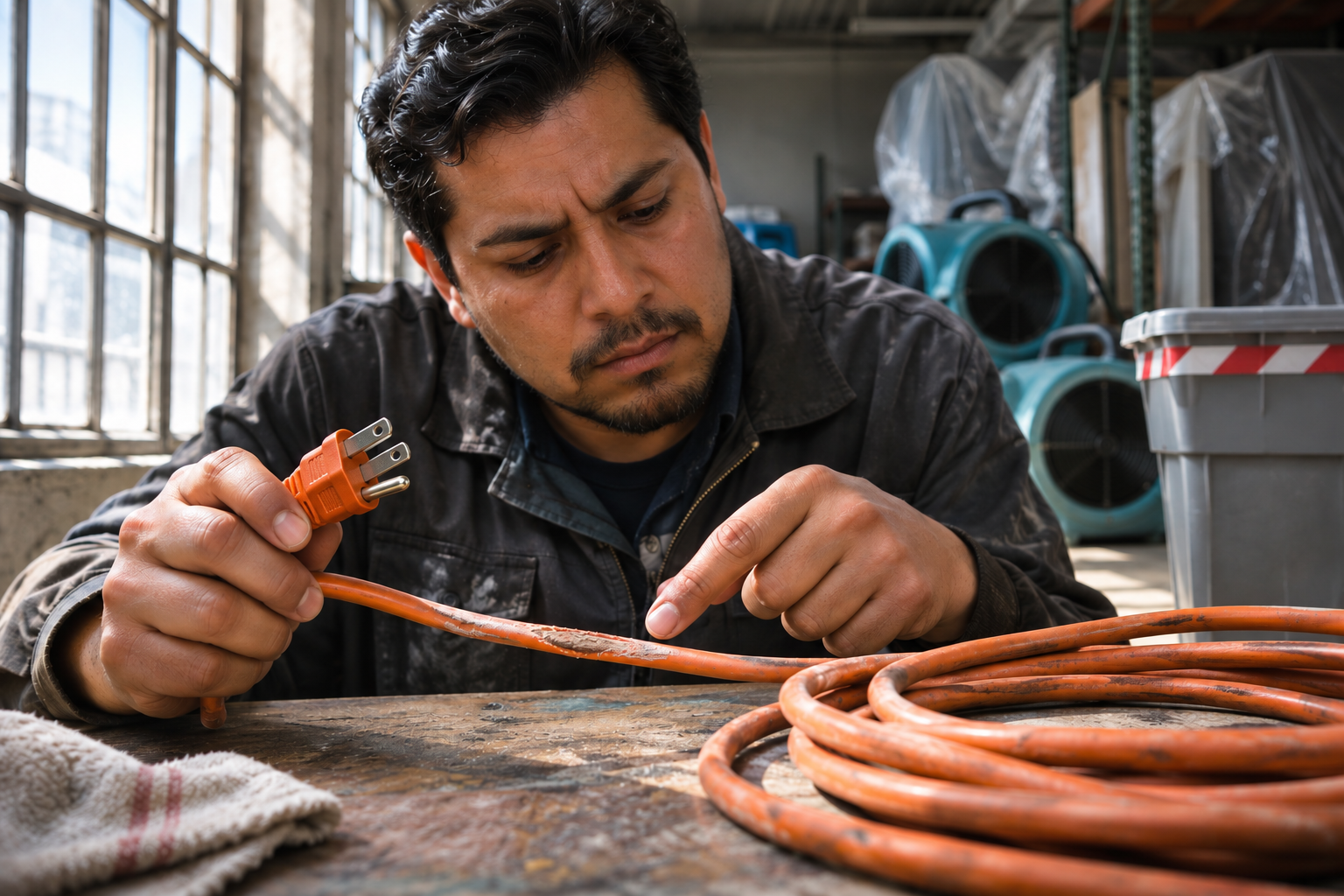

Make removal part of the check
A restoration equipment inspection should end with a clear decision: ready for use, or unavailable until properly repaired and tested. Finding damage without separating the equipment leaves the next crew to discover the same problem at a customer’s property.
OSHA’s portable equipment standard requires visual checks before use on a shift, with an exception for equipment that stays connected and is not exposed to damage until relocated. It also requires removal when a defect could cause injury. These are general industry provisions; managers should identify the standards applicable to each job and operation.
The operational lesson is straightforward. Give the person inspecting a cord authority to stop its use, a place to put it and a way to obtain a suitable replacement. A verbal warning alone is a weak handoff between shifts.
Separate inspection from repair
Inspect unplugged equipment in a dry, appropriate location before dispatch. Check the manufacturer’s instructions and the employer’s safety procedures. OSHA identifies damaged insulation, missing or deformed plug pins, loose parts and a crushed outer jacket as examples of defects or possible internal damage. Do not energize suspect equipment to see whether it still runs.
Record the equipment identifier and observed condition without guessing at the cause. Move the item into a designated unavailable area and communicate its status through the same dispatch system used to assign equipment. A tag or inventory note supports that process; it is not a substitute for required electrical safety or hazardous energy procedures.
Keep repair decisions with appropriately qualified personnel. The OSHA rule bars reuse until the repairs and tests needed to make the equipment safe have been completed. A manager’s desire to fill a truck does not establish that condition.
Test the handoff between shifts
Consider a hypothetical evening return: an employee notices a crushed section of cord while unloading an air mover. The night dispatcher needs another machine immediately. If the damaged unit remains beside ready equipment, both employees may reasonably assume someone else has handled the problem.
A better workflow records the identifier, separates the unit and assigns a replacement before the next dispatch. The repair record then explains who evaluated it and when its status changed. This is a proposed management practice, not an OSHA-prescribed inventory format.
Review whether the system works during busy periods. Can a substitute employee find the unavailable area? Does dispatch know how many suitable replacements remain? Can repaired equipment return to stock only through a defined release step? These questions connect safety decisions to operating capacity without treating every equipment shortage as permission to improvise.
Review the replacement shelf as well as the quarantine area. If only incompatible or damaged spares remain, dispatch needs to know before assigning work. Record that shortage as an operating constraint and arrange suitable equipment instead of quietly reversing the removal decision.
Use NDR’s Business coverage to strengthen related operating procedures. For today’s check, follow one returned machine from unloading through its next assignment. If its condition or repair status becomes unclear anywhere along that path, fix the handoff before sending it out again.