A closed package is not enough
Food exposed to floodwater should not return to the pantry simply because its container looks closed. Packaging materials and closures matter, and some cannot be safely disinfected after contamination.
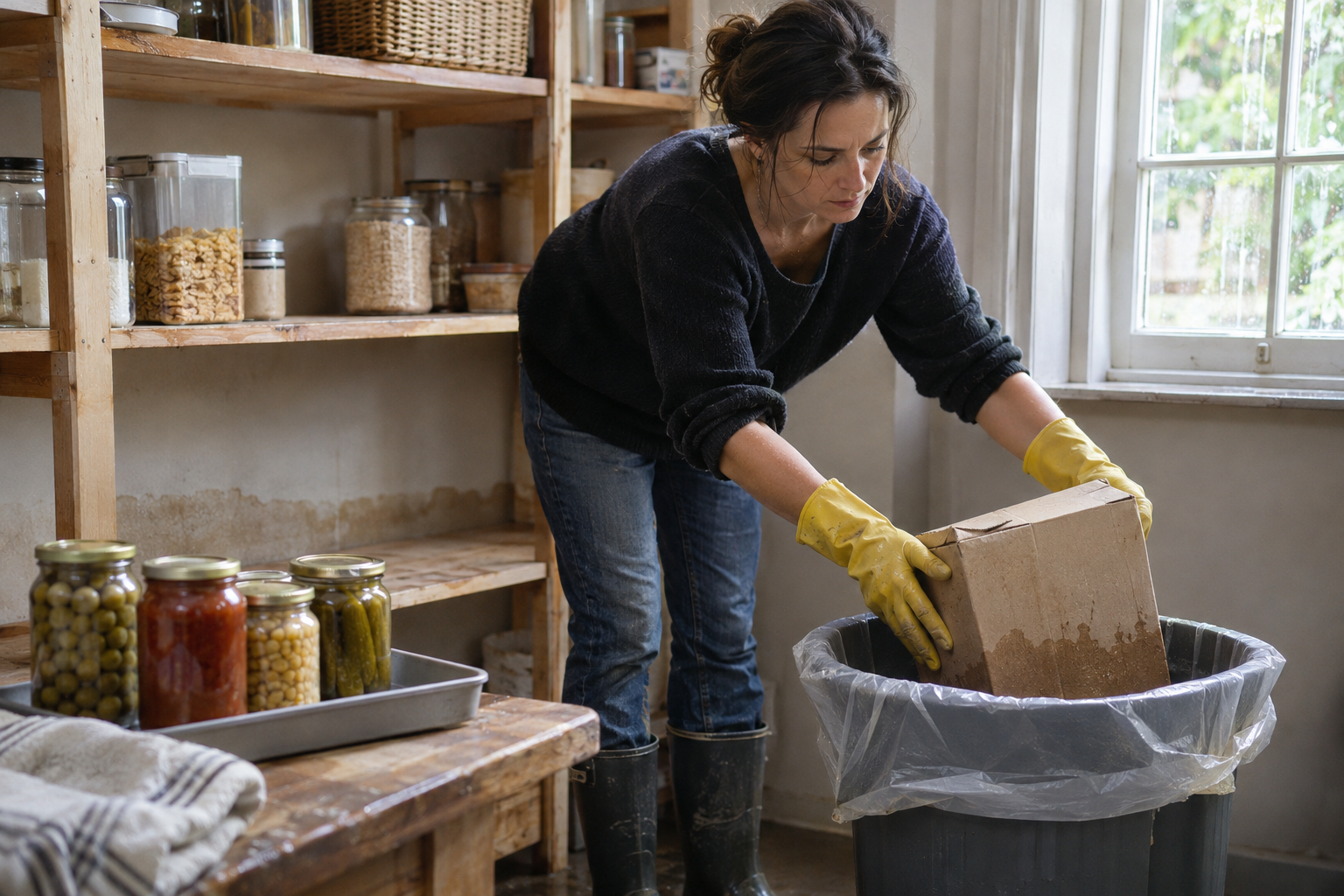
The Food and Drug Administration advises discarding food that may have directly contacted floodwater and water-damaged food in paper, cardboard, cloth, plastic and similar packaging. It also identifies screw caps, snap lids and several other closures as unsuitable for disinfection after flood exposure. Home-canned food belongs in the discard group.
These distinctions change the cleanup question. Ask whether the packaging meets the agency’s criteria, not whether the product was expensive or still smells normal. Do not taste questionable food to decide whether it is safe.
Separate sorting from salvage
FDA describes a limited salvage process for undamaged commercially prepared food in all-metal cans or retort pouches. That process includes cleaning and disinfection, not just wiping away mud. Follow the agency’s current instructions completely if considering that option, and discard containers whose condition is uncertain. A label’s appearance alone cannot establish that a seal remains sound.
A hypothetical pantry illustrates the distinction. A cardboard cereal box, a jar with a screw-top lid and an undamaged commercial metal can may have shared the same low shelf. Treating them as one salvage group overlooks the different packaging rules. Move questionable items away from food that remained protected while you make the decisions.
Do not turn a food-sorting task into entry into an unsafe building. Wait for access to be permitted and follow local recovery instructions. If contamination or damaged building systems prevent safe work, seek appropriate assistance rather than entering to retrieve groceries.
Document without delaying disposal
If you are making an insurance claim, ask the insurer what documentation it needs for spoiled or contaminated food. When safe, photograph the affected shelf and packaging and make a practical item list. Documentation supports a claim review; it does not establish coverage or require keeping hazardous food in a living area.
Ask local officials how to handle disposal during the recovery operation. Keep contaminated food away from children, pets and remaining supplies. Organize the task so someone does not mistake a sorted bag for groceries that can be reused. Clearly separate the discard stream from items awaiting assessment.
Food cleanup also involves preparation surfaces and utensils. FDA advises discarding flood-exposed wooden cutting boards, wooden dishes and certain other items that cannot be safely cleaned. Consult its specific guidance before returning kitchen equipment to service. Restocking food before the preparation area is ready creates another avoidable decision later.
Plan a final shelf check before restocking: are discarded items gone, are uncertain items clearly separated, and does everyone helping understand the decisions? Assign one person to maintain the loss list so repeated sorting does not send contaminated packages back into the kitchen by mistake.
Review NDR’s Flood Damage coverage for related recovery questions. Before buying replacements, confirm safe drinking water, usable storage and a clean preparation area under local guidance. A shorter pantry inventory is preferable to carrying uncertain food into the next stage of recovery.