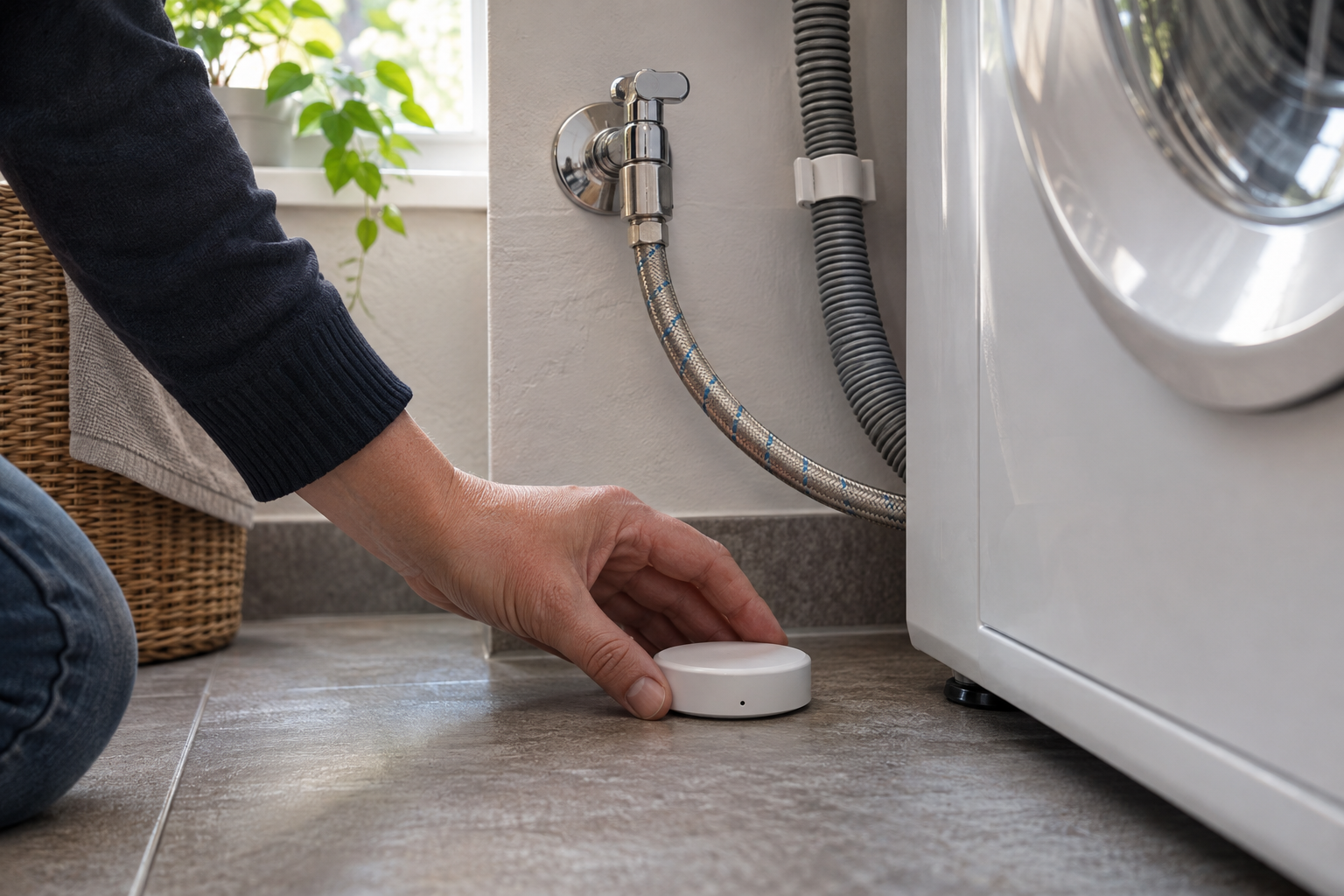
Choose what happens after detection
A water leak alarm is most useful when someone can act on it. Before choosing a device during repairs or upgrades, decide what it should detect, who receives the alert and what response is possible when nobody is home.
EPA’s WaterSense guide distinguishes moisture detection from flow monitoring. A sensor near a fixture detects water where it is placed; a flow monitor looks for unusual water use. Some systems include automatic shutoff. Those functions answer different questions, and a product described as smart does not necessarily perform all three.
Begin with the property’s likely leak locations and access constraints. A washing machine supply connection, a sink drain and air conditioning condensate do not all create the same detection problem. EPA notes that a local sensor can detect water in places where a main-line flow monitor may not identify the leak.
Match the device to the location
A point sensor only observes its immediate area. Ask where water would travel before reaching it and whether the location can be checked and maintained. A sensor placed out of reach may remain unnoticed after a battery failure or routine cleaning moves it away from the intended spot.
Whole-home flow monitoring offers a different perspective, but ask what types of water movement the product can recognize and what falls outside its design. EPA explains that point-of-use devices may miss leaks upstream or at unmonitored fixtures. No device description should be read as a guarantee against every water loss.
If automatic shutoff is included, ask a qualified installer how it interacts with the home’s plumbing and other connected systems. Review installation requirements, manual operation and the manufacturer’s instructions. Do not modify a shared supply or a system serving fire protection based on a general consumer article.
Rehearse the alert pathway
Use a hypothetical travel scenario to test the choice. A local audible alarm may be helpful while someone is in the next room. During a week away, the same sound cannot notify an absent owner unless another supported communication path exists. A remote alert still needs someone with safe access and authority to respond.
Ask about power, connectivity, subscriptions, batteries and maintenance before purchase. Follow the manufacturer’s approved test method rather than creating a leak to see whether the equipment reacts. Confirm that the intended recipient actually receives the test alert and knows whom to contact.
Keep a short response instruction with the household plan: which device sent the alert, where it is located, who checks conditions and when professional help is needed. An alert should prompt investigation, not unsafe entry into standing water or contact with potentially energized equipment.
If several people receive notifications, assign a primary responder and a backup. Otherwise, each may assume another person checked the alert. Record how the responder will confirm the outcome to everyone else after investigating through a safe route.
NDR’s Rebuilding & Prevention coverage explores related improvements. Choose a device only after matching its detection area and response capability to your home. Then schedule the next approved test so the plan remains useful after installation day.